
Asset management’s new purpose

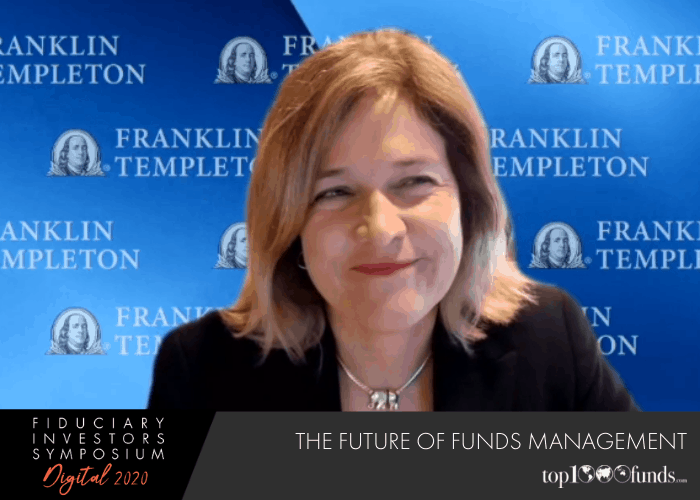
“We didn’t have any sleepless nights,” Jenny Johnson, president and chief executive of Franklin Templeton told FIS 2020 Digital delegates, reflecting on one of the largest purchases in asset management history on the eve of the pandemic in February.

“We are long-term, and the reasons we did the acquisition still remain today.”

Franklin Templeton’s cash purchase of rival Legg Mason was driven by the need to fill product gaps and move more into the alternatives space, as well as diversify the active manager’s client base, she said. Now the focus will be on investing in AI, data and fintech across asset classes which account for a combined $1.5 trillion.

“We still have lots of cash to invest in the business,” she said.

The merger will help the two firms navigate trends in the asset management industry including downward pressure on fees and more customisation, said Johnson.

Sponsored Content

She said institutional partners increasingly seek thought leadership, and that active managers like Franklin Templeton are increasingly responding to institutional client demand for data analytics.

For example, the firm’s global macro team has built an ESG data platform bringing together ESG data feeds from 17 different sources to support investment research, she said. Active managers will be able to take advantage of the market dislocation caused by COVID-19, Johnson continued, although she flagged that government intervention has reduced the level of dislocation, making it “more difficult” in the short-run.

She also said that the asset management industry will have to adapt to employees working from home. A new flexibility will see firms support employees who want to work from home and that employees may only come together “some days of the week”.

Elsewhere, she noted how distribution and sales teams will travel less because of digital communication. Active managers have always worried how often their portfolio managers visit clients because it takes away from research, she said. Now, COVID-19 will result in less travel and more efficiency. She also said that ESG investment would see more of a focus on the integrations of social factors.

Reflecting on growing racial tension in the US and the recent high profile firing of a senior Franklin Templeton employee for racism, Johnson said “she’d learnt a lot in the last couple of weeks”. She said that equality is not only the right approach but diversity is proven to produce better outcomes. She also said that it was “a good thing” firms and individuals are increasingly accountable for their behaviour.

However, asset managers need to do more, particularly in boosting diversity and inclusion in the underlying companies they own. She said most black-run businesses and female entrepreneurs struggle to attract venture capital, and that the industry needed to do more to ensure capital is available to these groups. Everyone has a fiduciary responsibility to make sure they are getting returns, but she urged investors to “change the lens” on how they view investments to enable capital to flow to these groups.

Johnson also reflected on a new purpose in asset management.

“What we do every day really matters,” she said, referencing the in-depth research carried out by Franklin Templeton’s biotech team into companies developing a COVID-19 vaccine. She said although Wall Street is viewed as “greedy,” people working in asset management do care. She also urged a keen focus on helping pension funds that are underfunded.

“For us it is just staying focused on what is important,” she concluded.

Leave a Comment

Florida: Opportunities in a crisis

Florida: Opportunities in a crisis

The Florida State Board of Administration has made some strategic moves to take advantage of opportunities in the dislocation, including in private equity, distressed debt and active listed equities.. But CIO, Ash Williams, is concerned about the underlying real economy.

Sort content by

Kotkin’s mega trends: Deadends & despair

Political regimes around the world are stuck in a series of dead-ends and despair. Most importantly, the China-US relationship has hit a brick wall as their fundamentally different values and interests clash. Deterrents and robust policy is the only way forward, says Stephen Kotkin, professor in history and international affairs, Princeton University.

Duflo says credit ratings punish poor

Nobel prize winner Esther Duflo suggests institutional investors can help alleviate poverty by fostering new supply chains and looking beyond a country's credit rating. She said there is an "unacceptable" level of poverty amongst Africa Americans and Latinos who are keeping the US economy going but dying for it.

Robeco hails the power of stewardship

Global asset manager Robeco has found proactive stewardship triggers important changes in corporate behaviour. Chief executive Gilbert van Hassel urges FIS 2020 Digital delegates to do the same.

Meng talks CalPERS leverage plan

In a fireside chat, CIO of CalPERS Ben Meng talks about how the fund wants to use leverage to push deeper into private assets, while Ronald Wuijster, chief executive officer, APG Asset Management said the policy response has made taking advantage of buying opportunities difficult.

Purpose set to drive investment

Investors should use stewardship to encourage purposeful companies that provide long-term value by meeting the needs of multiple stakeholders and helping improve society. But what is a purposeful company?

China’s growth conundrum: Debt vs GDP

Understanding the two policy making camps in China - one which is concerned about debt and one which is worried about a slowdown in growth - is key to understanding China's position in the global economy, says professor of finance at Peking University, Michael Pettis.

Previous