
Investors prioritise governance, tilts and liquidity

In a wide-ranging session at the Fiduciary Investors Symposium at Chicago Booth School of Business investment executives from HOOPP, CalSTRS, USS and Cbus reflect on the need for strong governance in the current climate, diversification and liquidity.

The need for diversification when so many assets are struggling requires detailed conversations with trustees and governors about how to make the portfolio better factor balanced, said Michael Wissell, chief investment officer of Canadian fund, HOOPP.

“It is helpful to bring management and the board together,” he said in a panel session that recognised the importance of well-defined risk parameters and governance to support positions if market conditions deteriorate. Wissell, who said HOOPP’s portfolio is still defensively positioned, cited the fund’s thoughtful approach to opportunities where he predicts picking up assets today that will sow the seeds of decent future returns.

Scott Chan, deputy chief investment officer of CalSTRS noted how the market is struggling to price in uncertainties around inflation, supply chains and de-globalisation. CalSTRS priorities include managing liquidity and providing lines of credit where they are needed. Chan noted that this could lead to the fund selling assets in some parts of the portfolio as values fall in a risk mitigation strategy.

“We will liquidate and get into a position to invest in distressed assets,” he said. In March 2020 CalSTRS was already with billions on hand to “go shopping” but in the event only needed to ride equities back up in the V-shaped recovery. Chan said CalSTRS is also focused on building out its private credit allocation that will provide a degree of inflation protection. “Doing more of these types of things will move the needle,” he said.

Tilts

At Australia’s Cbus, strategy includes making asset allocation tilts, positioning around shorter duration and more domestic equity relative to international equity. Cbus has also structured option protection strategies in the last month, said Kristian Fok, CIO at Cbus. Elsewhere, the fund is seeking resilience to rising interest rates and inflation via property and infrastructure. Fok noted how infrastructure will continue to provide a buffer, smoothing the risk-free rate and providing an uplift from GDP activity and inflation protection, but only as long as rates don’t rise too much.  Fok added that the fund is also seeking to build more capability internally.

Sponsored Content

Panellists noted how construction companies have come under pressure via inflation and supply chain issues, forcing some to collapse. It is creating a changing dynamic for investors in greenfield property and infrastructure, pushing investors to get comfortable with risk sharing and develop new skills.

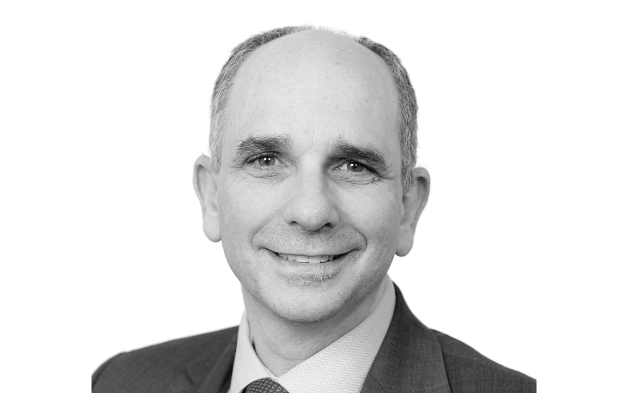
Cbus is not the only investor titling to opportunities. Rather than owning the S&P, investors could tilt to inflation sensitive equities or green-energy orientated equities. At the United Kingdom’s USS tilts to public markets include  assets set to do well from the cost of living and high inflation. Bruno Serfaty (pictured), head of dynamic asset allocation at USS told delegates that strategies require a strong governance process to understand the scope of a tilt over an investment period.

Hedging provides another protective seam with panellists referencing tail risk mandates and strategies that hedge when markets are falling. However, they stressed the importance of sizing allocations correctly, difficult when the scale of the drawdown is unknown, and flagged that these strategies are also usually associated with a drag.

Panellists added that regulatory frameworks make it difficult to take large positions unless investors can change their strategic asset allocation to suit the investment environment.

Reflecting on where they would invest if they had a free-hand, Serfaty highlighted opportunity in energy and the safety of cash. Away from the elevated risk premiums inherent in financial assets, he said energy is currently not expensive.  Other investors cited opportunity in real return bonds, a focus on cash management and pivoting to new areas. Fok concluded that a new political regime in Australia signals opportunities in renewables where he predicted private capital may increasingly invest alongside public investment in a scenario that could bring guarantees, but also the ability to take risk.

Pandemic learnings

Panellists discussed how their organisations had weathered the pandemic. HOOPP wrote more tickets in March 2020 than ever before and emerged confident in its ability to work from home. On the flip side, Wissell noted challenges around mental health, particularly in the younger team members.

Chan explained how CalSTRS added more hires during Covid to build out its direct investment model. CalSTRS now insources around three quarters of its public markets allocation in a strategy designed to slash fees.

“During Covid we captured lots of hires, and now it’s hard to hire,” he said. The fund has emerged from Covid focused on its organisational objectives, particularly trying to shape its framework around net zero.

At Cbus, pandemic challenges included $2.4 billion of withdrawals from the fund as beneficiaries pulled money out following government policy allowing members’ access to their accounts. Elsewhere, the fund invested in the local market and navigated new rules on super funds and allocations to better performing funds only.

At USS Serfaty described an early pandemic scramble to navigated margin calls and collateral issues. In a second stage, USS stepped in to support funding for some of its private market investments hit hard by Covid like Heathrow airport. He said that strategies at USS have subsequently focused on redirecting its position away from fixed income into assets including commodities.

Leave a Comment

Beyond traditional asset allocation

Beyond traditional asset allocation

Today’s challenging climate has led diversified investors like GIC, Singapore's sovereign wealth fund, to explore different approaches to portfolio construction to build resilience. Grace Qiu and Ding Li, both senior vice presidents in total portfolio policy and allocation at GIC discuss their new research.

Sort content by

Private credit investors ready for next cycle

While many allocations struggle in a downturn, it presents opportunities in private credit some of which are already starting to appear.

Why the world is approaching an inflection point on climate investing

A push towards standardised data and more appropriate incentives is bringing greater amounts of private sector capital into play on the path towards net zero emissions by 2050.

Tech wipeout brings lucrative opportunities for savvy investors

“Horrible” sentiment towards technology stocks is dragging down the value of some of the “best business models on the planet,” experts say.

Bridgewater advises downside protection as turning point appears

Investors should shape strategies that protect against the downside, said Jeff Gardner, senior portfolio strategist, Bridgewater Associates.  Speaking at the Fiduciary Investors Symposium at the Chicago Booth School of Business, he said that investors should prioritise protecting against losses in the current environment: increasing returns can be additive to long-term wealth, but missing the big

Solutions to Europe’s energy crisis

Chris Hulatt, founder, Octopus Group, and Olivier Rousseau, executive director of France’s FRR, reflect on the European energy crisis. Speaking at FIS Chicago, they warn of consumer pain ahead, urging governments to do more to build renewable energy infrastructure. Cripplingly high energy costs in the UK where the average annual household bill is forecast to

The future of globalisation: Friend shoring and telemigration

FIS delegates heard how globalisation will give way to new trends in nearshoring or friend shoring, telemigration, and cause companies to diversify their supply chain.