
ESG: Engagement, stock picking and investment team expertise key at AP4

AP4, the SEK 459.1 billion ($41.4 billion) Swedish buffer fund, has been integrating sustainability since the 1970s. In those days, the key focus was scrutinizing corporate governance in the Swedish equity allocation. Today that focus has expanded to a broad ESG focus supported by AP4’s beneficiaries and Swedish government legislation.

However of all the risks under an ESG umbrella, AP4 views climate with particular concern.  Nearly a decade ago the fund concluded that climate and environmental risk wasn’t correctly priced and represented a significant systematic risk to the portfolio over the long-run. Particularly pertinent given AP4 invests with a 40-year horizon, longer than most pension funds.

Important milestones since include the buffer fund becoming one of the first investors in green bonds in 2012. In 2017, AP4 made ESG a formal investment belief, at which point sustainability became integrated by every investment team, sending a strong signal both internally and to the outside world.

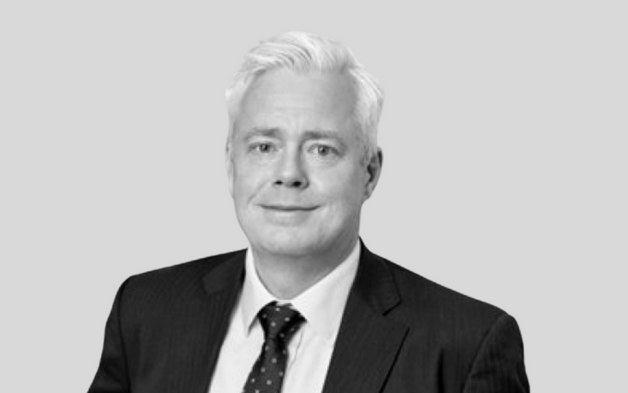
“Today it is part of our DNA but at the time not everyone was happy and we faced resistance within the organization,” recalls Niklas Ekvall, Chief executive, AP4, speaking at FIS Maastricht. “But if we hadn’t taken that decision, we wouldn’t be where we are today.”

Sustainability was pushed out into the organization so that each investment team had to take responsibility to integrate sustainability in their own asset class. Because all investment teams now house their own sustainability expertise, AP4 only has a small dedicated sustainability unit, focused mostly on reporting.

“The bulk of our resources are in the investment teams,” says Ekvall. “The idea is that teams share and learn from each other, particularly around climate scenario analysis.”

Sponsored Content

Engagement

AP4 screens the portfolio on a regular basis, using external vendors to support the process alongside its own internal tools. It is publicly engaging with around 100 companies on all ESG topics, although climate engagement given its systemic risk in the portfolio and broadest impact tends to dominate.

“Engagement is a very strong tool for value and for influencing companies. We stand up for the right of equity owners to give their opinion,” he says.

The buffer fund is prepared to exclude companies if corporate engagement doesn’t progress to corporate change. A key reason for divestment is a company violating Swedish legislation or treaties Sweden has signed, and AP4 will also divest if it doesn’t agree with companies’ business models, particularly in sectors with a large climate impact.

Still, Ekvall is mindful that many energy intensive industries like steel and chemicals are producing goods vital for working society and a successful transition.

“Divestment would not be responsible,” he said. “If you want to have an impact, you need to be invested in these sectors.”

Stock picking

Investing in the energy transition has included fundamental stock picking, continues Ekvall. In a bottom-up process, the investment team finds companies that have a business model that will be viable in the future.

“Companies we own need plans and ambitions for the future,” he says.

This process has caused AP4 to reduce the number of energy intensive companies in its portfolio from 60 to around ten, comprising those with the most ambitious plans to reform. “These companies are part of the solution,” he said.

Carried interest ESG link

No corner of the portfolio is sparred integrating sustainability. AP4 views private equity as a compliment to listed equity, offering the ability to find exposures that are hard to come by in the listed market.

“Private equity is lagging behind in terms of sustainability,” he notes.

However, it is sometimes possible to integrate sustainability in private equity by pegging sustainable integration and success to carried interest paid to managers.

“We have introduced this into the terms and contracts with our private equity managers,” he says.

AP4’s 17 per cent allocation to alternatives includes a real estate allocation, long renown for its climate risk and responsible for between 20-40 per cent of portfolio emissions. AP4 works with real estate groups to plan for the transition including green construction, sustainably heating and cooling buildings and ensuring building waste goes into the circular economy.

“We still have some way to get to net zero,” he said, noting a need for better recycling markets.

AP4 promotes the introduction of a price on carbon because it would accelerate progress in the non-listed market. “The non-listed space is lagging,” he concludes.

Asset Owner:AP Fonden 4 (AP4)

Leave a Comment

The twin forces that are shaping a new world investment order

The twin forces that are shaping a new world investment order

Portfolios built for the old world will be severely tested as emerging forces shape a new world order. The Fiduciary Investors Symposium heard that geopolitical and macroeconomic upheaval, together with the disruption wrought by AI, should force asset owners to rethink the structure and composition of portfolios.

Sort content by

Concerns over private equity leave pension funds wary

Institutional investors are clearly attracted to private equity, but remain wary of the sector for its perceived lack of transparency and ability to be measured, high fees and a sense that they cannot invest into the sector as truly equal partners. “It’s clear that now is a time with a lot of flux in private

All aboard the change express as Railpen leaves the station

At the end of a corporate review process that lasted eight months, involved 23 meetings of a steering committee and produced 60 working papers, the UK railways pension fund Railpen was left with 422 action items. “We’ve done 224 of them,” Chris Hitchen, Railpen chief executive, told the Fiduciary Investors Symposium (FIS) at Harvard University.

Using a ‘foreign language shield’ to improve investment decision making

Introducing a “foreign language shield” into a decision-making process is a proven way of making better decisions, according to Cass Sunstein, the Robert Walmsey University Professor at Harvard Law School. Sunstein, a former administrator of the White House Office of Information and Regulatory Affairs (OIRA), told the Fiduciary Investors Symposium (FIS) at Harvard University that

ESG factors take centre stage in the evolving world of the fiduciary

The modern responsibilities of the fiduciary investor extend beyond what are perceived as the “mainstream” investment issues to those related to environment, society and governance (ESG) factors. But there is a growing understanding among fiduciaries that ESG considerations are now equally important in discharging their obligations. David Wood, adjunct lecturer in public policy and director of the Initiative for Responsible

The biggest risk for investors is misunderstanding uncertainty

As the focus of retirees shifts ever-further towards objectives-based outcomes, those entrusted with achieving those objectives will have to rethink a traditional approach to managing money involving risk and return trade-offs. Speaking at the Fiduciary Investors Symposium (FIS) at Harvard University, Abdallah Nauphal, chief executive and chief investment officer of Insight Investment, a BNY Mellon

Good for Harvard, good for the world: Why HMC embraced ESG with a passion

Harvard Management Corporation (HMC) signed up to the UN-supported Principles for Responsible Investment (PRI) less than a year ago, but the company that manages the $36 billion Harvard University endowment is already moving rapidly to build environmental, social and governance (ESG) factors into every investment decision it makes. Jane Mendillo, president and chief executive of



