

The $34 billion Khazanah Nasional, the sovereign wealth fund of Malaysia, has been increasing its public and private equity exposure to developed markets for the past eight years.
It is a pivot away from its traditional focus on emerging markets, including its home country and other Asian economies, that was made somewhat out of necessity because underperformance in the past decade was hurting returns.
As of this March, the US accounted for approximately 40 per cent of Khazanah’s global portfolio, and it has plans to increase overall developed countries exposure to in line with the MSCI ACWI benchmark at 88 per cent.
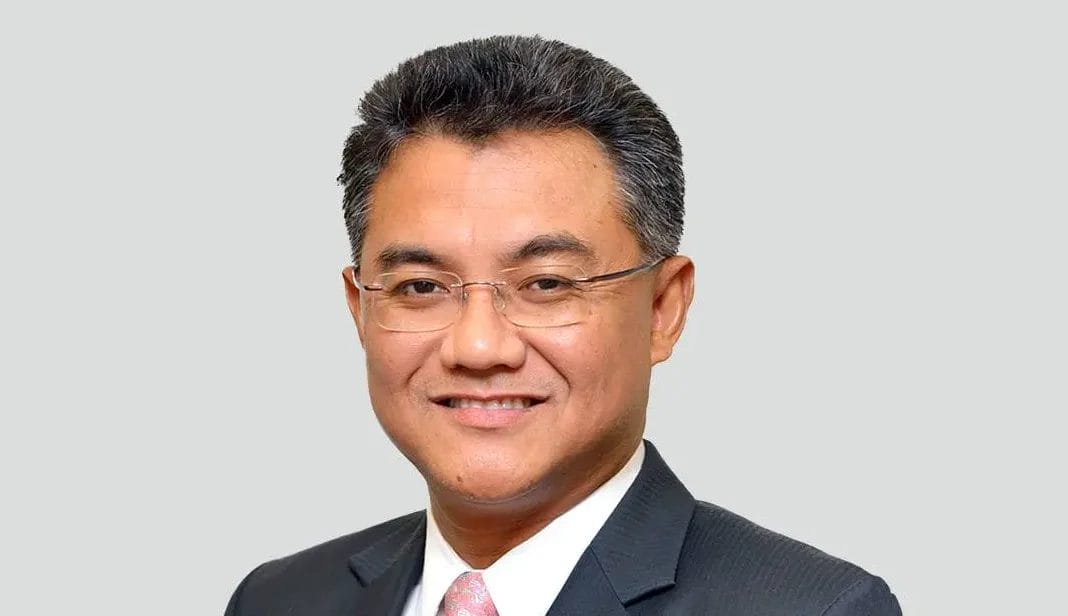
But while the allocations are increasing chief investment officer Hisham Hamdan is very realistic about what the fund can and cannot achieve by allocating to developed markets. He sees it as sufficiently rewarded beta but not the place to look for an edge and is “spending more time on allocation, less on selection”.
“That’s one thing that I think most organisations need to ask themselves, do you really believe that you can outperform the index in efficient developed market countries?” Hisham tells Top1000funds.com, adding that it is why Khazanah prefers to access developed markets via cheaper and passive options.
As of the end of 2024, 57.5 per cent of Khazanah’s main investment portfolio was domestic public markets,17.4 per cent was global public markets, 16.5 per cent was private markets and 8.6 per cent was real assets.
In contrast, emerging markets is where Khazanah wants to take on active risks due to inefficiencies, but the problem in these countries is that higher risks and volatility haven’t been rewarded with higher return. The momentum in developing economies, which accounts for two-thirds of the world’s GDP growth, also has not translated into higher company earnings. And this creates a dilemma for investors like Khazanah located within the region.
Khazanah has traditionally had a high allocation to China, but investments in the country in particular have come under significant strain since 2021, following a slow COVID-19 recovery and the real estate market crash.
India however, where the fund also has an office, has been the bright spot in emerging markets with strong returns in public markets, Hisham says.
The last decade of emerging markets performance has been “out of whack”, Hisham says, but he still believes investing in emerging markets will bring higher returns over the long term. Khazanah itself has a role to play, as Malaysia’s sovereign wealth fund, part of its responsibilities is to invest in and help develop its domestic equity markets and promote economic activities in its home region.
So despite the momentum of the past few years, and an increasing allocation to the US and other developed markets, uncertainties in US markets supercharged by tariffs could signal an opportunity to allocate more to emerging markets, which are showing signs of rebound. Notwithstanding fear of a trade war with the US, China’s benchmark CSI 300 index has still outperformed the S&P 500 in 2025 so far.
“If you are a US-centric [allocator], chances are you are probably underweight emerging [public] markets. Maybe instead of having 12 per cent [in EM], you have 7 or 8 per cent,” Hisham says. “If you see China has done well this year, maybe it’s time for you to pivot.”
“That depends on who the fund is and where they are, but we are obviously happy to see China’s numbers coming back.”
On the private equity side, it is reducing exposure to venture capital and increasing buyout and secondaries investments. “Private equity is definitely higher active risk than public market, but the dispersion of return is wider,” Hisham says.
“Increasingly, the median return of PE is not beating the public market benchmark, it could also be because the public [market] has been very strong because of the Mag Seven.
“We always invest into an asset class, [where] if the risk is higher, you want to make sure that the risk is rewarded.”
Compared to its global sovereign wealth fund peers, Khazanah’s $34 billion of assets under management is modest, and it doesn’t have the luxury of inflows from resource revenue or access to foreign exchange reserves, but its existence is closely linked to the prosperity of the Malaysian market where the fund plays a role to improve its beta.
Hisham considers that Khazanah’s mandate could be likened to a combination of three Singaporean sovereign and state investors, GIC, Temasek and the Economic Development Board (EDB). It needs to juggle between transforming Malaysian listed companies, developing new economic sectors and bringing foreign capital into the country alongside the government, while ensuring a globally diversified portfolio and meeting return targets.
The overall Khazanah portfolio has four components. Apart from around $31.5 billion in the main investments portfolio with commercial return targets, $1.3 billion is allocated to the ‘Dana Impak’ fund which executes investments around six socioeconomic themes such as healthcare and food security; ‘developmental assets’ which are companies that Khazanah is helping to strengthen their financial sustainability; and ‘special situations’ where assets are under stress and need active management to improve profitability.
“Some of the things that we do, you don’t necessarily get the return. The return can be captured in the form of jobs that we created, in the form of new skill sets [in the economy] that we created,” he says.
“But at the same time, we have to make sure that we generate those cash returns, pay dividends to the government and take care of our balance sheet.”







Leave a Comment
You must be logged in to post a comment.
Login