
Wisconsin leans into opportunities

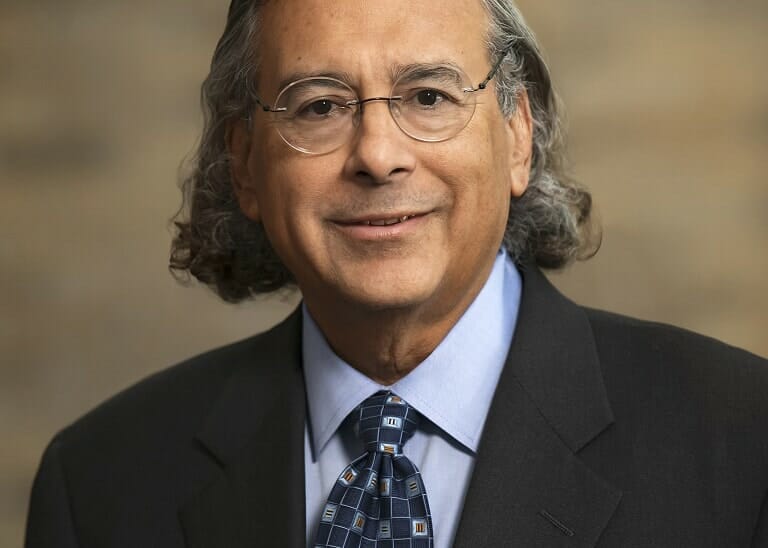
In the space of three months the State of Wisconsin Investment Board has moved its portfolio from “defensive” to “offensive” as it “leans into the opportunities” presented by the coronavirus crisis. CIO and executive director David Villa, and deputy, Rochelle Klaskin spoke to Amanda White about the portfolio and how the large internal team is managing remotely.


In the space of three months, the $110 billion State of Wisconsin Investment Board has moved its portfolio from “defensive” to “offensive” as it “leans into the opportunities” presented by the coronavirus crisis.

In December last year, SWIB’s investment chief and executive director David Villa had a defensive allocation to the portfolio. Villa was worried about the outlook for returns back in October and at that time moved to a significantly underweight position in sovereign bonds in favour of cash.

“I didn’t feel that investors were being compensated for the risk that was being taken by holding different kinds of assets,” he said in an interview with Top1000funds.com. “Today’s posture is much more offensive and aggressive. In terms of fear and greed, the fear factor is very elevated and we are now being compensated.”

But while SWIB’s outlook is more offensive, the approach is still cautious.

Sponsored Content

“In terms of our budget, we’ve only spent a fraction of it, because we think that it is possible for things to get much worse,” he said. “If there was such a thing as an ‘aggressive budget’ we’ve spent maybe 20 per cent. We are leaning into the opportunities but there is so much uncertainty and volatility that to spend all of our budget things would have to get worse, and there’s a fair chance it could get much worse.”

SWIB is unusual in the fund does not have an automatic rebalancing process, rather the senior investment team votes every month on the portfolio positions. While it does have limits imposed by the board, they are pretty wide and it’s rare to bump up against them.

“At this moment we are fearless rebalancers,” Villa said. “A lot of return will come from being willing to rebalance without worrying about what might happen. We are also very liquid. Our asset allocation is built around publicly traded securities so we are extremely liquid, and there are deep derivative markets that allow us to rebalance synthetically. Fourteen years ago it would take us eight weeks to rebalance, today it takes us less than 24 hours.”

A rebalancing out of bonds into equities was completed on the last day of March, and SWIB realised the month-to-date recovery in the equity markets the week of April 6. Enhancements to the technology platforms also means the rebalancing process is more precise which also saves on transition costs.

“We don’t try to time the market, instead we focus on fundamentals and valuation, and we stick to policy,” Villa said. “We add active risk when we feel we can be compensated for it.”

Managing remotely

About half of the assets of SWIB are managed inhouse by a team of 80 staff.

“I’m really proud of the team they’ve managed to get things running almost back to normal using remote technology,” Villa said.

A few years ago the fund put in place a business continuity program and it has a cross-functional incident command team of 16 staff that sit under deputy executive director and chief administration officer, Rochelle Klaskin. The plan has been tested and enhanced as a result of two tests last year in the form of a severe snowstorm and a city-wide power outage.

“These were two opportunities to do more than just test, it was a live drill where we had to work remotely for a few days,” Villa said. “But working for a few days is very different to working from home for a very long extended period of time.”

Klaskin said a lot of work was done to prepare the team for working from home since March 12, well ahead of the state government’s instruction. This has included providing them with VPN access, getting more servers and increasing capacity. The team uses Skype for business and Microsoft team to communicate and conduct meetings.

“We are having the same meetings but creating a virtual environment for them,” she said. “Nobody was using Microsoft teams three weeks ago and now that’s the common way to interact. Communication is always important for staff, it’s the number one thing for leaders and managers. At this time when you can’t just run into people in the hallway, it’s even more important. A lot of times you get information from walking around and checking in with each other. You can still to do that remotely but you just need to do it with a lot more intention.”

Villa is pleased with the way the team is working and how the fund’s expansive and new technology infrastructure is holding up, but he’s surprised by some of the more human elements of isolation.

“The one thing unanticipated is the human isolation, everyone getting a bit antsy,” he said. “I think people are walking their dogs a little further and faster than usual. That is a bigger challenge than I thought. I’ve found that I’m reaching out to people I haven’t talked to in a while, and they are reciprocating and reaching out as well. Once or twice a day in between conference calls and reading research, I have one to two interactions with someone who it would be rare I would reach out and talk to. That’s happening on a daily basis. I suspect that’s very common behaviour.”

Impact on investment implementation

Villa said that working remotely had not impacted the implementation of the fund’s strategy “as much as you would think”.

The team can make strategic tilts “at the top of the house” and for a couple of years, the approval process for those kinds of positions has been done using a DocuSign application.

“Even when we are all in the office we use technology to capture the votes remotely,” he said. “So it’s not a big deal to be home and be collaborating and voting using the technology.”

The team is also conducting meetings for ideas and exposure management where managing directors and senior portfolio managers discuss what they are thinking about and what changes they might like to make.

“We had that meeting and had 80 investment professionals on the line,” Villa said. “The chatter was very good, people are used to sharing and were speaking up. We were already in an environment where we were collaborating in a digital environment.”

The next phase of idea generation is to replicate the fund’s widely used whiteboarding practice in a digital environment.

“In the office we have a lot of floor to ceiling whiteboards and do a lot of thinking out loud,” he said. “The next bit of functionality we will be introducing is to provide people the ability to whiteboard in a digital environment.”

SWIB asset allocation

Public equities 49%
Public fixed income 25%
Inflation sensitive 6%
Real estate equity 7%
Private equity/debt 9%
Multi-asset 3%
Cash and overlays 1%


Leave a Comment

Long term lens shields Colorado from private credit jitters

Long term lens shields Colorado from private credit jitters

As concerns in private credit mount, Colorado PERA CIO and COO Amy McGarrity says the pension fund isn’t seeing any strains in its growing allocation to the asset class, arguing that long-term investors are shielded from the risks because they can lock up their capital to weather market cycles.

Sort content by

Maryland’s record year prompts actuarial rate reduction

Maryland State Retirement  and Pension System is the latest fund to record an historical performance for the 2021 financial year, returning a best ever 26.7 per cent. Again public and private equities were the star performers with an exceptional 51.85 per cent return in private equity and 44.54 per cent in public equities  But in recognition there might be a bill to pay for those higher returns in the future the fund has lowered its actuarial rate of return.

POBA performance reflected in funding level

The $15 billion fund for Korean public officials, POBA, has reached new heights including a diversified, resilient portfolio, full funding and a stellar return due to a global alternatives program. Amanda White spoke to CIO Dong Hun Jang.

Future Fund adds risk and generates best-ever return

The Future Fund, Australia’s A$196.8 billion sovereign wealth fund raised its risk profile in the year to June 30, resulting in the fund’s best-ever one-year result of 22.2 per cent.

CalPERS’ new asset allocation to take on more risk

The largest pension fund in the United States, the $469 billion CalPERS, is in the middle of an asset liability modelling exercise to set a new asset allocation by June 2022. Chief executive Marcie Frost says it’s the most significant decision the board makes with regard to the investment portfolio and that achieving a return target of 6.8 per will require “pushing everyone’s risk appetite”.

CalPERS reduces equities universe

In the first story of an exclusive series examining investment portfolio innovation at CalPERS, Amanda White looks at the global equities portfolio where the universe of stocks was recently halved.

APG positions for a digital future

APG, the biggest pension provider in Europe, is positioning itself as a digital pioneer with investment in the large-scale use of data, workflow automation and digital analytical platforms. A leader in funds management, most notably sustainability, it is once again a frontrunner by embracing technology.

Previous



