
UMR will add to private assets, more

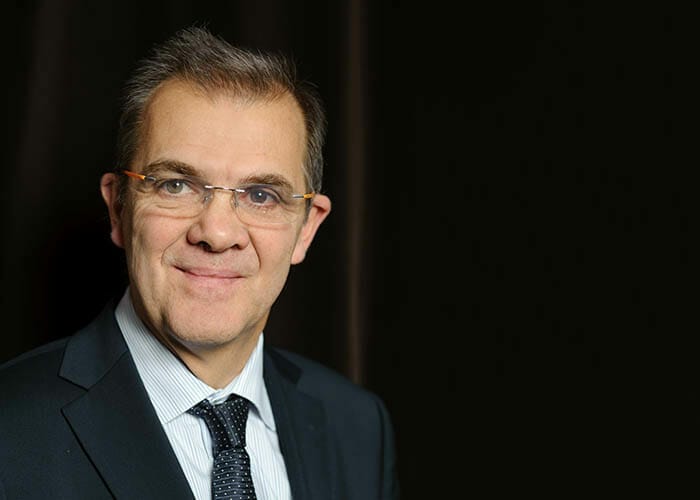
France’s fourth-biggest pension fund, Union Mutualiste Retraite (UMR) will slightly increase its allocation to cash, private equity, private debt and infrastructure in response to high valuations and the late cycle, director general Paul Le Bihan says, in an interview from the fund’s Nantes headquarters.

UMR, one of France’s few pension organisations, runs three separate funds, of which the €7.9 billion ($8.9 billion) Corem is the largest; with about 300,000 members, two-thirds of whom are still active, the fund has a healthy growth-seeking allocation comprising equity, property and infrastructure.

Real assets

Real assets, which Le Bihan favours for the diversification, liability hedging and duration benefits, account for about €900 million in the Corem portfolio – about 11.5 per cent of total assets. The lion’s share of the allocation is in real estate with the remaining 2 per cent in infrastructure. UMR has steadily increased its real-estate allocation over the last decade. In that time, it has also diversified from a bias towards residential housing in Paris, entering new allocations to assets such as hotels, healthcare, logistics and industrial centres.

The portfolio has also diversified assets among France, the rest of Europe and the US, although 70 per cent still remain in France. UMR is managed dynamically and includes direct investment with allocations to funds and funds-of-funds. A key priority through 2018 has been increasing direct real estate investments, which now make up about 40 per cent of the property portfolio, Le Bihan says.

UMR’s infrastructure portfolio dates from 2008. Strategy is focused on generating recurring long-term revenues in regulated markets, visible in its stakes in European telecoms infrastructure. Investments are split between funds (75 per cent) and funds of funds (25 per cent). Tried-and-trusted partners with good track records are favoured.

Sponsored Content

Diversification

UMR’s ability to build a diverse real assets allocation outside Europe is crimped by European regulation. Solvency II makes it costly for the French pension fund to invest overseas because of a perceived risk premium.

“Due to the cost of the Solvency II regulation, if we change the risk in the portfolio, our priority is to invest within the eurozone,” Le Bihan explains.

Other new rules President Emmanuel Macron has proposed for France’s pension system are also a cause for concern.

“We think the new rules for French pension funds’ ‘third pillar’ under discussion are not favourable to customers and could be dangerous for our asset liability management,” Le Bihan says.

Under the proposals, retirees will have an “open choice” of either a lump sum or annuity product in the decumulation phase. Le Bihan argues that lump sums should make up only a small proportion of assets during the decumulation phase, to ensure a lifelong income. He adds that the policy also threatens to reduce the fund’s liability horizon, which will damage asset performance.

Equity

Corem’s 18.3 per cent equity allocation is invested in two funds-of-funds UMR manages: the Select Europe fund and the UMR Select OECD. Allocations include European equities, US equities, frontier markets and emerging markets, along with a direct allocation to Chinese listed equities. Each fund-of-funds holds about 30-40 funds and strategy is counter-cyclical and value driven, shaped around different styles of active stockpicking using a broad range of asset managers.

About 4.4 per cent of Corem’s assets under management are invested in hedge funds and, as with equity, the UMR Select Alternative portfolio is all invested in funds-of-funds. Although Le Bihan says he is looking into some of the fund choices, he has no plans to change the allocation, which seeks to reduce the volatility from the equity portfolio. UMR has invested in hedge funds since 2002. The pension fund decides on a specific investment strategy internally, before selecting individual hedge funds with the help of its fund managers, as with the equity allocation.

UMR has an internal investment team of four. It has “premium relationships” and frequent contact with five asset managers but works with about 30 in all. The priority is to build long-term relationships based on mutual understanding and confidence.

“We are very selective, particularly for private debt and private equity,” he says.

UMR adjusts its targeted rate of return to market performance and reinforces the investment-grade side of the portfolio when risk levels increase. Despite the impact of low interest rates on the bond allocation, UMR returned 4 per cent in 2017. The pension fund is also improving ESG integration. It now excludes from its investment universe tobacco firms and companies selling firearms to civilians. It also signed the Principles for Responsible Investment this year.

Leave a Comment

Long term lens shields Colorado from private credit jitters

Long term lens shields Colorado from private credit jitters

As concerns in private credit mount, Colorado PERA CIO and COO Amy McGarrity says the pension fund isn’t seeing any strains in its growing allocation to the asset class, arguing that long-term investors are shielded from the risks because they can lock up their capital to weather market cycles.

Sort content by

Chicago Police fills alternatives allocation

The Policemen’s Annuity and Benefit Fund of Chicago has appointed GMO and PIMCO to global tactical asset allocation mandates boosting the fund’s alternatives allocation by 10 percentage points. mrec4inarticleinline Sponsored Content scnative1 scnative2 scnative3

OMERS uses patient capital for life cycle venture investing

OMERS has will capitalise on its ability to invest for the long-term and use the newly-launched venture capital arm to invest directly in the entire life cycle of a project. OMERS Ventures, which will be the avenue for the fund to invest directly in venture rather than through funds, is predicated on funding through the

CalSTRS positions for global volatility with allocation changes

The volatility in global markets has prompted the $154 billion CalSTRS to an underweight global equities position, moving assets into cash, its chief investment officer, Chris Ailman, said.mrec4inarticleinline Sponsored Content scnative1 scnative2 scnative3

QSuper looks beyond benchmarks in remaking investment strategy

QSuper is re-inventing itself. On the eve of marking a century, the $27 billion superannuation fund for Queensland public sector workers is redefining its investment beliefs and living them through a strategy that is purposefully different from those of its Australian peers. mrec4inarticleinline Sponsored Content scnative1 scnative2 scnative3

WSIB eschews administrivia for risk deep-dives

This summer the Washington State Investment Board will conduct two “deep dives” using its new risk tools to examine the portfolio exposure to US debt, and the impact of turmoil among the European Union. Executive director, Theresa Whitmarsh, discusses the board planning session, which will also include a review of the fund’s resource constraints.mrec4inarticleinline Sponsored

Investors see the forest for the trees

Timber is increasingly attractive for institutional investors as part of an alternatives exposure, with benefits including diversification and inflation-hedging. To date most of the investments have been in the US, but a new report predicts this will move to emerging countries including those in Asia, with consultants advising investors spread their timber exposures to capture

Previous



