
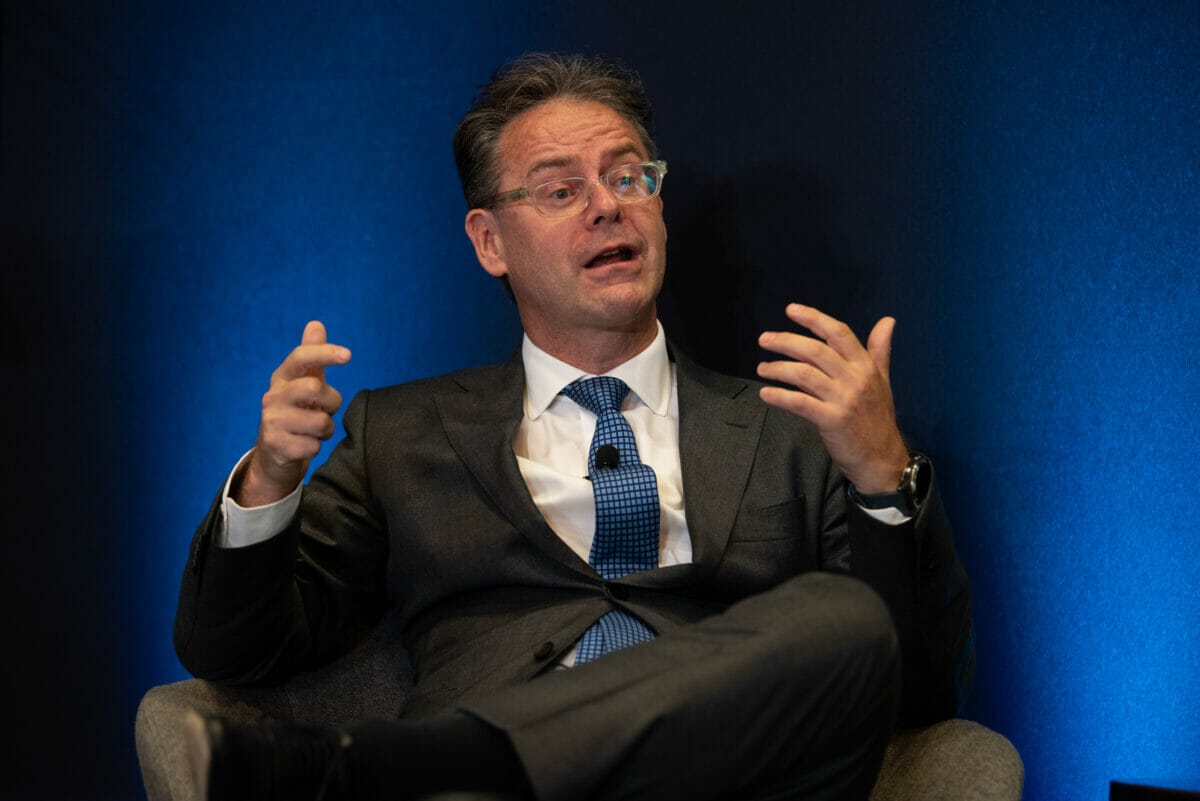

Evolving portfolio construction techniques that include more attention to liquidity management, diversification and resilience are needed in a macro environment that has more complexity and volatility delegates at the Fiduciary Investors Symposium at Stanford University heard. Investors from CalSTRS, CPP Investments and MFS share their approach.
Evolving portfolio construction techniques that include more attention to liquidity management, diversification and resilience are needed in a macro environment that has more complexity and volatility.
Delegates at the Fiduciary Investors Symposium at Stanford University heard that inflation, geopolitical risk, and climate are contributors to a more complex environment that has a broader range of outcomes, dictating an evolving approach to portfolio construction.
Derek Walker, head of portfolio design and construction at CPP Investments and Geraldine Jimenez, senior investment director at CalSTRS both said that liquidity management was top of mind.
For CalSTRS it was focused on the funded status and the maturity of the plan and a larger allocation to private markets than ever before.
For CPP the focus on liquidity is to ensure “as much capital is put to work as possible”.
“Our focus on liquidity is quite intense, not because of cashflow needs but because we want to allocate as much as we can to active programs and that they are allocated as efficiently as possible,” Walker says.
The panel, which also included Benoit Anne (pictured), managing director of fixed income solutions at MFS, participated in a conversation about diversification that was anchored around liquidity and equity bond correlations.
CPP Investments has built its investment strategy on “three big planks” with one of those constructing resilient portfolios.
“Correlations are such a crucial part of diversification and something we have been trying to augment, in terms of, for example, adding inflation sensitive assets.”
Similarly, CalSTRS has added inflation-sensitive assets, a risk-mitigating strategy, and private credit.
With investors looking for a strategy to truly provide diversification, MFS’s Anne proffered the return of fixed income as an alternative to alternatives.
“I’m really excited about the comeback of fixed income as an interesting asset class after years of risking falling into oblivion,” he told delegates, pointing to duration risk in particular.
He said the analysis of macro regimes was a very important pillar of the investment process and was ecstatic to be moving away from the era of quantitative easing. Monetary policy, he said, was “back as a powerful policy tool” going forward.
“We are moving away from the fear of the Fed that was very toxic and painful for most investors for the past few quarters,” he said.
“Thank god we are exiting this long era of QE, which came with a lot of collateral damage and distortions and we are now facing the luxury of some sort of normalisation, the old normal. It is very good news, we are embracing the shift away from QE.”
Anne said there was definitely a shift to more complexity and higher uncertainty which was a favourable environment for fixed income.
“I think public fixed income provides one way to manage that complexity after the repricing because fixed income is back as a volatility management tool and return generator.”








Leave a Comment
You must be logged in to post a comment.
Login