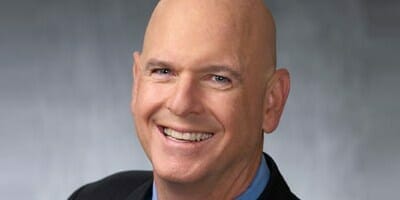
The year that was, a CIO’s perspective

The downgrade of the US took the entire industry by surprise, in a year that confirmed the complexity and unpredictability of markets, CalSTRS chief investment officer, Christopher Ailman, says.

“The entire financial services industry was underweight US Treasuries. We were short duration and underweight sovereign debt. But it turned out it would have been the best decision to be long US debt,” he says.

“It has been a humbling year, we thought we were in a slow recovery, but that completely stalled and for much of the second half of the year we faced the prospect of a double dip.”

Ailman says his team started the year with conviction that inflation would be a key issue for 2011 and had an underweight position in fixed income and a commitment to invest in inflation-sensitive assets.

He says one of the best investment decisions he made this year was to build up the TIPS portfolio, but not because of inflation, because yields were lower.

The decision to be a bit more tactical on asset allocation also paid off for the fund, he says, with a neutral position in global equities from the middle of the year, an example.

Sponsored Content

CalSTRS’ investment team had a creative year working on a number of new initiatives and long-term projects such as the risk overlay, which it will continue to integrate into its investment process next year.

“Diversification is still the centre piece, still our main risk tool, but we need additional tools,” he says.

The fund also created an innovation group and Ailman says the expansion of the investment universe to include opportunities such as micro finance, commodities and global macro hedge funds, has been very interesting.

Ailman says “austerity” will be the key word for 2012, with countries unable to grow their way out of the crisis.

“Austerity is not good for GDP growth, we will have low GDP this year and next,” he says.

With this in mind the fund is debating its equity position, with Ailman’s preference for a neutral position, and will also look at weighting public markets differently.

Ailman says there will be pockets of opportunity in 2012 and that “next year will lend itself more to active management”.

“We have flexibility around our active/passive ranges but will be tilting our portfolio more towards active.”

The best decision for next year will be trying to buy stable cash flows, in whatever form that appears, he says.




Leave a Comment

Sort content by

Investors must collaborate to innovate

Institutional investors are sheltered by competition, which in some instances can be beneficial, but it also means they are shielded from competitive forces that drive innovation. A new paper by Gordon Clark and Ashby Monk, looks at why the current model of either insourcing or outsourcing investment management doesn’t allow for innovation, and the models

Mercer’s plan for integrating ESG

How to implement ESG into portfolio construction and implementation is an ongoing challenge for asset owners. Mercer has come up with a number of strategies including the best way to use ESG ratings, active ownership, and tailored strategies that play to sustainability themes, including its own unlisted investment solution. Amanda White spoke to Jane Ambachtsheer,

PRI governance review to look at differential rights

The PRI has received many queries following the move by six Danish funds to abdicate as signatories over governance concerns. The association is holding a governance review that among other things will discuss the prospect of differential rights among signatories.   When six Danish funds, with a combined $300 billion, decided to leave the PRI

A trustee guide to factor investing

This research by academics at Tilburg University and the VU University Amsterdam, looks at the hurdles of implementing factor investing. It translates those into a checklist for implementing factor investing. The research, conducted for Robeco, finds that three approaches to factor investing are emerging and conducts case studies to examine how these approaches are implemented

Blackrock looks favourably on equities

Blackrock has a favourable view on equities, relative to bonds, but within fixed income it advocates an unconstrained approach. Amanda White spoke to chief investment strategist, Russ Koesterich.   Equities look cheap relative to bonds or cash, says chief investment strategist for Blackrock and iShares chief global investment strategist, Russ Koesterich, with the manager recommending

Howard Marks on alpha and making money

“It used to be easier to make money,” Oaktree Capital Management founder and chairman, Howard Marks muses as he discusses meeting the demands and goals of his clients in 2014. Marks is an avid communicator, and has been writing memos to clients for 24 years. The result is his book “The Most Important Thing”, which

Previous



