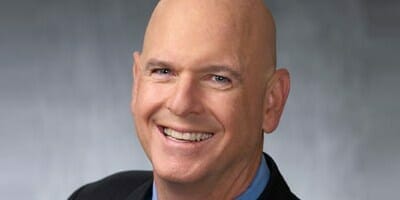
The year that was, a CIO’s perspective

The downgrade of the US took the entire industry by surprise, in a year that confirmed the complexity and unpredictability of markets, CalSTRS chief investment officer, Christopher Ailman, says.

“The entire financial services industry was underweight US Treasuries. We were short duration and underweight sovereign debt. But it turned out it would have been the best decision to be long US debt,” he says.

“It has been a humbling year, we thought we were in a slow recovery, but that completely stalled and for much of the second half of the year we faced the prospect of a double dip.”

Ailman says his team started the year with conviction that inflation would be a key issue for 2011 and had an underweight position in fixed income and a commitment to invest in inflation-sensitive assets.

He says one of the best investment decisions he made this year was to build up the TIPS portfolio, but not because of inflation, because yields were lower.

The decision to be a bit more tactical on asset allocation also paid off for the fund, he says, with a neutral position in global equities from the middle of the year, an example.

Sponsored Content

CalSTRS’ investment team had a creative year working on a number of new initiatives and long-term projects such as the risk overlay, which it will continue to integrate into its investment process next year.

“Diversification is still the centre piece, still our main risk tool, but we need additional tools,” he says.

The fund also created an innovation group and Ailman says the expansion of the investment universe to include opportunities such as micro finance, commodities and global macro hedge funds, has been very interesting.

Ailman says “austerity” will be the key word for 2012, with countries unable to grow their way out of the crisis.

“Austerity is not good for GDP growth, we will have low GDP this year and next,” he says.

With this in mind the fund is debating its equity position, with Ailman’s preference for a neutral position, and will also look at weighting public markets differently.

Ailman says there will be pockets of opportunity in 2012 and that “next year will lend itself more to active management”.

“We have flexibility around our active/passive ranges but will be tilting our portfolio more towards active.”

The best decision for next year will be trying to buy stable cash flows, in whatever form that appears, he says.




Leave a Comment

Sort content by

Investors x embrace ethics

More than half of the world’s largest sovereign wealth funds, and around a third of the largest US state pension funds, have a disclosed code of ethics for their staff. According to the Public Fund Investment Policies 2015 annual review produced by the Ohio State University Moritz College of Law, a code of ethics helps

Shared fund objectives key to investor success

The practice of benchmarking the salaries of senior executives of institutional funds with reference to external financial services firms, instead of the shared objectives of the fund, is a major barrier to their success, according to Professor Gordon Clark of Oxford University and director of Smith School of Enterprise and the Environment. Clark sees the

PGGM halves CO2 footprint in investments

Ahead of the COP21 in Paris, the second largest Dutch fund with €161 billion ($160 billion), Pensioenfonds Zorg en Welzijn (PFZW), has announced it will halve the CO2 footprint of its investments by 2020. After an in-depth study with its fund manager, PGGM, the fund has decided its capital should be focused on companies that

Mercer’s seven tools for risk management reflect evolving landscape

Mercer Investments is using its deep insurance and environmental, social and governance (ESG) skills, contacts and processes to evolve its tools for advising clients on investment risk assessment, analysis and reporting – a move that reflects the evolving landscape for risk faced by investors. Partner and global head of responsible investment at Mercer, Jane Ambachtsheer,

OTPP advises on climate risk mitigation

Ontario Teachers’ Pension Plan (OTPP), an investor known for its advanced risk-management tools and processes, considers that the common tools available to investors to mitigate carbon risk for investors – portfolio carbon footprints and thematic divestment – provide incomplete risk management. The fund has suggested macro- and microanalysis is necessary to understand a company’s complete

PRI to consider new principle focusing on systemic risks

The UN-backed Principles for Responsible Investment (PRI) is considering a seventh principle that will focus on broad financial system systemic risks. The six principles were written before the global financial crisis and are focused on environmental, social and governance (ESG) integration. Now, a decade after their creation, consideration of systemic risks is on the agenda and

Previous



