Sustainability among key industry’s tagged for China’s growth

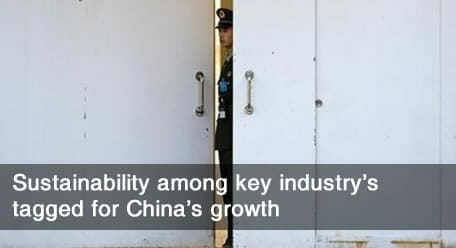
It’s not very salubrious but it’s secure. The four-star Jingxi Hotel in Beijing (pictured), which is owned by the People’s Liberation Army, hosted the annual plenum of the Communist Party’s Central Committee to draft the country’s next five-year plan.

The 12th five-year plan, nutted out by about 300 committee members, will be put to the National People’s Congress in March for ratification. The key themes in the latest plan are sustainability and reducing inequalities between provinces.

Analysts are predicting a lower GDP-growth target to be discussed between now and March, with details of the plan coinciding with a surprise 25bps point rise in the official interest rate last week – the first in China for three years.

A research note from HSBC Global Banking and Markets says more growth is likely to have to come from private consumption which has dropped from 50 per cent of total GDP to an estimated 36 per cent in the past 20 years.

“Expect further efforts to boost household incomes, primarily through higher minimum wages, as well as lower personal taxes,” the bank says.

Notwithstanding the stated concern for poorer provinces, the latest plan intends to speed the demographic shift to the cities, which will further boost consumption.

Sponsored Content

After the meeting, the Government confirmed a list of emerging strategic industries to be at the forefront of a “higher quality” of economic growth. They are: energy-saving and environmental protection firms, next generation IT, biotech, high-end manufacturing, new energy, new materials and composites, and clean-energy cars.

According to Shanghai Securities News, the group of industries currently make up only 3 per cent of GDP but are expected to contribute at least 15 per cent by 2020.


Leave a Comment

Sort content by

Australian pension funds face greater governance and investment regulations

Australian pension funds will face a greater scrutiny of their corporate governance and risk management policies that will impact investment decisions in sweeping government changes released yesterday.mrec4inarticleinline Sponsored Content scnative1 scnative2 scnative3

Derivatives supervision helps in fight for right to food

The International Organisation of Securities Commissions (IOSCO) released principles for regulation and supervision of commodity derivatives markets last week. Effective supervision of these markets is necessary to avoid even the prospect that derivatives contribute to speculative price bubbles in commodities, which can increase the number of people driven into hunger.mrec4inarticleinline Sponsored Content scnative1 scnative2 scnative3

ICGN sets sights on emerging markets expansion

The International Corporate Governance Network’s (ICGN) first board appointee from the Middle East, Dr Nasser Saidi, says he wants to push for a new focus on emerging markets within the investor-led organisation that represents more than $18 trillion of assets.mrec4inarticleinline Sponsored Content scnative1 scnative2 scnative3

Investors need to look beyond current crisis and plan for future inflation risk

Investors should be looking past a “safe haven mentality” and be structuring their portfolios to deal with the possibility of a looming risk of inflation in the longer term, says Ed Britton, Towers Watson’s global head of fixed income manager research.mrec4inarticleinline Sponsored Content scnative1 scnative2 scnative3

Union leader calls for investors to drive new green future

Institutional investors need to move beyond “bombastic support” of ESG issues, says the head of the world’s peak trade union organisation.

Sea change at Timor-Leste’s SWF manager

The manager of Timor-Leste’s $8.3 billion sovereign wealth fund, the Banking and Payments Authority (BPA), was inaugurated as the island nation’s central bank on Monday.mrec4inarticleinline Sponsored Content scnative1 scnative2 scnative3

Previous



