Sustainability among key industry’s tagged for China’s growth

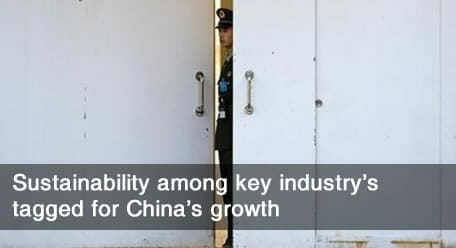
It’s not very salubrious but it’s secure. The four-star Jingxi Hotel in Beijing (pictured), which is owned by the People’s Liberation Army, hosted the annual plenum of the Communist Party’s Central Committee to draft the country’s next five-year plan.

The 12th five-year plan, nutted out by about 300 committee members, will be put to the National People’s Congress in March for ratification. The key themes in the latest plan are sustainability and reducing inequalities between provinces.

Analysts are predicting a lower GDP-growth target to be discussed between now and March, with details of the plan coinciding with a surprise 25bps point rise in the official interest rate last week – the first in China for three years.

A research note from HSBC Global Banking and Markets says more growth is likely to have to come from private consumption which has dropped from 50 per cent of total GDP to an estimated 36 per cent in the past 20 years.

“Expect further efforts to boost household incomes, primarily through higher minimum wages, as well as lower personal taxes,” the bank says.

Notwithstanding the stated concern for poorer provinces, the latest plan intends to speed the demographic shift to the cities, which will further boost consumption.

Sponsored Content

After the meeting, the Government confirmed a list of emerging strategic industries to be at the forefront of a “higher quality” of economic growth. They are: energy-saving and environmental protection firms, next generation IT, biotech, high-end manufacturing, new energy, new materials and composites, and clean-energy cars.

According to Shanghai Securities News, the group of industries currently make up only 3 per cent of GDP but are expected to contribute at least 15 per cent by 2020.


Leave a Comment

Sort content by

HF investments to reach pre-crisis heights

Despite ongoing uncertainty facing the world economy, institutional investors are planning to increase their allocations to alternative assets, with alternative asset researcher Preqin predicting the hedge fund industry could rebound next year to pre-global financial crisis (GFC) levels.mrec4inarticleinline Sponsored Content scnative1 scnative2 scnative3

Tips for looking under a manager’s kimono

Trouble-shooting consultant, Jim Ware, who has worked with the likes of Texas Teachers and Cornell University, gives his tips on selecting managers and as well as how to deal with the “investment” personality type, which makes up only 5 per cent of the population.mrec4inarticleinline Sponsored Content scnative1 scnative2 scnative3

UN fund increases indirect exposure

The $38 billion United Nations Joint Staff Pension Fund (UNJSPF) has begun to implement the recommendations of the Hewitt Ennis Knupp asset-liability study which, among other things, recommended higher allocations to indirect assets, emerging markets and private equity.mrec4inarticleinline Sponsored Content scnative1 scnative2 scnative3

Public funds stick to aggressive targets

As US public pension funds grapple with the thorny question of what is an achievable rate of return, a survey of 126 public pension funds has revealed the median actuarial rate of return remains at 8 per cent.mrec4inarticleinline Sponsored Content scnative1 scnative2 scnative3

Sustainability in members interest academic says

Asset owners have a responsibility to consider whether their investment strategies are potentially damaging to long-term sustainable wealth creation and are, therefore, not in the best interests of beneficiaries, Harvard University’s David Wood says.mrec4inarticleinline Sponsored Content scnative1 scnative2 scnative3

Sustainability boosts company performance

A study of the performance of companies over an 18-year period has found that high-sustainability companies out perform low-sustainability companies and have lower volatility.mrec4inarticleinline Sponsored Content scnative1 scnative2 scnative3

Previous



