Sustainability among key industry’s tagged for China’s growth

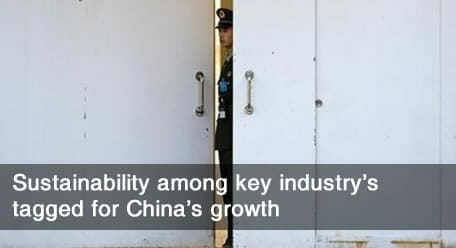
It’s not very salubrious but it’s secure. The four-star Jingxi Hotel in Beijing (pictured), which is owned by the People’s Liberation Army, hosted the annual plenum of the Communist Party’s Central Committee to draft the country’s next five-year plan.

The 12th five-year plan, nutted out by about 300 committee members, will be put to the National People’s Congress in March for ratification. The key themes in the latest plan are sustainability and reducing inequalities between provinces.

Analysts are predicting a lower GDP-growth target to be discussed between now and March, with details of the plan coinciding with a surprise 25bps point rise in the official interest rate last week – the first in China for three years.

A research note from HSBC Global Banking and Markets says more growth is likely to have to come from private consumption which has dropped from 50 per cent of total GDP to an estimated 36 per cent in the past 20 years.

“Expect further efforts to boost household incomes, primarily through higher minimum wages, as well as lower personal taxes,” the bank says.

Notwithstanding the stated concern for poorer provinces, the latest plan intends to speed the demographic shift to the cities, which will further boost consumption.

Sponsored Content

After the meeting, the Government confirmed a list of emerging strategic industries to be at the forefront of a “higher quality” of economic growth. They are: energy-saving and environmental protection firms, next generation IT, biotech, high-end manufacturing, new energy, new materials and composites, and clean-energy cars.

According to Shanghai Securities News, the group of industries currently make up only 3 per cent of GDP but are expected to contribute at least 15 per cent by 2020.


Leave a Comment

Sort content by

Swiss investors on the hunt for alternatives

A company pension fund might not be the first place you would think of applying for a mortgage. According to Matthias Weber, a partner at Zurich consultancy ifund services, the issuance of mortgages by investors is likely to deepen as Swiss pension funds continue on their quest to find good alternative assets. Weber has just

Real estate the object of desire for UK funds

United Kingdom pension funds will increase their real estate allocations as bond and equity investments continue to disappoint, according to new research by property consultancy Jones Lang Lasalle. The funds typically hold around 5 per cent of their assets in real estate, but the recent findings predict the pendulum will swing in favour of much

CFA Institute survey reveals ethical vacuum leads to lack of trust

An absence of appropriate ethical culture at financial services firms has been the biggest contributor to the lack of trust in the finance industry, according to a global survey of CFA Institute members, which attracted more than 6000 responses. Matt Orsagh, director of capital markets policy at CFA Institute, says to restore integrity in global

EDHEC: a bridge to practical portfolio construction

The new chairman of EDHEC-Risk Institute’s international advisory board, chief investment strategist at Swedish pension fund AP2, Tomas Franzen, says institutional investors should embrace academia and be open to applying research in the implementation of practical portfolio construction. He says that while investing is part art and part science, it is important to employ science

Fund “heads in sand” on climate risk

An Australian superannuation fund with A$6.6 billion ($6.9 billion) under management has achieved number-one ranking in a global survey of how the world’s top 1000 retirement funds, insurance companies and sovereign wealth funds are responding to climate risk. Sydney-based Local Government Super (LGS) has received the top ranking in the inaugural Climate Index of the

BFP to boost UK economy

In a policy to galvanise pension fund assets to help boost its ailing economy, the UK government wants funds to invest in small and medium-sized businesses. As part of its Business Finance Partnership (BFP), it has named four asset managers to run specialist funds backed by pooled government and private capital. The funds will invest

Previous



