Sustainability among key industry’s tagged for China’s growth

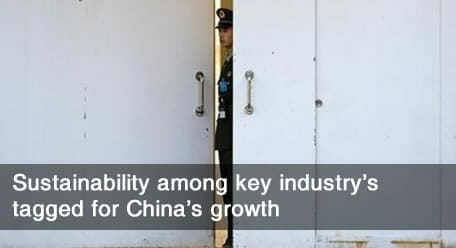
It’s not very salubrious but it’s secure. The four-star Jingxi Hotel in Beijing (pictured), which is owned by the People’s Liberation Army, hosted the annual plenum of the Communist Party’s Central Committee to draft the country’s next five-year plan.

The 12th five-year plan, nutted out by about 300 committee members, will be put to the National People’s Congress in March for ratification. The key themes in the latest plan are sustainability and reducing inequalities between provinces.

Analysts are predicting a lower GDP-growth target to be discussed between now and March, with details of the plan coinciding with a surprise 25bps point rise in the official interest rate last week – the first in China for three years.

A research note from HSBC Global Banking and Markets says more growth is likely to have to come from private consumption which has dropped from 50 per cent of total GDP to an estimated 36 per cent in the past 20 years.

“Expect further efforts to boost household incomes, primarily through higher minimum wages, as well as lower personal taxes,” the bank says.

Notwithstanding the stated concern for poorer provinces, the latest plan intends to speed the demographic shift to the cities, which will further boost consumption.

Sponsored Content

After the meeting, the Government confirmed a list of emerging strategic industries to be at the forefront of a “higher quality” of economic growth. They are: energy-saving and environmental protection firms, next generation IT, biotech, high-end manufacturing, new energy, new materials and composites, and clean-energy cars.

According to Shanghai Securities News, the group of industries currently make up only 3 per cent of GDP but are expected to contribute at least 15 per cent by 2020.


Leave a Comment

Sort content by

CFA to lead industry out of crisis

Protecting the pension system is one of six key themes at the centre of the CFA Institute’s Future of Finance initiative as it aims to empower the investment industry to take leadership in restoring trust. Speaking at the sixty-sixth annual CFA Institute conference in Singapore this week, president and chief executive of the CFA Institute,

Tail risk parity, V 1.0

Just when you thought you were safe, the next reiteration of risk parity has arrived. AllianceBernstein’s tail risk parity takes the concept of risk parity, reallocating assets uniformly according to risk, but it uses tail risk, not volatility, as the core measure. The concept of risk parity is a portfolio diversified according to risk, rather

Retirement: a cause worth working on

There are two things that drive the newly appointed global chief operating officer of State Street Global Advisors, Greg Ehret, in his bid to improve the client experience: the retirement business is a cause worth working on and the clients are the reason the business exists. Ehret was appointed to the new position at SSgA,

Pension funds, where banks no longer go?

There continues to be potential for pension capital appearing where bank lending no longer wants to go. Commentators in the UK and continental Europe have heightened expectations that pension funds will step in to help fill the continent’s bank financing gap. Societe Generale, for instance, recently predicted further “disintermediation” by investors sidestepping banks and looking

Building consensus for investment beliefs at CalPERS

An investment-beliefs workshop for the CalPERS board, held in April, revealed five areas, including active management, where the views of the board and staff lacked consensus. The contentious, or unsettled, topics for discussion were active management, private asset classes, sustainability (environmental, social and governance), investment performance targets and stakeholder considerations. At the board workshop, Janine

Behind PGGM’s ESG index

In 2010 PGGM conducted a study to see if it was possible to reduce the number of companies it invested in from 4000 to 400, based on its environmental, social and governance leanings, and still maintain it’s beta risk/return profile. The idea was that the €133-billion ($174-billion) fund would better know and understand what it

Previous



