Sustainability among key industry’s tagged for China’s growth

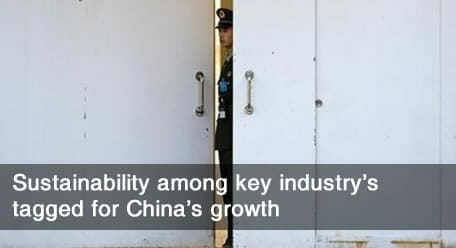
It’s not very salubrious but it’s secure. The four-star Jingxi Hotel in Beijing (pictured), which is owned by the People’s Liberation Army, hosted the annual plenum of the Communist Party’s Central Committee to draft the country’s next five-year plan.

The 12th five-year plan, nutted out by about 300 committee members, will be put to the National People’s Congress in March for ratification. The key themes in the latest plan are sustainability and reducing inequalities between provinces.

Analysts are predicting a lower GDP-growth target to be discussed between now and March, with details of the plan coinciding with a surprise 25bps point rise in the official interest rate last week – the first in China for three years.

A research note from HSBC Global Banking and Markets says more growth is likely to have to come from private consumption which has dropped from 50 per cent of total GDP to an estimated 36 per cent in the past 20 years.

“Expect further efforts to boost household incomes, primarily through higher minimum wages, as well as lower personal taxes,” the bank says.

Notwithstanding the stated concern for poorer provinces, the latest plan intends to speed the demographic shift to the cities, which will further boost consumption.

Sponsored Content

After the meeting, the Government confirmed a list of emerging strategic industries to be at the forefront of a “higher quality” of economic growth. They are: energy-saving and environmental protection firms, next generation IT, biotech, high-end manufacturing, new energy, new materials and composites, and clean-energy cars.

According to Shanghai Securities News, the group of industries currently make up only 3 per cent of GDP but are expected to contribute at least 15 per cent by 2020.


Leave a Comment

Sort content by

Investors x embrace ethics

More than half of the world’s largest sovereign wealth funds, and around a third of the largest US state pension funds, have a disclosed code of ethics for their staff. According to the Public Fund Investment Policies 2015 annual review produced by the Ohio State University Moritz College of Law, a code of ethics helps

Shared fund objectives key to investor success

The practice of benchmarking the salaries of senior executives of institutional funds with reference to external financial services firms, instead of the shared objectives of the fund, is a major barrier to their success, according to Professor Gordon Clark of Oxford University and director of Smith School of Enterprise and the Environment. Clark sees the

PGGM halves CO2 footprint in investments

Ahead of the COP21 in Paris, the second largest Dutch fund with €161 billion ($160 billion), Pensioenfonds Zorg en Welzijn (PFZW), has announced it will halve the CO2 footprint of its investments by 2020. After an in-depth study with its fund manager, PGGM, the fund has decided its capital should be focused on companies that

Mercer’s seven tools for risk management reflect evolving landscape

Mercer Investments is using its deep insurance and environmental, social and governance (ESG) skills, contacts and processes to evolve its tools for advising clients on investment risk assessment, analysis and reporting – a move that reflects the evolving landscape for risk faced by investors. Partner and global head of responsible investment at Mercer, Jane Ambachtsheer,

OTPP advises on climate risk mitigation

Ontario Teachers’ Pension Plan (OTPP), an investor known for its advanced risk-management tools and processes, considers that the common tools available to investors to mitigate carbon risk for investors – portfolio carbon footprints and thematic divestment – provide incomplete risk management. The fund has suggested macro- and microanalysis is necessary to understand a company’s complete

PRI to consider new principle focusing on systemic risks

The UN-backed Principles for Responsible Investment (PRI) is considering a seventh principle that will focus on broad financial system systemic risks. The six principles were written before the global financial crisis and are focused on environmental, social and governance (ESG) integration. Now, a decade after their creation, consideration of systemic risks is on the agenda and

Previous



