Sustainability among key industry’s tagged for China’s growth

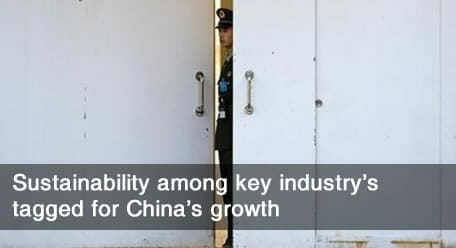
It’s not very salubrious but it’s secure. The four-star Jingxi Hotel in Beijing (pictured), which is owned by the People’s Liberation Army, hosted the annual plenum of the Communist Party’s Central Committee to draft the country’s next five-year plan.

The 12th five-year plan, nutted out by about 300 committee members, will be put to the National People’s Congress in March for ratification. The key themes in the latest plan are sustainability and reducing inequalities between provinces.

Analysts are predicting a lower GDP-growth target to be discussed between now and March, with details of the plan coinciding with a surprise 25bps point rise in the official interest rate last week – the first in China for three years.

A research note from HSBC Global Banking and Markets says more growth is likely to have to come from private consumption which has dropped from 50 per cent of total GDP to an estimated 36 per cent in the past 20 years.

“Expect further efforts to boost household incomes, primarily through higher minimum wages, as well as lower personal taxes,” the bank says.

Notwithstanding the stated concern for poorer provinces, the latest plan intends to speed the demographic shift to the cities, which will further boost consumption.

Sponsored Content

After the meeting, the Government confirmed a list of emerging strategic industries to be at the forefront of a “higher quality” of economic growth. They are: energy-saving and environmental protection firms, next generation IT, biotech, high-end manufacturing, new energy, new materials and composites, and clean-energy cars.

According to Shanghai Securities News, the group of industries currently make up only 3 per cent of GDP but are expected to contribute at least 15 per cent by 2020.


Leave a Comment

Sort content by

Securities body ramps up risk surveillance

Securities watchdog, the International Organization of Securities Commissions (IOSCO), has revamped its structure to better identify market risks and develop regulatory standards for capital markets.mrec4inarticleinline Sponsored Content scnative1 scnative2 scnative3

Should I Stay or Should I Go?

A discussion paper by APG’s Roderick Molenaar, and Tilburg University’s Kim Peijnenburg and Eduard Ponds, looks at whether a low funding ratio of a pension fund can creative incentives for individuals to leave this fund. mrec4inarticleinline Sponsored Content scnative1 scnative2 scnative3

Underfunded pensions mauled in bearpit of expectations

It’s not until you’re actually in the country that the real depth of the funding problem in US state pension plans becomes clear, as does the truly arduous environments that the investment professionals at those funds are operating within.mrec4inarticleinline Sponsored Content scnative1 scnative2 scnative3

Rational agents can upset asset-pricing paradigm

In contrast to the standard paradigm about momentum and reversal in markets being caused by agents reacting wrongly, new research shows that these phenomena can arise in markets with rational agents.mrec4inarticleinline Sponsored Content scnative1 scnative2 scnative3

Callan sticks to the long-term knitting

Unfortunately, from a journalist’s point of view at least, there is nothing new or radical about the investment principles that president and head of research at Callan, Greg Allen (pictured), is touting. He says investors should stick with the status quo of long-term, stable strategic asset allocation regardless of the recent market turmoil challenging investors.mrec4inarticleinline

CalPERS implements new RFP process for global equities

CalPERS will implement a new RFP process for global equities, which is more consistent with the transformation of its global equities portfolio and the desire to assess every strategy, than its current Spring Fed Pool system, Eric Baggesen, senior investment officer of global equities said.mrec4inarticleinline Sponsored Content scnative1 scnative2 scnative3

Previous



