Sustainability among key industry’s tagged for China’s growth

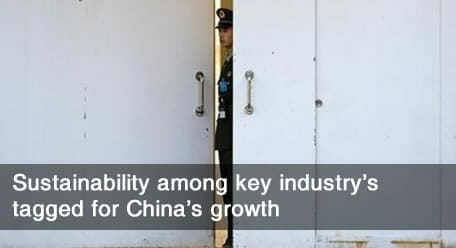
It’s not very salubrious but it’s secure. The four-star Jingxi Hotel in Beijing (pictured), which is owned by the People’s Liberation Army, hosted the annual plenum of the Communist Party’s Central Committee to draft the country’s next five-year plan.

The 12th five-year plan, nutted out by about 300 committee members, will be put to the National People’s Congress in March for ratification. The key themes in the latest plan are sustainability and reducing inequalities between provinces.

Analysts are predicting a lower GDP-growth target to be discussed between now and March, with details of the plan coinciding with a surprise 25bps point rise in the official interest rate last week – the first in China for three years.

A research note from HSBC Global Banking and Markets says more growth is likely to have to come from private consumption which has dropped from 50 per cent of total GDP to an estimated 36 per cent in the past 20 years.

“Expect further efforts to boost household incomes, primarily through higher minimum wages, as well as lower personal taxes,” the bank says.

Notwithstanding the stated concern for poorer provinces, the latest plan intends to speed the demographic shift to the cities, which will further boost consumption.

Sponsored Content

After the meeting, the Government confirmed a list of emerging strategic industries to be at the forefront of a “higher quality” of economic growth. They are: energy-saving and environmental protection firms, next generation IT, biotech, high-end manufacturing, new energy, new materials and composites, and clean-energy cars.

According to Shanghai Securities News, the group of industries currently make up only 3 per cent of GDP but are expected to contribute at least 15 per cent by 2020.


Leave a Comment

Sort content by

Mercer goes global and adds more to plate

Two new global roles have been added to Mercer’s investment business executive suite, with Russell Clarke appointed global chief investment officer of mainstream assets, and Cara Williams global head of wealth management.mrec4inarticleinline Sponsored Content scnative1 scnative2 scnative3

Carbon is next bubble, warns report

Capital markets may be creating a so-called carbon bubble by mispricing known fossil fuel reserves as assets, leaving investors with a systematic risk to their portfolios, new research claims.mrec4inarticleinline Sponsored Content scnative1 scnative2 scnative3

Robin Hood had it so simple

A Maid Marian of sorts, I like the idea of taking from the rich to give to the poor, and I certainly believe in a low-carbon economy, so it’s pleasing to see momentum building for the causes behind a financial transaction tax in Europe and the UK. But I’m not convinced such a tax is

Is this the beginning of real reform in NY?

New York Governor, Andrew Cuomo, has introduced a reform agenda for the $140 billion State Common Retirement Fund in a bid to reduce the burden of its liabilities on taxpayers, but there is no sign of fulfilling his election promise of changing the governance structure of the fund. mrec4inarticleinline Sponsored Content scnative1 scnative2 scnative3

Columbia students solve governance problems

Financial studies students at one of New York’s most-respected business schools, Columbia Business School, are asked to suggest a new governance model for the State Common Retirement Fund, as its current model of a single trustee is held up to be “the worst example of governance” in a large pension fund in the developed world

Bespoke is the new black of risk management

Risk management is the new black – never out of fashion and always reliable. Russell Investments’ director of investment strategy, Canada, Bruce Curwood, explains why risk management is the cornerstone of investing and why now is the perfect time to talk to fiduciaries about their governance structures.mrec4inarticleinline Sponsored Content scnative1 scnative2 scnative3

Previous



