Sustainability among key industry’s tagged for China’s growth

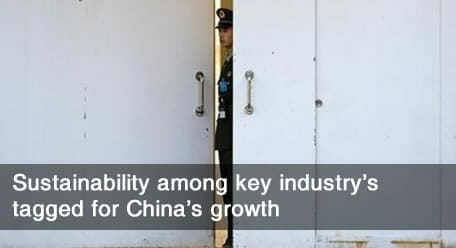
It’s not very salubrious but it’s secure. The four-star Jingxi Hotel in Beijing (pictured), which is owned by the People’s Liberation Army, hosted the annual plenum of the Communist Party’s Central Committee to draft the country’s next five-year plan.

The 12th five-year plan, nutted out by about 300 committee members, will be put to the National People’s Congress in March for ratification. The key themes in the latest plan are sustainability and reducing inequalities between provinces.

Analysts are predicting a lower GDP-growth target to be discussed between now and March, with details of the plan coinciding with a surprise 25bps point rise in the official interest rate last week – the first in China for three years.

A research note from HSBC Global Banking and Markets says more growth is likely to have to come from private consumption which has dropped from 50 per cent of total GDP to an estimated 36 per cent in the past 20 years.

“Expect further efforts to boost household incomes, primarily through higher minimum wages, as well as lower personal taxes,” the bank says.

Notwithstanding the stated concern for poorer provinces, the latest plan intends to speed the demographic shift to the cities, which will further boost consumption.

Sponsored Content

After the meeting, the Government confirmed a list of emerging strategic industries to be at the forefront of a “higher quality” of economic growth. They are: energy-saving and environmental protection firms, next generation IT, biotech, high-end manufacturing, new energy, new materials and composites, and clean-energy cars.

According to Shanghai Securities News, the group of industries currently make up only 3 per cent of GDP but are expected to contribute at least 15 per cent by 2020.


Leave a Comment

Sort content by

Complexity: thinking ahead

Complexity is, well complex. And as trite as that sounds, it’s something investors, even professional investors, don’t understand well enough, according to Tim Hodgson, head of the Thinking Ahead Group at Towers Watson. The Thinking Ahead Group (TAG), as has been reported here before, gets paid to think – a gig conexust1f.flywheelstaging.com is envious of.

Study finds greenness equals performance

There is a positive correlation between the investment performance of REITs and the “greenness” of their portfolio holdings, according to a new paper by Maastricht University’s Piet Eichholtz, Nils Kok and Erkan Yonder. The paper – Portfolio greenness and the financial performance of REITs – finds that investment performance of REITs is positively related to

Benchmarking ESG changes behaviour

The power of benchmarking funds on sustainability is demonstrated by the fact 171 property companies and funds surveyed in the 2012 GRESB benchmarking report reduced GHG emissions by 6 per cent – this is a reduction of 432,000 metric tons of CO2, the equivalent of removing 85,000 cars from the road. The Global Real Estate

Taking RI from in-house to front of mind

The industry needs to be better at thinking how responsible investing can be accessed by smaller funds or those lacking sufficient internal resources, David Russell, co-head of responsible investment at the UK’s Universities Superannuation Scheme, says. Russell, who will join a panel at the Fiduciary Investors Symposium in Santa Monica produced by Conexus Financial, publisher

In-house not for
every house: WSIB

While the trend for most large institutional investors is to insource asset management, the $85-billion Washington State Investment Board (WSIB) has decided to take a different path. Much-cited CEM Benchmarking research shows that funds with internal-management platforms are better performers after cost, and this is largely driven by the lower costs of internal management. Many

Three-way shift in investor behaviour

There are three major behavioural shifts occurring among investors that will have significant impact on asset allocation in the next 10 years, according to a year-long study by global head of research at State Street’s Center for Applied Research, Suzanne Duncan. An increase in investor sophistication, re-evaluation of the risk/return trade-off and more discernment over

Previous



