Sustainability among key industry’s tagged for China’s growth

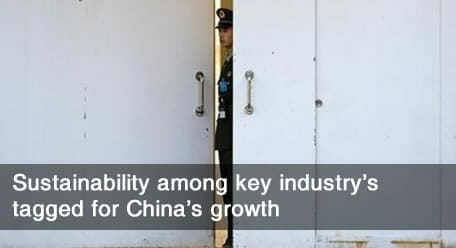
It’s not very salubrious but it’s secure. The four-star Jingxi Hotel in Beijing (pictured), which is owned by the People’s Liberation Army, hosted the annual plenum of the Communist Party’s Central Committee to draft the country’s next five-year plan.

The 12th five-year plan, nutted out by about 300 committee members, will be put to the National People’s Congress in March for ratification. The key themes in the latest plan are sustainability and reducing inequalities between provinces.

Analysts are predicting a lower GDP-growth target to be discussed between now and March, with details of the plan coinciding with a surprise 25bps point rise in the official interest rate last week – the first in China for three years.

A research note from HSBC Global Banking and Markets says more growth is likely to have to come from private consumption which has dropped from 50 per cent of total GDP to an estimated 36 per cent in the past 20 years.

“Expect further efforts to boost household incomes, primarily through higher minimum wages, as well as lower personal taxes,” the bank says.

Notwithstanding the stated concern for poorer provinces, the latest plan intends to speed the demographic shift to the cities, which will further boost consumption.

Sponsored Content

After the meeting, the Government confirmed a list of emerging strategic industries to be at the forefront of a “higher quality” of economic growth. They are: energy-saving and environmental protection firms, next generation IT, biotech, high-end manufacturing, new energy, new materials and composites, and clean-energy cars.

According to Shanghai Securities News, the group of industries currently make up only 3 per cent of GDP but are expected to contribute at least 15 per cent by 2020.


Leave a Comment

Sort content by

Jeff Scott takes on risky business as Wurts’ inaugural CIO

A common belief in the value of a risk-based approach to asset allocation, and a courtship of eight months, has culminated in Jeff Scott being appointed the first chief investment officer of US consulting firm, Wurts & Associates. mrec4inarticleinline Sponsored Content scnative1 scnative2 scnative3

Cracks show in investors’ voices on climate change

Investors around the globe are increasingly incorporating climate change into their risk analysis, however there are huge regional discrepancies with investors in Europe streaks ahead of their counterparts in the US and Australia. mrec4inarticleinline Sponsored Content scnative1 scnative2 scnative3

Public frat-boy investors skirt high returns at members’ peril

With the skills, practices and expectations that are embedded in the private corporate sector being brought to pension management maybe we need to expect the turnover in senior investment jobs to increase, but that doesn’t mean it is a good thing for the industry.mrec4inarticleinline Sponsored Content scnative1 scnative2 scnative3

Dutch shake up pension system

The Dutch Government, some unions and employers have agreed on a deal to radically reform the Dutch pension system, with the formerly defined-benefit scheme edging towards a more hybrid defined-contribution arrangement.mrec4inarticleinline Sponsored Content scnative1 scnative2 scnative3

Low-turnover, low-cost quells cap vs equal debate

The debate over cap-weighted or equal-weighted portfolios has been somewhat quelled by the launch of a new strategy by INTECH Investment Management that combines the two approaches.mrec4inarticleinline Sponsored Content scnative1 scnative2 scnative3

Profiting from out-of-the-box thinking

A collaborative management and investment approach, as well as being willing to say “I don’t know everything” are important elements to success according to Janet Campagna, chief executive of the former Deutsche-owned quant shop, and women-majority owned firm, QS Investors.mrec4inarticleinline Sponsored Content scnative1 scnative2 scnative3

Previous



