
ShareAction mainstreams responsible investment

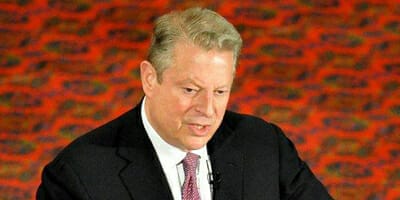
“ShareAction has become the premier organisation to give voice to those who wish to invest their values as well as their assets,” enthused former vice president of the United States Al Gore, speaking to a packed audience at ShareAction’s annual lecture in London’s Guildhall last week. ShareAction is only a tiny pressure group but Gore’s ringing endorsement reflects its growing clout when it comes to galvanising pension scheme members and other asset owners to make sure their views are taken into account by the funds responsible for investing their money.

ShareAction, formerly FairPensions, has been around since 2005, when it emerged out of a campaign in the 1990s backed by academics and students to make investment strategy at the £34-billion ($51.5-billion) University Superannuation Scheme socially responsible and sustainable. Multiple events such as the explosion at BP’s Deepwater Horizon rig in 2010 – Gore jibed that shareholders would have avoided losses if “the metrics had been more sophisticated” – to a wave of authoritative studies on the damaging effects of short-term investment, the dire funding levels in many UK pension schemes and the harnessing powers of the internet have helped propel it’s message into the mainstream. It’s building a momentum that the organisation’s chief executive, Catherine Howarth, is determined not to miss.

Rank and change

When it comes to influencing schemes’ investment strategies, one of the most effective tools at the pressure group’s disposal is its ranking system. ShareAction grades the responsible investment performance of the 25 biggest UK funds. With a new ranking due later this year, it’s what Howarth calls a “nudging process” and a “catalyst for change”. “There is still a long way to go,” she explains, “but we’ve seen schemes really improve their responsible investment, transparency and award mandates according to ESG principles as a result of our rankings.” Pension funds are galvanised, particularly, she says, when scheme members push trustees on gaps in their responsible investment criteria highlighted by the rankings. It’s also a process that highlights what she calls a common disconnect between companies with front-office green credentials, but with employee pension schemes still “in the dark ages” when it comes to ESG.

The Co-op, which due to its strong ethical brand is one of the UK’s best-loved retail and financial services chains, was a case in point. One company in the group, Co-operative Asset Management, is even a leading light on responsible investment, truly embracing active ownership because it believes it is part and parcel of being a responsible owner. Yet the Co-op’s $9-billion pension scheme scored 35 per cent, coming fourteenth out of 30 in ShareAction’s 2009 survey. In response, the Co-op overhauled its strategy and beefed up ESG credentials scoring much higher in subsequent surveys. “The fund has gone a long way to implementing all of the recommendations we made,” says Howarth.

Membercentricity and mainstreaming ESG

She is also pushing the novel concept of pension funds shaping investment strategy around their members, putting savers’ values at the heart of fiduciary management. It sounds ambitious but she’s convinced it will happen, pointing out that with some funds, it already is. Research by the UK government’s National Employment Savings Trust, NEST, the new automatic-enrolment pension scheme for employers, found that its target membership is more worried about investment loss than particularly high returns. With this in mind, NEST set its growth target at consumer price index plus 3 per cent, compared to growth phases in other employers’ defined contribution schemes typically coming in around CPI plus 5 per cent. Regarding responsible investment, NEST found its target members highlighted concerns around labour rights and fair pay, wanting investment skewed to support these themes and greater stewarding on these issues of the underlying companies. “This kind of behavioural research is really innovative and others will follow; it’s a pioneering approach” says Howarth. Most importantly, she said, it’s a strategy designed to encourage people to keep saving and not opt out, crucial in NEST’s early years. Howarth contrasts the investment strategy in Australia, where the automatic-enrolment model doesn’t allow opting out and saving is compulsory. She says it has allowed providers there to adopt more bullish investment strategies altogether.

Tailored investment strategies designed for scheme members leads Howarth to her next point – “mainstreaming” the integration of ESG factors. She wants to open up the whole debate around fiduciary obligations altogether, pushing “a more enlightened view” in which trustees have “clear permission” to take long-term decisions rather than invest for short-term profit. Many trustees believe their fiduciary duty is only to maximise returns but this needs to change, with schemes investing for long-term value rather than short-term share prices, she argues. ESG is now applied to a broad range of asset classes and available to investors through a wide range of products, she insists.

Sponsored Content

Working from the inside

As well as cajoling pension funds to alter their strategies to invest responsibly, ShareAction wants schemes to become more active asset owners. The pressure group doesn’t advocate screening or excluding stocks. On one hand this model is outdated, focusing on so-called sin stocks such as tobacco and pornography rather than asking today’s questions around human rights and environmental issues. On the other, Howarth argues disinvestment, or not investing per se, makes wielding any kind of influence impossible. “We are not big disinvestment people. Once you disinvest, you lose the opportunity to influence. Disinvestment can and does have its uses, but if you sell your shares no one will notice,” she says. Having honed her ability to build tricky alliances between different interest groups and work the system from the inside after years working as a community organiser in London, Howarth’s campaign successes include demanding more transparency from Shell and BP regarding tar sands projects and, together with Oxfam, pushing institutional investors to pressure pharmaceutical group Novartis to ensure the continued availability of affordable generic medicines in India.

Passive investors are just as capable of having the conversation. Managers such as Legal and General Investment Management, one of the biggest passive managers in the UK, is a case in point. Howarth refers to the company’s “brilliant work” on responsible investment. “Trustees may struggle to sell companies because they are invested in a passive tracking fund, but they still have good access to governing boards and can have a powerful effect.”

Howarth is convinced the tide of change is now unstoppable. Lively investor activism in Australia, the US and Europe, is keeping pension providers in check with members’ interests and increasingly offering better value for money. Although Asian institutions continue to lag behind Western counterparts in ESG adoption, with schemes in Asia “less inclined” to alter investment strategies or challenge the companies they invest in, foreign investors in Asian corporates are taking up the mantle and encouraging debate. “It’s our money after all,” she says.

Leave a Comment

Sort content by

The changing nature of fixed income

As the fixed income asset class undergoes rapid change and the opportunity set expands, unconstrained bond funds have become popular. But as this article examines, with that expanded opportunity set comes new considerations including a wider risk/return spectrum among managers.   Trends in the global investment universe tend to come around every six months or

McKinsey’s tips on sustainability integration

More companies are recognising sustainability as a core business issue, but according to McKinsey and Company they are still failing to capture its full value, in particular struggling with incorporating it into organisational processes such as performance management. A McKinsey global survey, garnering responses from 3,344 executives from the full range of regions, company size

Long term investing and infrastructure

There has been some ambiguity about what being a long-term investor means. For Australia’s Future Fund it means focusing on a few key aspects of our investments: understanding value, the ability to make and implement portfolio decisions and manager alignment. In this speech at the ASFA Global Investment Forum on infrastructure and long-term investment, Raphael

Where does the next generation of fund managers come from?

According to Malcolm Gladwell’s Outliers, at least 10,000 hours of practice is needed to be a success at your chosen profession. This means that a fund manager will hit their strides around age 40. But the London Business School is giving its students a leg up in that quest to find success. They have real-life

The meaning of fiduciary duty

The UK Law Commission has delivered its final report on how the law of fiduciary duties applies to investment intermediaries and an evaluation of whether the law works in the interests of the ultimate beneficiaries. The project was commissioned by the Department for Business, Innovation and Skills (BIS) and the Department for Work and Pensions

New leadership prompts strategy review at ICPM

A decade since the formation of the Rotman International Centre for Pension Management is a good time to review the organisation’s raison d’etre. Amanda White spoke to ICPM chair, Barbara Zvan, chief investment risk officer of Ontario Teachers’ Pension Plan, and the outgoing and incoming executive directors, Keith Ambachtsheer and Rob Bauer.   “There is

Previous




