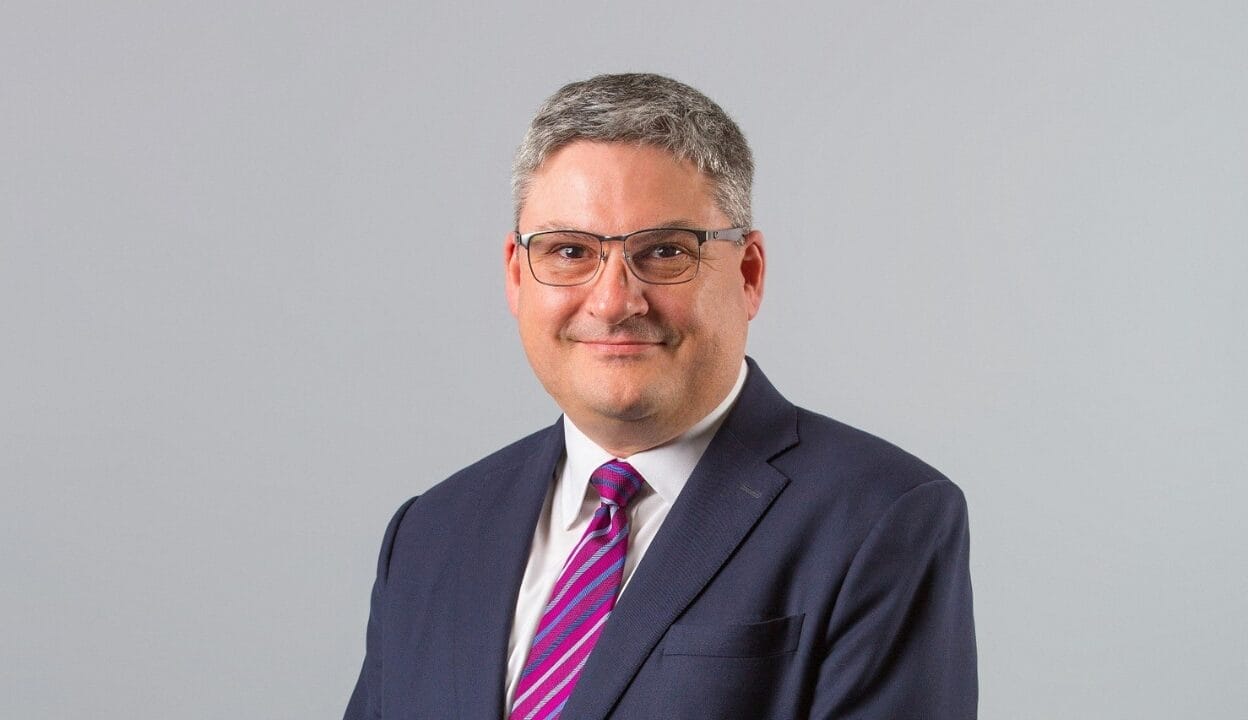
Scott Treloar: Skiing in Singapore and how to quantify investor skill

I chat with Scott, the CEO of Singapore-based Noviscient, about shape of the hedge fund industry and how to create better systematic allocation to funds using machine learning techniques. Reflecting on his career in Deutsche Bank in Asia and running his own statistical arbitrage fund, we discuss the pragmatic applications of quantitative methods and the use of AI in society.

Nothing on this podcast is to be considered investment advice or a recommendation. No investment decision or activity should be undertaken without first seeking qualified and professional advice

Sponsored Content

Leave a Comment

Future Fund: AI world order defined by US-China split will hurt capital owners

Future Fund: AI world order defined by US-China split will hurt capital owners

A geostrategic standoff between the US and China over AI would be “extremely damaging for capital owners” according to the Future Fund, Australia’s A$337 billion ($237 billion) sovereign wealth fund, which outlined four “secular scenarios” around AI and its investment implications.

Sort content by

Why West Virginia’s CIO is worried about its China divestment directive

The $28 billion West Virginia Investment Management Board will divest from Chinese state-owned companies and CIO Craig Slaughter has reservations about the decision. He outlines in an interview with Top1000funds.com about why the directive is an extension of a big threat facing investors: a decline in liberal democracy. 

USS paper urges governments to do more to support climate policy

A new report from USS and the University of Exeter, argues that investors who focus on decarbonising their portfolios won't change real-world decarbonisation and would have more impact on climate change by buying transition investments.

TRS strikes gold: Tiny allocation crushes its benchmark

This year, TRS doubled its tiny allocation to gold via a special fund that buys gold ETFs and mining companies. The strategy returned nearly 60 per cent, thanks to market conditions including inflation, geopolitics, government debt levels and de-dollarisation pushing gold higher.

Moving from risk 1.0 to risk 2.0

As investors move into 'risk 2.0', how should they change their modelling approach and investment toolkits? WTW global head of portfolio strategy Jeff Chee outlines in this column why investors should consider principles such as greater use of qualitative risk measures.

Private asset funds are no longer fit-for-purpose

The surging interest in generative AI has triggered a technological arms race, driving demand for data centres. Investors are looking to capitalise on what is often described as a generational opportunity, but as Blue Owl’s James Clarke cautions, there are several important factors to assess in partners for the long-term.

PRI slashes reporting burden to preserve code relevance among signatories

The Principles for Responsible Investment will reduce signatories’ responsibilities in their annual mandatory reporting from 240 questions to just 40 next year. The outgoing PRI chief David Atkin explains the move and why asset owners have a big role in stabilising the discussion around responsible investment. 

Previous



