
Retirement: a cause worth working on

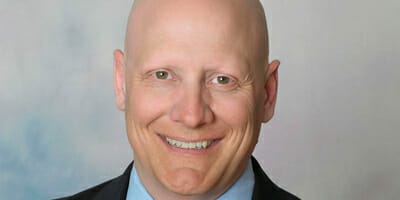
There are two things that drive the newly appointed global chief operating officer of State Street Global Advisors, Greg Ehret, in his bid to improve the client experience: the retirement business is a cause worth working on and the clients are the reason the business exists.

Ehret was appointed to the new position at SSgA, which manages $2.2 trillion, in September 2012, and as COO he is responsible for delivery to clients, which means operations, technology, client relationships, sales and marketing all report to him. It’s basically everything except investments, and there are 440 investment professionals, and 2350 employees in SSgA, so it’s no small task. He and the chief investment officer, Rick Lacaile, report to chief executive, Scott Powers, and interestingly both are based in London despite the firm’s strong Boston heritage.

He believes in what he is selling

Ehret is a State Street man, he believes in what he is selling and says that all evidence he can see points to the fact the manager is the best in the world at passive management.

But he’s not an index tragic. He believes in innovation and business evolution because he is driven by solving clients’ problems.

“Our goal is to be relevant to our clients. Passive is a core strength of SSgA, we are the best indexers in the world. But our goal is to be relevant in facing off clients’ problems, and those problems have changed, so the solution can be indexed, or alternative beta, or active strategies,” he says.

“Many pension funds are under water and there is a real need for alpha and to use efficient sources of beta. ‘Core and explore’ is a key tenet of ours and while I think the secular trend to passive is a long-term core trend, we offer tools to get alpha and efficiently deliver the core.”

Sponsored Content

Ehret looks at three core concepts – interest rates, returns and risk – and how the needs of clients have changed as those three issues shift.

Driving client solutions

Meeting those changing needs then drives client solutions and product innovation.

One such example is the recent launch of senior debt exchange traded funds developed by SSgA and GSO Capital Partners, the global credit business of The Blackstone Group.

“Rates will be back up eventually; it’s not sustainable for them to be so low or negative,” he says. “The challenge is looking for income now, but in the future we will diversify away from interest rates.”

He says liquid alternatives will become more important in the product-suite offering and points to the hedge fund manager, SSARIS, which is a State Street Global Alliance company, the joint initiative with APG.

“In their multi-strategy and single strategy they have developed strategies that are divergent trades, they go long volatility. In their investment discipline, they are consistently diversified with long volatility and, over the long term, they have lower risk and higher return,” he says. “Volatility is so much more important to clients. We are working on a number of different strategies in alternatives, and liquid alternatives will become more important to us. There is great talent available, so we can do it organically.”

Business savvy

Ehret is a 20-year veteran of SSgA, holding a number of executive positions in operations, sales and product development, including as co-head of the firm’s industry-leading SPDR exchange traded fund business.

While SSgA is fundamentally an institutional investment manager, Ehret says his background means he looks at things differently.

“It’s a roundabout way of getting here, and it’s given me a different view,” he says. “I started in intermediary, not institutional, and the intermediary business is becoming more important to the business. Our initial foray was in ETFs and now the intermediary is asking what else we can do for them, whether it be advice, product differentiation or delivering an outcome to customers. It shows how the firm has changed.”

Service has to be impeccable

Ehret’s goal when he started as global COO was to “improve the client experience”, and first and foremost in that mission is to have a relationship between the client that is spotless.

A new initiative to help benchmark that is the introduction of a new process in which clients are surveyed when they are new and “onboarded”.

Ehret is also emphasising the power of communication and the delivery of good direct, transparent communication about the firm and the portfolio.

“It has to be good communication, up to date and on time. We have to get in the client’s shoes and remember that delivering a report is not the end of it, rather making sure everyone in our value chain understands the impact on the client. By the way that’s why we’re here,” he says. “Service has to be impeccable, integrity is really important.”

Ehret says that asset managers are partners of their clients, and are frequently asked to do a lot of value added in the investments solutions team.

This includes such things as total portfolio analysis, or liability hedging analysis, or the appropriate use of leverage or derivatives.

SSgA also participates in some unique conversations such as with the chief financial officers of listed corporations to talk about their stock so they can get the opinion of the buy side.

State Street also recently launched Global Exchange, which provides data and analytic solutions.

“We’re in the retirement business; it’s a cause worth working on,” says Ehret.

Leave a Comment

Sort content by

Why integrated reporting makes sense: Robert Eccles

Robert Eccles has been trying to change the nature of corporate reporting for more than 20 years. He has been an advocate for supplementing financials with information on non-financial factors that are leading indicators of financial results – such as product development, customer satisfaction and the development of intangible assets. The premise is those companies

Opportunities in Europe

Investors and academics agree that political developments in Greece are important because they may shape how financial markets will respond to future political situations in the Eurozone. But according to Olivier Rousseau, the executive director of the FFR, the French pension reserve fund, there is more hype outside of the Eurozone on the implications of

More evidence big is better in pension funds

A pension fund that has 10 times more assets under management has on average 7.67 basis points lower annual investment costs according to a working paper from authors at De Nederlansche Bank, that explores the relationship between pension fund size and investment costs. Written by Dirk Broeders, Arco van Oord and David Rijsbergen the paper

European investment plan requires public private collaboration

The two largest institutional investors in the Netherlands, PGGM and APG, have responded to the European Commission’s investment plan, urging the commission to call on institutional investors to collaborate on the investment proposal. However they also warn that institutional investors are not just a “subsidising entity” and the Juncker Plan is best executed as a

Why Andrew Ang joined Blackrock

Andrew Ang believes factor investing is a more efficient way to organise a portfolio as it allows liquid and illiquid strategies to be managed across the portfolio. It also has the added benefit of honing managers on value creation. He’s been working with a handful of investors while Professor of Finance at Columbia University on

The power of engagement

It is called the “CalPERS’ Effect” but it could easily be called the asset owner effect, or the institutional investor effect, or the power of engagement effect. Wilshire, which is a consultant to the $300 billion Californian fund CalPERS, has provided an update on its study measuring the effect of engagement on a targeted list of companies called the Focus List.

Previous




