
Opportunities in Europe

Investors and academics agree that political developments in Greece are important because they may shape how financial markets will respond to future political situations in the Eurozone. But according to Olivier Rousseau, the executive director of the FFR, the French pension reserve fund, there is more hype outside of the Eurozone on the implications of a Grexit than from within it and analysts are undervaluing profit prospects of European companies. Amanda White reports on the views of a number of investors including FFR, PGGM and APG, on the impact of the European crisis on their portfolios.


Investors, and academics, are calm about the implications of the potential financial Greek tragedy on long-term returns.

Specialist in geopolitical risk, Stephen Kotkin, who is Professor of History at Princeton University says the Greece/Euro crisis has been so long in the making, unfolding right in front of everyone, that “one would think institutional investors would have taken prudent measures by now. We shall soon learn if that is the case.”

Indeed it seems Kotkin is right. Institutional investors have been keeping a close eye on the situation and have been allocating accordingly.

PGGM, for example, set up a special financial crisis team which monitors this crisis closely and issues daily reports to its pension fund clients. Its biggest client, PFZW, has very little direct exposure in Greece – about €50 million, or 0.03 per cent of its assets – and Greek sovereign bonds were sold years ago.

Sponsored Content

Similarly the €428 billion Dutch investor APG has a very limited exposure to Greece – also about 2 to 3 basis points of the total portfolio. APG’s position is that the fate of these investments depended too much on a binary outcome. It prefers to position the portfolio for capital preservation and as a long term investor it doesn’t like to speculate, so Greek bank holdings were sold some time ago.

An APG spokesperson said: “Our investments currently move with the sentiment in the market, among others as a result of the Greek unrest, although volatility is less than expected by many beforehand. We do not expect this unrest to impact the long term prospects of our investment portfolio.”

Similarly the French sovereign wealth fund, the FFR, has 40 per cent of its equities allocation in the euro zone, and its exposure to Greece is very small.

The FFR doesn’t take many tactical bets – choosing to act only when there is a very strong view on an asset class – but took a tactical position a few months ago and reduced the allocation to the Eurozone through selling futures.

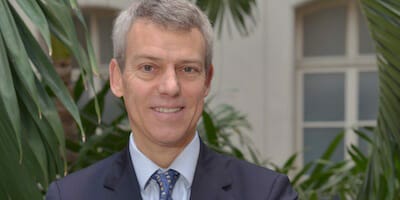
Executive director, Olivier Rousseau, says the fund bought back in a few days ago, and is now sitting at slightly above its normal Eurozone asset allocation.

“We think most of the Greek worries have been priced in,” he says.

But Rousseau says there is an Anglo-Saxon view of Europe that is not accurate for those within the Eurozone, and in his opinion as a consequence analysts are undervaluing European equities, which presents an opportunity for investors.

“Eurozone companies derive very substantial shares of their profits from elsewhere, for example large French companies have 50 per cent of their profits from outside the Eurozone,” he says. “The euro crisis is massively overplayed and the implications for long term investors is not as much as some paint it to be. Outside of the Eurozone there is more hype of the implications of a Grexit than from within it. A Grexit would first and foremost be a tragedy for the Greek people and a very worrying geopolitical situation.”

Rousseau who has held several senior jobs in the French Treasury as well as positions at BNP Paribas, and was previously the alternate director for France on the board of the European Bank for Reconstruction and Development, says there is a bias against the Eurozone and within Europe there is a significantly different view.

“I perceive that among many Anglo Saxon analysts the Euro is a monstruosity of the European continent. A capital sin that has to be punished by the gods of the financial order,” he says.

“But there is so much willingness from within the Euro zone to keep it.”

Rousseau says the recovery seems to be on track and that profits reported by companies will surprise on the upside.

“Analysts are behind the curve on the profit forecast at the moment we think,” he says.


Contagion

Perhaps the less than expected volatility within European equities, at least compared with China, is a reflection of Rousseau’s view that the market has priced in the Greek worries.

Toby Nangle, head of asset allocation at Columbia Threadneedle Investments agrees that markets have not moved as much as perhaps expected by some.

“We are surprised that the moves have been so modest and continue to believe that market participants are optimistic in their assessment as to the possibility of a favourable resolution of Greece’s travails,” he says.

Princeton’s Kotkin also says that the direct economic consequences given the scale of Greece and of the global economy should be relatively small, even in a worst case scenario.

“But of course, this will be all about psychology, and therefore one cannot say whether the impact will be contained or colossal,” Kotkin says. “Whatever happens in Greece, the bigger worry could be China’s rickety financial system.”

Nevertheless there is concern that there may be some contagion in Europe, not the least of which is due to the behavioural finance aspects of politics and sentiment, with Columbia Threadneedle’s Nangle acknowledging it is a challenge to understand the prospective channels for contagion.

“Financial market contagion typically spreads when assets that are understood to be risk-free turn out not to be so. For example, when currency pegs previously understood as invulnerable break, when AAA-rated securities are revealed as worthless, when risk-free government debt becomes risky, when systemically-important banks with involvement across the financial system fail,” he says.

“Greek assets are not widely held across the private sector following the efforts in 2011 by European states to transfer privately-held Greek debt into publicly-held Greek debt. In bailing out private sector bondholders in 2011, the original Greek bail-out largely severed the traditional channels of contagion. Those channels of contagion that persist are political, and sentiment-based. Both are harder to analyse.”

Similarly FFR’s Rousseau, says the issue is not direct exposure to Greece but the consequences that the situation will have on the broad market.

“We are reasonably confident no cataclysm will happen especially for sovereign debt. Contagion is limited so far and should remain so even in the case of a Grexit,” he says.

Rousseau also has confidence in the European Central Bank to put a cap on the widening of spreads should it need to.

“We are very confident the ECB is in control,” he says.

This is also the view of some asset managers including Darren Williams, senior economist for Europe at AllianceBernstein who says the ECB’s tolerance for rising bond yields is likely to be limited. And it has the tools to prevent contagion from spiralling out of control.

But the International Trade Union Confederation, which represents 176 million workers in 162 countries, has called on the creditor institutions  – the International Monetary Fund, the European Central Bank, and European Commission – to unblock support for the Greek banking system, carry out disbursements on previously agreed loans and engage in serious negotiations with the government for reducing Greece’s unsustainable debt burden.

The general secretary of the ITUC , Sharan Burrow, says the institutions must end their demands for further cuts in pensions and public services and continued destruction of labour market institutions in return for payments on loans they already approved. Instead, they should support a pro-growth investment and jobs program in Greece.

“The IMF’s debt sustainability analysis published last Thursday reiterates what many organisations both in Greece and elsewhere have been saying for years, which is that Greece requires substantial debt relief if the economy is to have any chance of making a sustainable recovery.”

Leave a Comment

Sort content by

Benchmark design for an active investment process

Choosing the appropriate benchmark for active managers is a common debate among institutional investors. Norges Bank Investment Management has produced a “discussion note’ on the benchmark design for an active investment process, in which it introduces a flexible modelling framework that aims to incentivise each portfolio manager to utilise their stock-picking skill.   The benchmark

SSgA focuses on innovation not assets

For Scott Powers, president and chief executive of State Street Global Advisors, assets under management is not a measure of success – the manager is currently the world’s fourth largest with around $2.5 trillion. Instead it is the ability to provide value for clients in meeting their objectives – whether it be matching liabilities, creating

Pension funds put pressure on G20 tax reform

Pension funds are becoming vocal ahead of the G20 leaders summit next week, reiterating the need for action over tax reform, and encouraging world leaders to consider financial reform that encourages long-term investing. The UK’s Local Authority Pension Fund Forum, which is a collaborative shareholder engagement group of 61 local authority pension funds with combined

G20 urged to develop policies to support long-term investment

The Fiduciary Investors Symposium (FIS) at Harvard University has identified several of the key barriers to pension funds, endowments and sovereign wealth funds adopting more effective long-term and sustainable investment strategies, and is preparing a communiqué to the upcoming meeting of the G20 to convey its concerns and its policy requirements. FIS, organised and hosted

Future Fund focuses on finding the best people

Australia’s sovereign wealth fund, the A$101 billion Future Fund, has just upped the stakes in not only attracting the best co-investment deals from fund managers, but in its bid to attract the world’s best investment professionals. Two months ago the fund’s long serving chief investment officer, David Neal, become chief executive in name (following the

The cost of bad asset allocation

A study of 300 US pension funds by CEM Benchmarking reinforces the importance of asset allocation, highlighting the performance of asset classes, as well as new evidence on correlations between asset classes. Alex Beath, author of the study, discusses the implications for asset allocation with Amanda White. A CEM Benchmarking study “Asset Allocation and Fund

Previous




