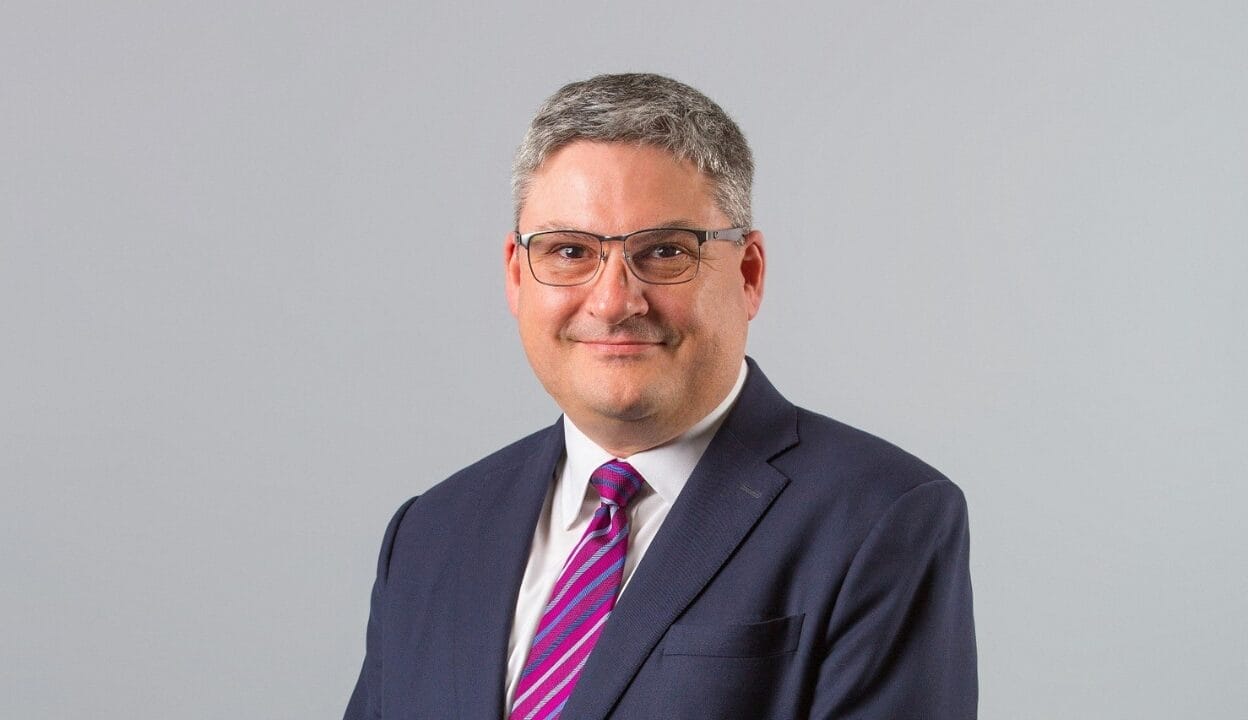
Michael Recce: The goldilocks approach to neuroscience, AI and investing

Apologies for the sound here, this interview was recorded using Skype and occasionally the quality drops.

I chat with Michael, Chief Data Scientist at Neuberger Berman, on using alternative data sets to improve insights into portfolios, deep diving into specific companies and industries and how these sets allow us to look at the world in a richer and more immediate fashion than ever before.

Nothing on this podcast is to be considered investment advice or a recommendation. No investment decision or activitiy should be undertaken without first seeking qualified and professional advice.

Sponsored Content

Leave a Comment

Future Fund: AI world order defined by US-China split will hurt capital owners

Future Fund: AI world order defined by US-China split will hurt capital owners

A geostrategic standoff between the US and China over AI would be “extremely damaging for capital owners” according to the Future Fund, Australia’s A$337 billion ($237 billion) sovereign wealth fund, which outlined four “secular scenarios” around AI and its investment implications.

Sort content by

The power of innovation

From allocating assets in order to achieve a healthy funding status, to keeping up with technology that analyses portfolio risk, the challenges of asset owners are relentlessly evolving. For asset managers, like AQR, the key to their own evolution and success is how to be more relevant to clients. AQR keeps clients’ needs firmly within

Emerging equity markets in a globalising world

Even though there has been dramatic globalisation over the past 20 years it still makes sense to segregate global equities into “developed” and “emerging” market buckets, according to a paper by Columbia and Duke academics. The research, which has important policy implications for institutional and pension fund management, shows that while correlations between developed and

Citigroup: a case study in managerial and regulatory failures

This article by Arthur Wilmarth from George Washington University Law School uses Citigroup as a case study to demonstrate the question of whether bank executives and regulators are able to supervise and control today’s complex megabanks. The study shows that post-mortem evaluations of Citigroup’s near-collapse revealed that neither Citigroup’s managers nor its regulators recognized the

Regaining control: why investors must stand up to banks

As the chief executive of a financial services media and events business, Colin Tate* benefits from the growth in the banking sector. But at the same time he is perplexed by their bad corporate behaviour, large pay packets, and secret negotiations. It’s time, he says, for institutional investors to demand change.   I’m not a

The business benefits of active ownership

Celebrating active ownership day, Simon Howard the chief executive of the UK Sustainable Investment and Finance Association, describes the business benefits of active ownership.   Active ownership by investors is becoming increasingly recognised for delivering a range of business benefits from helping to protect corporate reputations, to increasing share prices. Active ownership funds, i.e. those

Funds must embrace data to win

Superannuation funds in Australia are not putting enough emphasis on data and technology as a tool to strengthen member engagement or as a platform for their business. There is plenty they can learn from Rayid Ghani, chief scientist for the Obama for America 2012 campaign, who was the keynote at the Conference of Major Superannuation Funds

Previous



