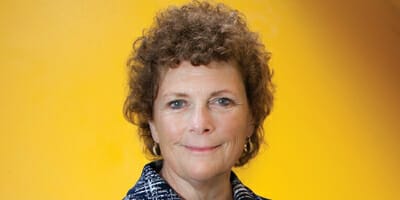

Macro risks remain dominant: Cambridge

Macro-economic risks remain the biggest investment concern this year, while certain distressed assets will present the best opportunities, according to managing director of Cambridge Associates, Sandra Urie.

“The dislocation in European markets has already created investment opportunities across different credit markets, and we believe these may expand as the pace of European bank deleveraging accelerates,” she says.

“We believe investors should consider staggering commitments to European distressed funds over time, though we recognise that some European distressed funds are already finding attractive opportunities, and that some funds will offer vintage year diversification through a multi-year capital call structure.”

The timing of how this occurs may be more difficult to assess, she says, as a bank’s decision to sell an asset can be influenced by a variety of factors. She says investors should also stagger investments over time.

“On one hand, some banks have taken write-downs on assets or face higher capital charges and may therefore be open to sales, while on the other, significant government equity stakes in banks and the availability of liquidity, for example through repo lines, means that the pressure to sell assets may be reduced.”

In addition, she says European banks’ continued reductions in loan commitments are creating a vacuum, which hedge funds and private equity firms are filling.

Sponsored Content

However a defensive posture is important given the continued macro risks, Urie says.

“We continue to regard high quality equities with stable, proven franchises, and steady earnings and profits as an important core investment for participating in equity upside while investing in high quality assets that should be able to weather potential storms that may arise.”

The investment concerns at the beginning of this year, as identified by Cambridge, remain the same as in 2011.

At the start of last year, the firm’s five main concerns were:

  • the corporate sector doesn’t spend, increasing the risk of global recession;
  • the crisis in Europe escalates;
  • a liquidity-fuelled boom gives rise to a global inflation scare;
  • China overheats;
  • and protectionism increases.

“While all of these concerns have serious implications, an overarching worry is that there is a tremendous amount of political disagreement about the appropriate way to deal with such risks,” Urie says.

“We enter 2012 in much the same place as 2011. Macro risks are our primary concern and the biggest risk we can see is the inability of the political system to deal effectively and decisively with the debt problem and that global imbalances lead to further erosion in confidence and further capital destruction.”

Leave a Comment

Sort content by

Swiss referendum: funds’ headache or investor utopia?

The idea of referendums setting the agenda for institutional investors may be a frightening pipe dream in much of the world, but Switzerland’s unique brand of direct democracy is set to revolutionise its funds’ priorities. Swiss funds are due to be anointed as no less than the country’s official guardians against “rip-off” executive salaries. That

Siguler: buy good quality companies

As the world and companies globalise, George Siguler, managing director and founding partner of private equity firm, Siguler Guff, has a simple recommendation for investors. “My recommendation for stock investors is to look at great global companies,” he says. “Look at companies like Johnson and Johnson, Unilever or Boeing. They all have great balance sheets

A series of shorts
don’t make a long

It is easy for long-term investors to avoid short termism, and the solution lies in avoiding momentum and conducting risk analysis using cash flows – not market pricing. “Diversification is a joke. Diversification and risk analysis relies on pricing, but pricing is distorted because it’s driven by momentum,” says Paul Woolley, chairman of the Paul

ShareAction mainstreams responsible investment

“ShareAction has become the premier organisation to give voice to those who wish to invest their values as well as their assets,” enthused former vice president of the United States Al Gore, speaking to a packed audience at ShareAction’s annual lecture in London’s Guildhall last week. ShareAction is only a tiny pressure group but Gore’s

Cass creates principles
for DC model

As almost every market in the world looks to move from defined benefit to some sort of defined contribution model, academics at the Pensions Institute of the Cass Business School, City University London have developed a set of 15 principles for designing a defined contribution model. The principles, consistent with the recently published OECD guidelines, are based

Pension funds reject EU financial transaction tax

When the European Commission announced plans on February 14 to introduce a Financial Transaction Tax (FTT) by the start of 2014, it planted a bomb under Europe’s pension funds. That is not, of course, the view of Algirdas Šemeta (pictured below right), the EU’s commissioner for taxation. He says the proposed tax is “unquestionably fair

Previous




