Australian contributions increase shifts retirement burden

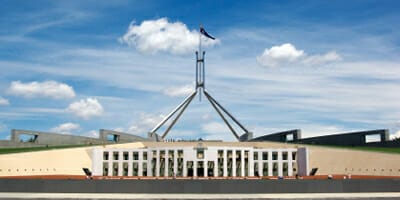
The increase in the Australian superannuation guarantee (SG) from 9 to 12 per cent of salary is an example of how the retirement savings burden, a global phenomenon, can be shifted from the public to private sectors, according to senior partner at Mercer, David Knox.

The increase in the SG, which has been approved in the House of Representatives and will be debated in the Senate this week, will be gradual over the next eight years.

While the percentage of salary deducted will be 12 per cent, the 15 per contributions tax in Australia means the amount in the “super pot” will be more like 10 per cent, Knox says.

“10 per cent for retirement benefits is the right number around the globe,” he says. “With government budgets under pressure and an ageing population, shifting the balance more towards private provision is significant.”

Knox also says, while it seems like the increase is one third (from 9 to 12 per cent), for most members the actual increase will be more like 40 per cent.

“Expenses won’t increase, and members also pay an insurance premium and that won’t increase. So what’s left for retirement is a greater net benefit.”

Sponsored Content

One of the highlights of the Australian system is its mandatory nature, with all employees, except the self-employed, covered.

The Australian superannuation system had assets of $1.3 billion at the end of June, and assets are expected to double again in the next seven years.


Leave a Comment

Sort content by

Taking the future into account

At the International Centre for Pension Management’s biannual meeting in London, Jack Gray and Generation’s David Blood had a tête à tête on sustainability. An academic at the Paul Woolley Centre for Capital Market Dysfunctionality at the University of Technology Sydney, Gray has written a paper, Misadventures of an Irresponsible Investor, that at its core

Kay calls for philosophical shift

In an interview with conexust1f.flywheelstaging.com, John Kay, economist and author of the UK government-commissioned enquiry into long termism and the UK equity markets, has said it is “fanciful to imagine large number of trustees will have the skills and knowledge to have long-term relationships with corporates”. Kay says the key players in the UK equity

UK equity allocation falls

Equity allocation by UK pension schemes continues to fall, but the assets are being re-allocated into “everything else except gilts”, according to Mercer chief investment officer, Andrew Kirton. Last year equities allocations by UK pension funds fell by 5 per cent, according to Mercer, as they attempt to deal with the enormous amount of pension

CalSTRS considers
asset risk factors

The $152.5-billion Californian State Teachers Retirement System (CalSTRS) is undertaking an asset-allocation review that will consider the underlying risk factors of assets for the first time. Chris Ailman, chief investment officer of CalSTRS, says the fund is in the middle of an asset-allocation study, which would likely take six months, and would take a different

Natixis champions
Asian alternatives

In a bid to achieve long-term returns without incurring the risk of today’s choppy markets, Asia’s biggest institutional investors are increasingly opting for alternatives in their asset allocation. The majority of respondents in a survey of 120 Asian institutional investors no longer deem long-held industry norms – such as lengthy holding periods or conventional 60/40

PIP in to infrastructure

A swathe of UK pension funds is poised to increase its exposure to infrastructure. In a small start, which enthusiasts believe will quickly grow, the Pension Infrastructure Platform (PIP) will launch as a fund in January 2013, targeting £2 billion ($3.24 billion) worth of projects with the backing of around 10 UK pension funds. The

Previous



