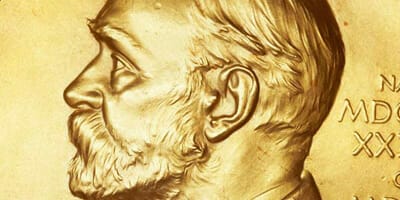
2013 Nobel Prize in economics split three ways

There is no way to predict whether the price of stocks and bonds will go up or down over the next few days or weeks. However, it is quite possible to foresee the broad course of the prices of these assets over longer time periods, such as the next three-to-five years.

These findings, which may seem both surprising and contradictory, were made and analysed by this year’s laureates, Eugene Fama, Lars Peter Hansen and Robert Shiller. Read the winning paper of the 2013 Nobel Prize in Economic Sciences, Trendspotting in asset markets.

Sponsored Content

Leave a Comment

Sort content by

Why integrated reporting makes sense: Robert Eccles

Robert Eccles has been trying to change the nature of corporate reporting for more than 20 years. He has been an advocate for supplementing financials with information on non-financial factors that are leading indicators of financial results – such as product development, customer satisfaction and the development of intangible assets. The premise is those companies

Opportunities in Europe

Investors and academics agree that political developments in Greece are important because they may shape how financial markets will respond to future political situations in the Eurozone. But according to Olivier Rousseau, the executive director of the FFR, the French pension reserve fund, there is more hype outside of the Eurozone on the implications of

More evidence big is better in pension funds

A pension fund that has 10 times more assets under management has on average 7.67 basis points lower annual investment costs according to a working paper from authors at De Nederlansche Bank, that explores the relationship between pension fund size and investment costs. Written by Dirk Broeders, Arco van Oord and David Rijsbergen the paper

European investment plan requires public private collaboration

The two largest institutional investors in the Netherlands, PGGM and APG, have responded to the European Commission’s investment plan, urging the commission to call on institutional investors to collaborate on the investment proposal. However they also warn that institutional investors are not just a “subsidising entity” and the Juncker Plan is best executed as a

Why Andrew Ang joined Blackrock

Andrew Ang believes factor investing is a more efficient way to organise a portfolio as it allows liquid and illiquid strategies to be managed across the portfolio. It also has the added benefit of honing managers on value creation. He’s been working with a handful of investors while Professor of Finance at Columbia University on

The power of engagement

It is called the “CalPERS’ Effect” but it could easily be called the asset owner effect, or the institutional investor effect, or the power of engagement effect. Wilshire, which is a consultant to the $300 billion Californian fund CalPERS, has provided an update on its study measuring the effect of engagement on a targeted list of companies called the Focus List.

Previous




