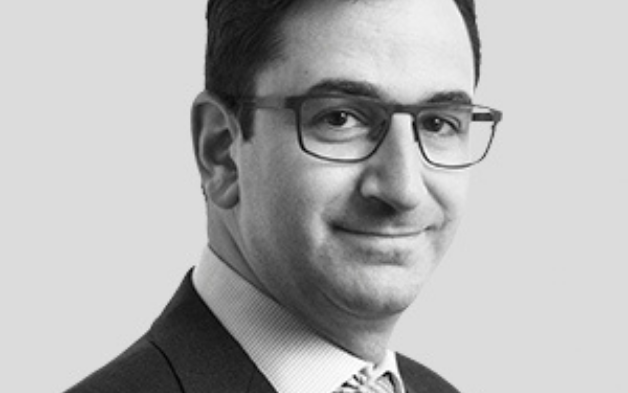

Private credit’s pivotal role in low-carbon transition

Private credit will play a vital role in accelerating the transition to a low-carbon economy. According to Rob Horn, global head of the Blackstone Credit Sustainable Resources Group, this role is set to get a whole lot bigger. Horn believes that credit will eventually supply as much as 60 per cent of the estimated $100 trillion needed to decarbonise economies around the world providing for a particularly attractive investment opportunity for private credit. An opportunity to drive attractive risk-adjusted returns, while potentially improving societal outcomes. In this exclusive fireside chat with Fiona Reynolds, chief executive of Conexus Financial and former head of the UN-supported Principles for Responsible Investment, Horn outlines Blackstone’s view on energy transition as a key investment theme for the firm; its approach to sustainable finance; and what is needed to encourage more institutional investors into this rapidly evolving space.

Sponsored Content

Leave a Comment

La Caisse’s oil exit pays off as renewables portfolio pulls ahead of fossil fuels

La Caisse’s oil exit pays off as renewables portfolio pulls ahead of fossil fuels

Divesting from the oil sector has been a boon for La Caisse’s performance, as the Canadian pension giant says its energy investments have earned billions in value-add compared to the benchmark since the inception of its climate strategy. Head of sustainability Bertrand Millot unpacks the fund’s approach in an interview with Top1000funds.com.

Sort content by

Can finance crack modern slavery?

Institutional investors are increasingly worried about investing in businesses that exploit slave workforces through their supply chains. A roundtable into modern slavery discussed how asset owners and managers can take the lead to impact the 40.3 million workers in the world suffering from some form of labour abuse.

The value creation boundary

The value creation boundary, a margin between innocent bystanders and the parties involved in an economic activity, is a powerful thinking device for asset owners and managers to use in considering their investment responsibilities. So should long-term investors expand the boundary and include more of humanity in the consequences of investment decisions?

New guide for implementing climate risks

More than 600 organisations have supported the Task Force on Climate Related Financial Disclosures but the implementation of its recommendations have been slow, so CDSB and SASB have drawn on their well-established reporting frameworks to produce a guide that shows companies, in a very practical way, how to implement the recommendations.

Foundations should invest for impact

Inequality and the climate crisis are market-based problems that need market-based solutions. What is the role of foundations in solving such problems?

The world must change

"If we don’t heal the fractures of today’s workforce that have been caused by the current model of greed, we will see even greater inequality in years to come," says Sharan Burrow, general secretary, International Trade Union Confederation.

The most responsible allocators named

The Responsible Asset Allocator Initiative’s Leaders List report, developed in partnership with the Fletcher School at Tufts University, analysed $21 trillion in sovereign wealth fund and government pension fund assets around the world to identify 25 leaders and 25 finalists that set a global standard of excellence in sustainable investing.

Previous




