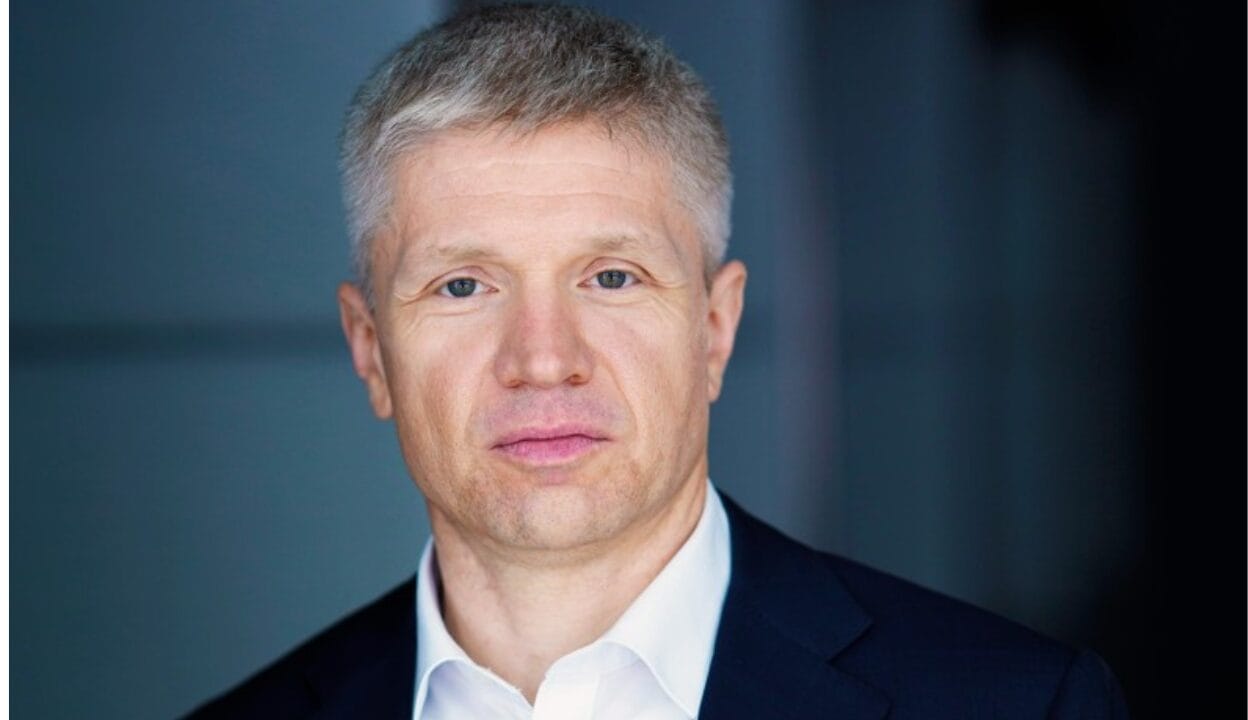

Net-Zero Asset Owner Alliance chair calls for more action from governments

Five years after signing up to net zero, climate-conscious asset owners have a message for governments: act now, or risk global prosperity. As policymakers, investors and climate action advocates ascend on NYC for Climate Week chair of the Net-Zero Asset Owner Alliance, Günther Thallinger, reflects on the progress.

Policymakers and climate action advocates are arriving in New York for the city’s annual Climate Week on the back of yet more record summer temperatures and the growing probability of the world overshooting warming of 1.5°C above pre-industrial levels, the most ambitious goal agreed by governments under the 2015 Paris Agreement.

Against this backdrop, some of the world’s largest investors are calling on governments to intensify their efforts to slash global emissions. This robust intervention comes from the UN-convened Net-Zero Asset Owner Alliance whose 88 members control $9.5 trillion in assets under management.

This is not investors indulging in climate alarmism, nor playing at environmental activism. New scientific research presents compelling evidence that crucial climate ‘tipping points’, such as the melting of the polar icecaps, could be imminent. The chain reaction arising from such an event will bring about huge economic instability, and thus poses a substantial risk to our portfolios.

Closing our eyes to this reality will not make it go away. The data is ever clearer, and ever harder to ignore. Annual economic losses from natural disaster events already hover at around $400 billion, while the estimated losses from a climate-driven shock to global food systems could easily reach $5 trillion annually. In short, if only to uphold our fiduciary duty, it’s imperative to act.

On the flipside, ambitious climate action promises to give rise to economically viable new asset classes. Just look at the clean energy tech sector, which has seen its total value already reach a staggering $790 billion. This aligns with our own research, which indicates that demand for innovative clean technologies, products and services could result in investment opportunities worth $136-275 trillion by 2050. This underscores the importance of the commitment by Alliance members in 2019 to balance the greenhouse gas emissions of our investments by mid-century, in line with the landmark Paris Agreement.

In what is considered to be the decisive decade for climate action, nearly all members (98%) have individually set intermediate climate targets as guided by the Alliance’s robust Target-Setting Protocol. As a direct consequence, financed emissions dropping by at least 6% on average annually, in line with requirements set by 1.5°C pathways, while $555 billion has been directed by members into climate solutions.

From the outset, however, our net-zero commitment came with a proviso that governments must set the pace and confirm the direction of travel. Why? Because without a clear political steer, businesses lack the confidence to shift their strategies accordingly. The lack of regulatory action stymies changes and leaves emissions creeping ever upwards.

Sponsored Content

For asset owners with clear climate investment targets, such as those in the Alliance, the failure of the real economy to decarbonise shrinks our investable universe. This not only reduces investment returns, but also restricts the quantity of transition finance. In short, a lose-lose for everyone.

Yet the wait for decisive government action continues. Glimpses have been seen. The pledge at last year’s UN climate summit in Dubai to transition away from fossil fuels was welcome, for instance. But far more urgent and ambitious measures are required if businesses are to shift track at the scale and pace required.

So, what can policymakers do? Most immediately, it’s essential to tackle the root cause of the problem. That means slashing demand for oil and gas, be it through regulatory measures such as a carbon tax or policy incentives for fossil fuel alternatives, while ensuring an economically and socially just transition. Similarly, governments should take firm steps to phase out all unabated existing coal-fired electricity generation.

Second, identify the best low-carbon solutions out there and work to bring them to scale. An obvious place to start is accelerating alternative energy supply through innovative market and non-market mechanisms. Similarly, governments should waste no time in setting up equitable carbon-pricing mechanisms in line with their Paris Agreement commitments.

Critics argue that the pursuit of net zero represents a drag on economic growth. Such thinking is short-sighted. Its climate change itself that is impinging growth, not efforts to stop it. Every day of delay in bringing about a rapid low-carbon transition, the costs of global warming go up – as does the unlikelihood of a stable, prosperous society for all.

Fortunately, with all signatories to the Paris Agreement obliged to submit progress reports before the end of 2025, policymakers have a last window in which to act. By doing so and duly meeting their Paris obligations (known as Nationally Determined Contributions), governments can send a powerful signal ahead of UN climate talks in Baku, Azerbaijan, this November.

One response to “Net-Zero Asset Owner Alliance chair calls for more action from governments”

  1. Mike Clark

    Spot on Guenter. The Great Risk Repricing will do more damage to governments than anybody. And governments shape markets. And markets are driven by money.

Leave a Comment

La Caisse’s oil exit pays off as renewables portfolio pulls ahead of fossil fuels

La Caisse’s oil exit pays off as renewables portfolio pulls ahead of fossil fuels

Divesting from the oil sector has been a boon for La Caisse’s performance, as the Canadian pension giant says its energy investments have earned billions in value-add compared to the benchmark since the inception of its climate strategy. Head of sustainability Bertrand Millot unpacks the fund’s approach in an interview with Top1000funds.com.

Sort content by

CalPERS’ role in tackling racism

CalPERS has a moral imperative to confront racism and economic inequality, according to its president, Henry Jones, who spoke to Amanda White in a conexust1f.flywheelstaging.com Sustainability series podcast about his own experiences growing up in the segregated south and the role of investors in shaping a future which is just, equal, inclusive and deeply grounded in fundamental human and civil rights.

Volatility top of mind at NYCERS

John Adler has been chief pension investment advisor to New York City Mayor Bill de Blasio since 2015 and sits on the board of four of the five New York City retirement systems. He spoke to Amanda White about the most pertinent conversations around the board tables, the outlook for the five city plans, and the complex job of balancing politics, pensions and investments.

Crisis and interdependence

This crisis may be an opportunity for transformational change, and Colin Melvin sees investment managers starting to realise their shared purpose with their clients.

Investors must act on DoL proposal

Investors  have only a few days to comment on the US Department of Labor’s proposed amendment to investment duties regulation and ESG – which many believe is out of step with the market and potentially damaging to retirees’ retirement income – with the window for comment closing on July 30.

The need for urgent action on climate

Nigel Topping who was appointed by the UK Government as the High Level Climate Action Champion for United Nations climate talks, COP26 joins Fiona Reynolds, chief executive of the PRI, in conversation with Amanda White, editor of Top1000funds.com This episode focuses on climate change and how, amongst and despite, the short-term focus of this COVID-19 crisis, we can mobilise government, business and investors into action around this important issue of climate change.

Strategy at Canada’s newest pension plan

Barbara Zvan started her job last week as the inaugural CEO and president of UPP, the new pension fund that will pool three existing Canadian university pension funds. She talks to Amanda White about the plans for the fund including the mix of internal and external management.

Previous




