

The lines between sustainable investing and investing in general are blurring and will soon disappear. Yet there remains an important barrier to fully integrating a company’s sustainability performance into investment analysis—the lack of reliable, relevant, and comparable data on the different dimensions of a company’s sustainability performance. Today we have a plethora of NGOs working to set sustainability measurement and reporting standards, as well as ESG data vendors whose ratings are poorly correlated with each other.
Fortunately, there is now a very real possibility to solve this problem. The IFRS Foundation (IFRS) has issued a “Consultation Paper on Sustainability Reporting” proposing a Sustainability Standards Board (SSB) which would be a parallel body to the International Accounting Standards Board (IASB), with both being under the direction of IFRS.
One of the issues discussed in the paper and for which comments are requested is the important, complex, and controversial concept of materiality. It proposes that “If established, the SSB would initially focus its efforts on the sustainability information most relevant to investors and other market participants. Such information would more closely connect with the current focus of the IASB.”
We support this approach while at the same time recognizing that there are sustainability issues that are important to the world even if they currently do not have an impact on investor returns.
A good analysis of materiality is presented in another September paper “Statement of Intent to Work Together Towards Comprehensive Corporate Reporting (The Statement)” written by CDP, the Climate Disclosure Standards Board (CDSB), the Global Reporting Initiative (GRI), the International Integrated Reporting Council (IIRC), and the Sustainability Accounting Standards Board (SASB) and facilitated by the Impact Management Project (IMP), Deloitte, and the International Business Council of the World Economic Forum (IBC/WEF).
The report provides a conceptual “three-box” framework which is very useful for the proposed SSB. The smallest box represents financial reporting standards, the traditional work of the IASB (and the Financially Accounting Standards Board in the U.S.). It sits inside a box of sustainability issues that are material for enterprise valuation creation, the focus of CDSB and SASB. Here the unit of analysis is the company, just as it is with financial accounting standards. The work of the SSB will be focused on the second box with the IIRC contributing a framework for integrating both sets of standards.
This box, in turn, sits inside one representing the total range of sustainability issues, which include the positive and negative externalities of a company’s operations, products, and services that make the world a better or worse place, such as through the lens of the Sustainable Development Goals. This is the domain of CDP, the GRI, and IBC/WEF. This is a system-level unit of analysis and is outside the boundary of work for the SSB, thus making its remit clear.
While some have argued that the SSB should include all sustainability issues and even extend to developing standards for reporting on science-based targets, we think that would be a mistake. One must walk before one runs. Simply establishing an SSB will be a major challenge in terms of funding and establishing the necessary capabilities. It also needs to move quickly, starting with climate and related environmental issues and then swiftly moving on to critical issues such as human capital and diversity & inclusion. Here it can rely on the work done by the authors of The Statement report and their public commitment to harmonize their efforts and, for climate, the Task Force on Climate-related Financial Disclosures.
Asking the SSB to take on a broader remit beyond the sustainability issues material to enterprise value creation would be impractical since it would greatly delay the needed global standards for sustainability reporting. A much better solution would be for the SSB to coordinate its work with those organizations that are focused on sustainability issues that are broader than enterprise value creation but very important to the world.
Over time, these issues can indeed became material from an SSB perspective through the concept of “dynamic materiality.” An issue that hasn’t been material to companies can become so for many reasons including system-level effects on all companies regardless of industry (e.g., climate change and inequality), changing social expectations of employees (particularly the Millennials) and customers, and laws and regulations (e.g., carbon taxes and minimum wage rates). When this happens, it will fall in the domain of the SSB.
The SSB is being established to meet the sustainability information needs of investors. Please help the IFRS Foundation help you by submitting a response to the Consultation. Oxford University’s Saïd Business School has submitted a letter that might provide some helpful guidance. Responses are due by December 31, 2020.
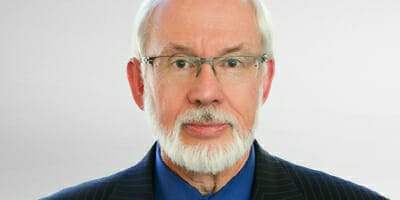
Richard Barker is Professor of Accounting and Associate Dean of Faculty , and Robert Eccles (pictured) is Visiting Professor of Management Practice at Said Business School, University of Oxford.
Bob Eccles will be speaking at the Fiduciary Investors Symposium online on December 8. For more information click here.








Leave a Comment
You must be logged in to post a comment.
Login