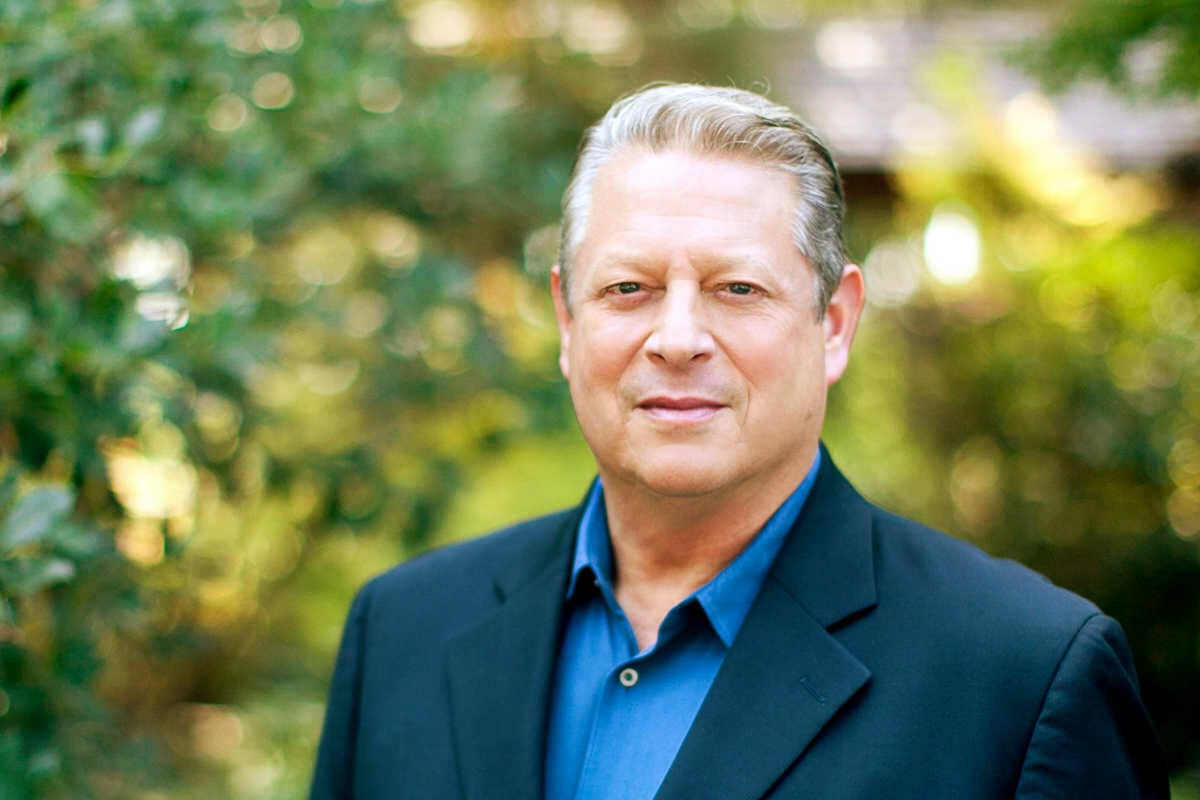

Gore spruiks sustainable investment

Climate change is the number one threat to the global economy but sustainability is the “single largest opportunity in all of history”, former US vice-president Al Gore told delegates at the Milken Institute Global Conference.

“The sustainability revolution is powered by new digital tools,” Gore said. “It has the magnitude of the industrial revolution and the speed of the technology revolution. It’s the single largest opportunity in all of history. The investor community can, and is starting to, play a key role in this.

“We are in a moment of transformation. The global economy is responding to new conditions and the resources we relied on in the past have delivered unanticipated problems. But there are new opportunities in resources. Growth must become sustainable growth.”

Gore called for policy changes to stop subsidising fossil fuels but said institutional investors adopting long-term horizons was the real key to change, as demonstrated by Norges Bank, which has taken a long view on climate.

“The cultural focus on short-term performance distorts the rational allocation of capital,” he said.

Gore told delegates there were still three questions to be answered on the climate: Must we change? Can we change? Will we change?

Sponsored Content

He said that every 24 hours, 100 million tonnes of man-made pollution was released into the air. While oil-production practices such as forest burning, land transport and landfill were all large sources of pollution, the biggest by far, was human reliance on fossil fuels, he said.

“Climate change has been a security issue for the country for some time,” he said. “It is the number one threat to the global economy. So we have to change, but can we?”

He said the US was the only country in the world that persistently denied climate change and pointed out that it cannot legally withdraw from the Paris Agreement until after the 2020 presidential election, alluding to the fact a change in president could alter the country’s stance on the issue.

“In the US, we’ve had 14 1-in-1000 events in the last seven years,” Gore said. “We have to solve this. We have the tools. We don’t have to wait for some research-and-development breakthrough, the answers are here.”

He said a volatile climate also set new conditions for growth and pointed to agriculture and energy as two areas to watch.

“The cost of clean new energy is coming down so dramatically,” he said. “In the US, 62 per cent of new capacity was from solar and wind last year. Chile and India have very large amounts of solar energy under construction and, in the US, solar jobs are growing nine times faster than other jobs.”

The session with Gore was chaired by Jim Yong Kim, president of the World Bank, which has a climate action plan that includes helping countries put a price on carbon, which will create incentives for investments in renewable energy and energy efficiency.

Asset Owner:World Bank

Leave a Comment

La Caisse’s oil exit pays off as renewables portfolio pulls ahead of fossil fuels

La Caisse’s oil exit pays off as renewables portfolio pulls ahead of fossil fuels

Divesting from the oil sector has been a boon for La Caisse’s performance, as the Canadian pension giant says its energy investments have earned billions in value-add compared to the benchmark since the inception of its climate strategy. Head of sustainability Bertrand Millot unpacks the fund’s approach in an interview with Top1000funds.com.

Sort content by

Holding managers to account

CalPERS has integrated sustainability into its investment strategy and implementation, and uses asset class-specific criteria to assess managers on ESG.

Empowering asset owners

Head of the global union movement, Sharan Burrow, has called on asset owners to “stop talking about constraints on fiduciary duty” and take the lead on the transition to a green economy. Burrow was part of a panel at the Fiduciary Investors Symposium in Chicago that told delegates the next wave of stewardship is not

Guide to persuading trustees to join the ESG journey: CalSTRS and BT Pension Fund explain all

For many asset owners, persuading their trustees to adopt an ESG strategy can be a challenge. The ESG strategy of one of the UK’s biggest pension funds, the $65 billion BT Pension Scheme, became more serious with the realisation that the scheme’s sponsors and beneficiaries were more interested in the area, said Daniel Ingram, head of

The importance of investment beliefs

It’s often said that investment beliefs provide the solid frame on which investment strategy can hang. Some of these Magna Carta’s are beguilingly simple, like ‘Costs Matter’. Others may enshrine beliefs like ‘A Long Term Investors Has Opportunities and Responsibilities.’ So, it was with keen interest that delegates at PRI in Person 2015, the annual

Designing an investment organisation for the long-term

With so many asset owners looking towards long-term investing, it is considered for funds managers to ask how their business models are aligned with those client aims, or not. In this research paper, Geoff Warren, research director for the Centre for International Finance and Regulation looks at how investment management organisations might be built to

UK funds set RI reporting expectations for managers

A group of 16 UK asset owners with combined assets of more than £200 billion ($269 billion) have developed a guide to responsible investment reporting in public equity. The aim of the guide is to clarify the investors’ reporting responsible investment requirements as they seek to include it in RFPs, manager searches, due diligence and

Previous




