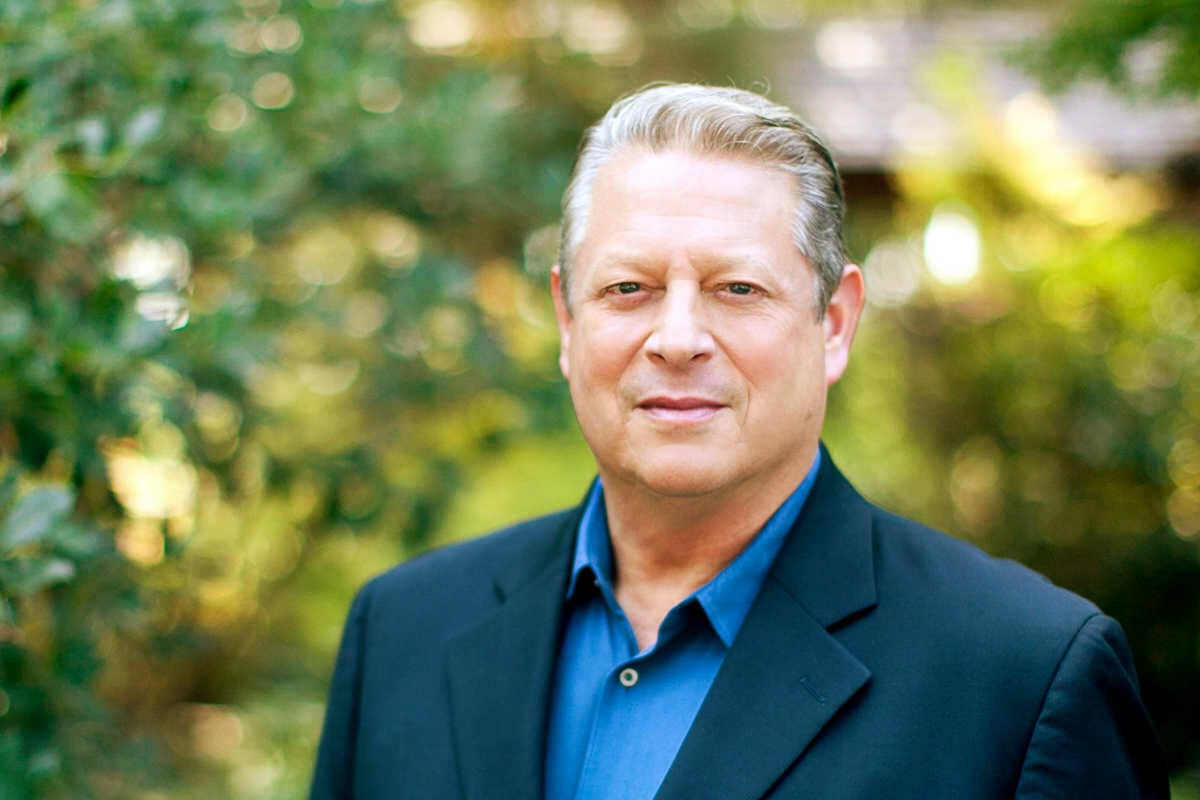

Gore spruiks sustainable investment

Climate change is the number one threat to the global economy but sustainability is the “single largest opportunity in all of history”, former US vice-president Al Gore told delegates at the Milken Institute Global Conference.

“The sustainability revolution is powered by new digital tools,” Gore said. “It has the magnitude of the industrial revolution and the speed of the technology revolution. It’s the single largest opportunity in all of history. The investor community can, and is starting to, play a key role in this.

“We are in a moment of transformation. The global economy is responding to new conditions and the resources we relied on in the past have delivered unanticipated problems. But there are new opportunities in resources. Growth must become sustainable growth.”

Gore called for policy changes to stop subsidising fossil fuels but said institutional investors adopting long-term horizons was the real key to change, as demonstrated by Norges Bank, which has taken a long view on climate.

“The cultural focus on short-term performance distorts the rational allocation of capital,” he said.

Gore told delegates there were still three questions to be answered on the climate: Must we change? Can we change? Will we change?

Sponsored Content

He said that every 24 hours, 100 million tonnes of man-made pollution was released into the air. While oil-production practices such as forest burning, land transport and landfill were all large sources of pollution, the biggest by far, was human reliance on fossil fuels, he said.

“Climate change has been a security issue for the country for some time,” he said. “It is the number one threat to the global economy. So we have to change, but can we?”

He said the US was the only country in the world that persistently denied climate change and pointed out that it cannot legally withdraw from the Paris Agreement until after the 2020 presidential election, alluding to the fact a change in president could alter the country’s stance on the issue.

“In the US, we’ve had 14 1-in-1000 events in the last seven years,” Gore said. “We have to solve this. We have the tools. We don’t have to wait for some research-and-development breakthrough, the answers are here.”

He said a volatile climate also set new conditions for growth and pointed to agriculture and energy as two areas to watch.

“The cost of clean new energy is coming down so dramatically,” he said. “In the US, 62 per cent of new capacity was from solar and wind last year. Chile and India have very large amounts of solar energy under construction and, in the US, solar jobs are growing nine times faster than other jobs.”

The session with Gore was chaired by Jim Yong Kim, president of the World Bank, which has a climate action plan that includes helping countries put a price on carbon, which will create incentives for investments in renewable energy and energy efficiency.

Asset Owner:World Bank

Leave a Comment

La Caisse’s oil exit pays off as renewables portfolio pulls ahead of fossil fuels

La Caisse’s oil exit pays off as renewables portfolio pulls ahead of fossil fuels

Divesting from the oil sector has been a boon for La Caisse’s performance, as the Canadian pension giant says its energy investments have earned billions in value-add compared to the benchmark since the inception of its climate strategy. Head of sustainability Bertrand Millot unpacks the fund’s approach in an interview with Top1000funds.com.

Sort content by

TCorp launches sustainability bond

The investment arm of one of Australia’s state governments, TCorp, has issued a A$1.8 billion sustainability bond reflecting the appetite of investors which are increasingly hungry for bonds that are issued to fund social and environmental projects.

Railpen and Nest warn on cyber risk

Two of the United Kingdom’s largest pension funds have launched a guide to cyber risk for asset owners highlighting key cyber dangers asset owners should watch, and rules of engagement with investee companies and reticent asset managers.

Largest investors need governance change

Governance and culture considerations among the largest 100 asset owners need to be improved according to the Willis Towers Watson Thinking Ahead Institute second Asset Owner 100 study. These asset owners account for 35 per cent of total asset owner capital with combined assets of $19 trillion.

Foundation puts diversity first

Bert Feuss, senior vice president, investments at the $13.5 billion Silicon Valley Community Foundation, SVCF, explains why diversity is so important, the steps the impact investor has taken to address the institutionalised lack of diversity, and the impact on performance.

Investors unite against modern slavery

The finance industry can not end modern slavery and human trafficking but it will not end without the finance industry. Head of ESG at NZ Super, Anne-Maree O'Connor, says investors can engage in a new report ‘Finance Against Slavery and Trafficking,’ to learn more about the specific role that they can play in making slavery a thing of the past and help achieve the SDGs.

Decarbonisation linked to better returns

As concerns about climate change reach fever pitch, Harvard Business School has published a report that shows investment strategies that “aggressively’ reduce carbon emissions can significantly boost fund performance.

Previous




