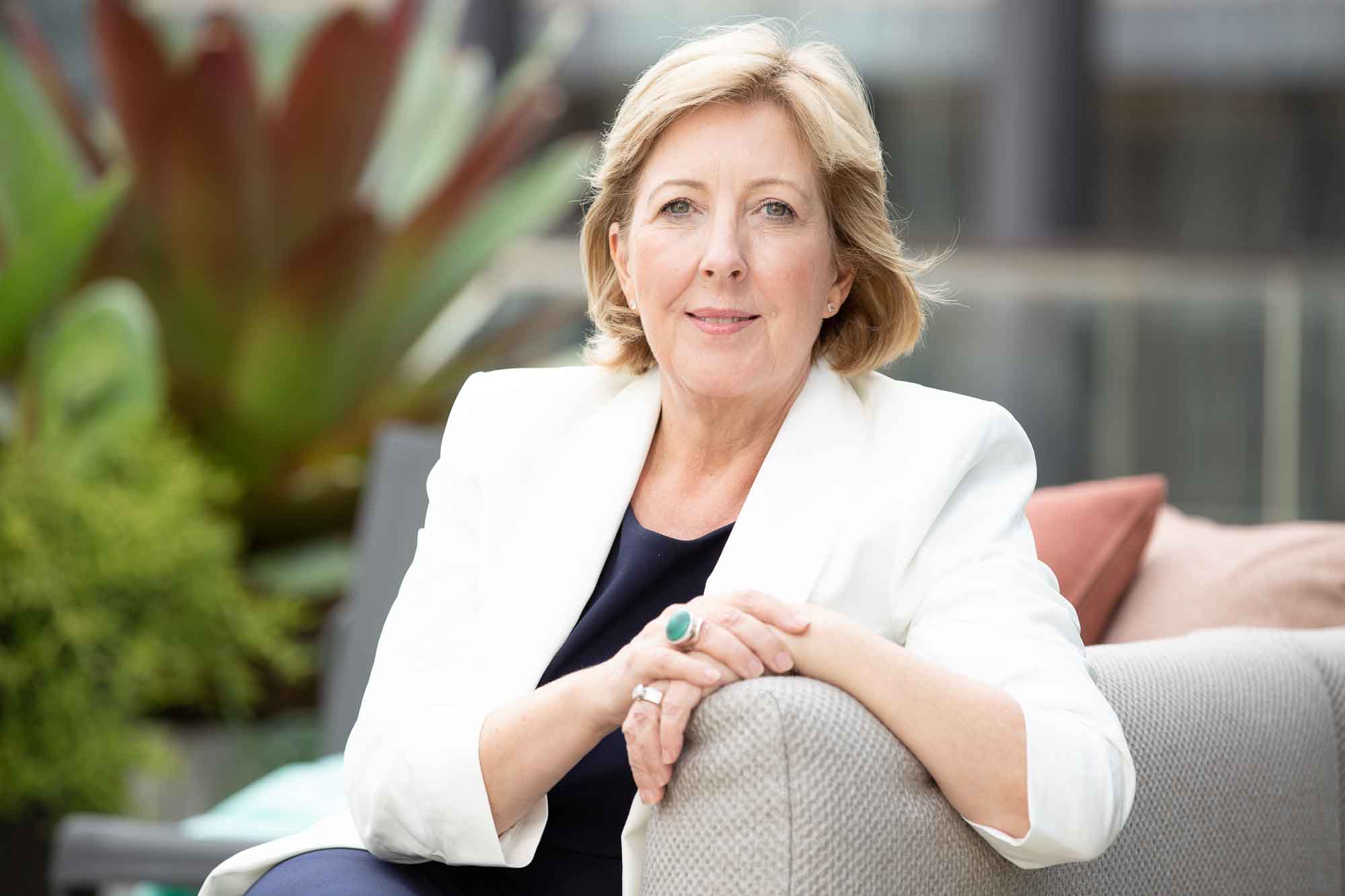

COP: There might be disappointment, but it’s still the best hope we have

This was the first COP meeting that I have missed in a very long time. As I watched from afar, I was at first disappointed not to be there in person but as I read much of the commentary about the lack of progress along with ‘the first world problems’ of long queues and bad food, I was at the same time glad to be home watching from the sidelines.

Despite much of the disappointment around the lack of 1.5C commitments and clear language on fossil fuel phase outs along with the slow pace of change, COP still remains the critical multilateral climate convening of nations, and is now attracting an increasing host of finance, corporate and civil society representation which provides a separate stream of momentum alongside the official negotiations.

I have witnessed firsthand many investors rally around COP to make major climate announcements, to update on progress on past commitments and the same on the business side, so we shouldn’t underestimate how important COP meetings are to both governments and the private sector. Without them momentum would be completely lost.

In the post-COP twilight with the initial assessment of pass or fail all written, institutional investors are rightly asking where we are up to at the end of 2023. What has changed and what remains the same?

The divide between aspiration and reality on 1.5C as an achievable outcome has already been noted in many quarters. After last year’s COP, we talked about 1.5 being still alive but on life support, this year many have pointed to the fact that as it currently stands, there is no credible pathway to limit warming to 1.5 degrees with the latest data showing that the world is on track for a temperature rise of between 2.4 and 2.6 degrees by the end of the century. The Inevitable Policy Response (IPR) analysis released during the conference helpfully revealed the policy gap between commitments and action, against both 1.8C and 1.5C outcomes for both developed and developing countries

Another disappointment which was yet again on display at this COP was the delaying hand of the carbon lobby seeking to water down commitments and many would argue that sadly they were successful.

Sponsored Content

Yet the COP process is still important and it may yet overcome both political and private sector inertia.

Investors looking ahead are aware that next year’s conference in the UAE will see the global stocktake take place, where nations will have to table their climate homework and their progress against their NDCs. I don’t think it takes a great leap of faith to know that many countries will receive a “can do better” on their report cards.

In 2025 COP will see the global ratchet embedded in the Paris Agreement, where the pivotal fight will be about what new national targets should be.

If Australia and the Pacific Islands are successful in their bid to host the 2026 event, additional attention will be on north/south finance and large-scale investment in low-carbon development paths, along with the reality of climate change for many low-lying Pacific nations.

For policymakers the next three to four years will bring relentless pressure to act. Clause IX of the Implementation Plan highlights that $4 trillion annually needs to be spent on renewable energy until 2030, to reach net zero by 2050 and an additional $4-6 trillion a year to achieve a low-carbon global economy.

For investors, the longer-term energy security impetus unleashed by the Ukraine War and the combined impact of US legislative developments are increasingly evident. The Inflation Reduction Act is providing new impetus and will give some confidence that at least part of investor net zero portfolio commitments can be met with increased investor support.

Where we have progress on one side though, unfortunately, much has also been made of the negative effect of anti-climate lobbying at a national level and at Sharm el-Sheikh. Influence Map has been unfailing in its efforts to expose the contradictions between corporate image setting and climate action sabotage. Let’s call it for what it is.

The fossil fuel lobbyists will again be out in force again in the at COP28 in the UAE. But a reckoning will have to come. Investors must redouble their efforts to end the funding of membership and the power of trade associations, think tanks and other third-party organisations that slow policy shifts and investment flows.

COP organisers cannot continue to give free reign to climate deniers and wreckers indefinitely either.

Limiting tobacco advertising was once seen as being an almost impossible task and an untenable restriction on business. Policymakers seeking elbow room need to find the courage to begin restricting and regulating anti climate lobby efforts.

A social license will no longer be a nice to have post 2025.

Silencing the carbon lobbyists will free up space to deal with the fundamental questions of north/south finance, just transition and accelerating investment.

All reasons why COP must step up so it can continue to occupy the climate centre stage.

One response to “COP: There might be disappointment, but it’s still the best hope we have”

  1. Mike Clark

    Well said Fiona. Few people realise just how disastrous 2Deg will be, let alone anything higher. Insurers will rightly continue to withdraw cover. So more uninsured losses will help us realise GDP is a dangerous metric when it ignores balance sheet destruction. With less insurance offered, banks will fund fewer capital projects.
    When earth science arm wrestles capital markets, the winner is clear. A Minsky Moment seems pretty certain.
    Strange not to have you on the stage here in Barcelona! Best, Mike

Leave a Comment

La Caisse’s oil exit pays off as renewables portfolio pulls ahead of fossil fuels

La Caisse’s oil exit pays off as renewables portfolio pulls ahead of fossil fuels

Divesting from the oil sector has been a boon for La Caisse’s performance, as the Canadian pension giant says its energy investments have earned billions in value-add compared to the benchmark since the inception of its climate strategy. Head of sustainability Bertrand Millot unpacks the fund’s approach in an interview with Top1000funds.com.

Sort content by

COVID-19 leads to heightened scrutiny

A survey of Canada’s institutional investors representing C$2.3 trillion shows they are increasingly seeing the value in managing “S” issues and are asking deeper questions about the impacts of investments.

Enormity of climate crisis misunderstood

There is a lack of understanding in investment decision-making about how big the climate crisis is which could lead to investments and risks being mis-directed, according to Professor Cameron Hepburn, Professor of Environmental Economics at Oxford University.

ESG and alpha: ESG integration in China

New research by the PRI suggests integrating ESG into investment practices in China is set to become best practice. It makes sense for asset owners to mandate ESG incorporation with their managers as markets are opening up and ESG risks and opportunities affect corporate performance in China.

Coronavirus, climate change parallels

The lackadaisical response by the United States to the coronavirus crisis is indicative of broader risk management issues and comparable to the country’s anaemic response to climate change according to risk expert, Bob Litterman.

The power of collective investor action

It’s time for the responsible investment community to step up and play its role as long-term holders of capital and call corporations to account. It’s time for asset owners sitting at the apex of the investment chain to lead the financial sector through this crisis. We need to maintain a focus on long-term horizons and support collective action while trying to understand the real issues companies are facing from COVID-19 as well as the flow on effects to our individual portfolios.

Long-term approach needed more than ever

Chief investment officer of the world’s largest pension fund the $1.5 trillion GPIF, Hiro Mizuno, says large institutional investors must stay calm and maintain their long term investment course. He told Top1000funds.com that “long term investment is needed more than ever before”.

Previous




