
China needs to play TCFD catch up

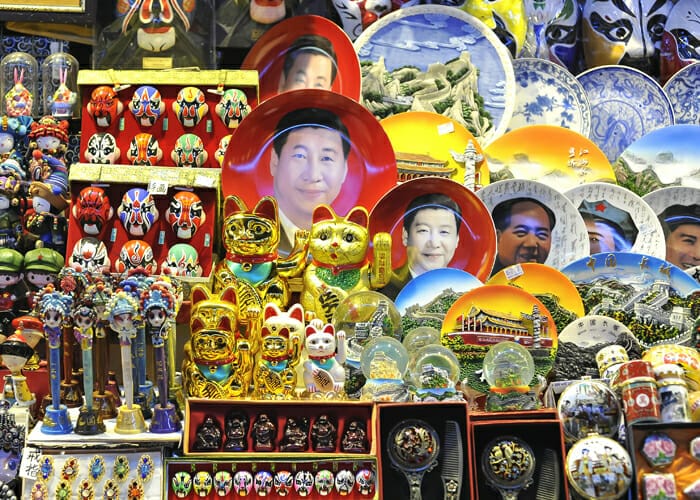
Beijing, China - October 19, 2014 - A souvenir stall at a Beijing night market selling Xi Jinping face plates and other kitsch rubbish.

Last month’s net zero pledge by President Xi Jinping was heralded as a monumental step forward to achieving the Paris Agreement. But can China seriously reach peak carbon before 2030 and net zero by 2060?

The world’s largest emitter of CO2, responsible for 28 per cent of global emissions, will need to radically reshape its entire economy to stand any chance of reaching this target. The financial sector will be a crucial part of this transformation.

If China is to make finance a force for good, it makes sense that all institutions will need strong TCFD alignment paired with capital allocation to low carbon businesses.  However, CDP’s research in partnership with UK PACT (UK Partnering for Accelerated Climate Transitions, funded by BEIS) shows that responding Chinese financial institutions are far behind global peers on TCFD alignment and need to ramp up efforts around disclosure and climate change related risks and opportunities.   

Progress to be made in global rankings

China’s net zero target is laudable but it’s critical that the country’s financial institutions continue to ramp up their efforts in measuring, disclosing, and responding to climate risk. Chinese financial institutions only began responding to CDP questionnaires four years ago. Thus disclosure in the region is still nascent, with only 7 of the 65 (11 per cent) invited Chinese financial institutions responding to CDP’s TCFD–aligned 2019 questionnaire.

Although Chinese financial institutions still have a long way to go to catch up with their European peers, of which 47 per cent disclosed – and most Chinese financial respondents received a D score (which means the respondent has achieved information disclosure) – the country has seen steady progress in promoting environmental information disclosure in past years.

Sponsored Content

There is cause for optimism however, with one Chinese financial institution receiving a B score (environmental management level), a sure sign of effective identification, assessment, and management of climate-related risks and low-carbon transition plans. A B score1 is an exceptional achievement for a first-time discloser and evidence that there is global leadership potential among Chinese firms.

How can China’s financial institutions catch up?

First and foremost, broader disclosure is needed, and if Chinese institutions are to play their part in the country’s net zero transformation they need to get up to speed in preparing TCFD-compliant quantitative information, particularly around target setting and Scope 3 (indirect) emissions reduction.

Scope 3 accounting for the financial industry is complicated but evolving fast, with guidance on calculating emissions from equity, debt, project finance and managed investments now available.  Having access to this kind of data brings a host of other benefits as well as better environmental performance, helping financial institutions get ahead of regulatory and policy changes, identify and tackle growing risks, and find new opportunities. With 83 per cent of global institutions now disclosing their scope 3 impact, there are few excuses left for those yet to tackle their indirect emissions.

Time to put words into action

China’s announcement to reach peak emissions before 2030 and achieve carbon neutrality before 2060 is a giant step forward in tackling the climate crisis. But actions speak louder than words, and the question now is how Chinese leadership will ensure that its actions match its commitments. The right frameworks and concrete implementation plans need to be put in place.

China’s financial institutions have a vital role to play and TCFD aligned disclosure will be a crucial part of how they catch up with the rest of the world. If the world’s biggest coal producer is to have a serious shot at realising a net zero future, its financial institutions need to act fast and help get the country on track to reach its 2060 target.

  1. According to CDP Scoring Methodology, responding companies will be assessed across four consecutive levels which represent the steps a company moves through as it progresses towards environmental stewardship. The levels are:
    Score A: Leadership; B: Management; C: Awareness; and D: Disclosure.

Antigone Theodorou is regional director, Asia Pacific, Latin America and partner regions at CDP

Leave a Comment

La Caisse’s oil exit pays off as renewables portfolio pulls ahead of fossil fuels

La Caisse’s oil exit pays off as renewables portfolio pulls ahead of fossil fuels

Divesting from the oil sector has been a boon for La Caisse’s performance, as the Canadian pension giant says its energy investments have earned billions in value-add compared to the benchmark since the inception of its climate strategy. Head of sustainability Bertrand Millot unpacks the fund’s approach in an interview with Top1000funds.com.

Sort content by

Can finance crack modern slavery?

Institutional investors are increasingly worried about investing in businesses that exploit slave workforces through their supply chains. A roundtable into modern slavery discussed how asset owners and managers can take the lead to impact the 40.3 million workers in the world suffering from some form of labour abuse.

The value creation boundary

The value creation boundary, a margin between innocent bystanders and the parties involved in an economic activity, is a powerful thinking device for asset owners and managers to use in considering their investment responsibilities. So should long-term investors expand the boundary and include more of humanity in the consequences of investment decisions?

New guide for implementing climate risks

More than 600 organisations have supported the Task Force on Climate Related Financial Disclosures but the implementation of its recommendations have been slow, so CDSB and SASB have drawn on their well-established reporting frameworks to produce a guide that shows companies, in a very practical way, how to implement the recommendations.

Foundations should invest for impact

Inequality and the climate crisis are market-based problems that need market-based solutions. What is the role of foundations in solving such problems?

The world must change

"If we don’t heal the fractures of today’s workforce that have been caused by the current model of greed, we will see even greater inequality in years to come," says Sharan Burrow, general secretary, International Trade Union Confederation.

The most responsible allocators named

The Responsible Asset Allocator Initiative’s Leaders List report, developed in partnership with the Fletcher School at Tufts University, analysed $21 trillion in sovereign wealth fund and government pension fund assets around the world to identify 25 leaders and 25 finalists that set a global standard of excellence in sustainable investing.

Previous




