
China needs to play TCFD catch up

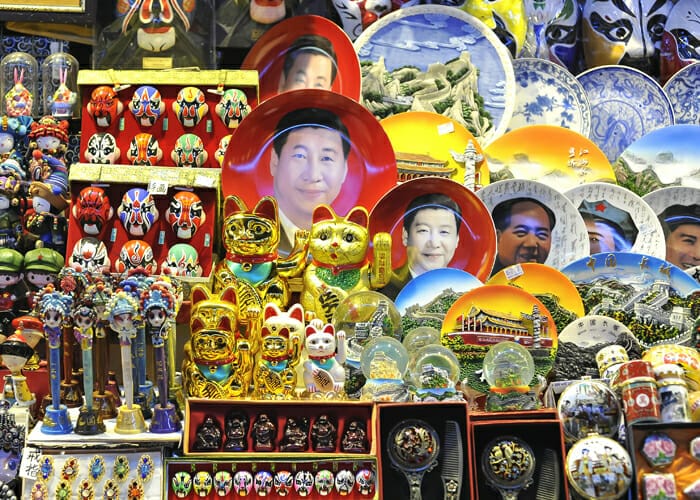
Beijing, China - October 19, 2014 - A souvenir stall at a Beijing night market selling Xi Jinping face plates and other kitsch rubbish.

Last month’s net zero pledge by President Xi Jinping was heralded as a monumental step forward to achieving the Paris Agreement. But can China seriously reach peak carbon before 2030 and net zero by 2060?

The world’s largest emitter of CO2, responsible for 28 per cent of global emissions, will need to radically reshape its entire economy to stand any chance of reaching this target. The financial sector will be a crucial part of this transformation.

If China is to make finance a force for good, it makes sense that all institutions will need strong TCFD alignment paired with capital allocation to low carbon businesses.  However, CDP’s research in partnership with UK PACT (UK Partnering for Accelerated Climate Transitions, funded by BEIS) shows that responding Chinese financial institutions are far behind global peers on TCFD alignment and need to ramp up efforts around disclosure and climate change related risks and opportunities.   

Progress to be made in global rankings

China’s net zero target is laudable but it’s critical that the country’s financial institutions continue to ramp up their efforts in measuring, disclosing, and responding to climate risk. Chinese financial institutions only began responding to CDP questionnaires four years ago. Thus disclosure in the region is still nascent, with only 7 of the 65 (11 per cent) invited Chinese financial institutions responding to CDP’s TCFD–aligned 2019 questionnaire.

Although Chinese financial institutions still have a long way to go to catch up with their European peers, of which 47 per cent disclosed – and most Chinese financial respondents received a D score (which means the respondent has achieved information disclosure) – the country has seen steady progress in promoting environmental information disclosure in past years.

Sponsored Content

There is cause for optimism however, with one Chinese financial institution receiving a B score (environmental management level), a sure sign of effective identification, assessment, and management of climate-related risks and low-carbon transition plans. A B score1 is an exceptional achievement for a first-time discloser and evidence that there is global leadership potential among Chinese firms.

How can China’s financial institutions catch up?

First and foremost, broader disclosure is needed, and if Chinese institutions are to play their part in the country’s net zero transformation they need to get up to speed in preparing TCFD-compliant quantitative information, particularly around target setting and Scope 3 (indirect) emissions reduction.

Scope 3 accounting for the financial industry is complicated but evolving fast, with guidance on calculating emissions from equity, debt, project finance and managed investments now available.  Having access to this kind of data brings a host of other benefits as well as better environmental performance, helping financial institutions get ahead of regulatory and policy changes, identify and tackle growing risks, and find new opportunities. With 83 per cent of global institutions now disclosing their scope 3 impact, there are few excuses left for those yet to tackle their indirect emissions.

Time to put words into action

China’s announcement to reach peak emissions before 2030 and achieve carbon neutrality before 2060 is a giant step forward in tackling the climate crisis. But actions speak louder than words, and the question now is how Chinese leadership will ensure that its actions match its commitments. The right frameworks and concrete implementation plans need to be put in place.

China’s financial institutions have a vital role to play and TCFD aligned disclosure will be a crucial part of how they catch up with the rest of the world. If the world’s biggest coal producer is to have a serious shot at realising a net zero future, its financial institutions need to act fast and help get the country on track to reach its 2060 target.

  1. According to CDP Scoring Methodology, responding companies will be assessed across four consecutive levels which represent the steps a company moves through as it progresses towards environmental stewardship. The levels are:
    Score A: Leadership; B: Management; C: Awareness; and D: Disclosure.

Antigone Theodorou is regional director, Asia Pacific, Latin America and partner regions at CDP

Leave a Comment

La Caisse’s oil exit pays off as renewables portfolio pulls ahead of fossil fuels

La Caisse’s oil exit pays off as renewables portfolio pulls ahead of fossil fuels

Divesting from the oil sector has been a boon for La Caisse’s performance, as the Canadian pension giant says its energy investments have earned billions in value-add compared to the benchmark since the inception of its climate strategy. Head of sustainability Bertrand Millot unpacks the fund’s approach in an interview with Top1000funds.com.

Sort content by

COVID-19 highlights human rights

The financial system will play a critical role in enabling economic recovery, development and contributing to wider societal well-being, including a focus on human rights. The PRI is working with investors to ensure that the financial sector contributes to, not detracts from, more inclusive societies. A world post COVID-19 needs to ensure the recovery respects both the boundaries of the planet and the rights of its people.

Investors focus on human capital

Investors are putting pressure on companies to accelerate the shift to purpose-driven leadership and focus on human capital policies during the crisis. But while there are some examples of corporations making policy changes that positively impact their workers, supply chain issues pose a significant problem.

ESG tool tracks supply chain COVID risk

ESG data provider, Fair Supply Analytics, has produced technology that maps the impact of COVID-19 on global supply chains, and can be used by investors to measure their investment portfolios exposure to the sectors and countries most effected.

London’s CIV talks pooling progress

The coronavirus is an unprecedented test for the UK’s eight Local Government Pension Scheme asset pools. The London Collective Investment Vehicle, the pooling manager for the pension assets of London’s 32 boroughs has lost 15 per cent of the value of its portfolio for the month, and CEO Mike O’Donnell says ensuring liquidity and diversification are priorities in the months ahead.

Long-term disclosure post COVID-19

In times of uncertainty and disruption the “long-term” is a place that’s often easy to talk about but harder to operationalise but forward-looking information is highly valued, particularly during this crisis. To understand a company’s value proposition requires a real sense of its ability to innovate and be a source of disruption (not its victim). That requires a rounded view of the forward story and an assessment of key ESG issues and mega-trends.

Meeting the social infrastructure need

The current coronavirus crisis has exposed many weaknesses, one of them being the chronic under-investment in social infrastructure in most countries – developed and emerging. So what can be done to make this more attractive for investors and meet the need?

Previous




