
Investors can’t afford to ignore China risk: Kotkin

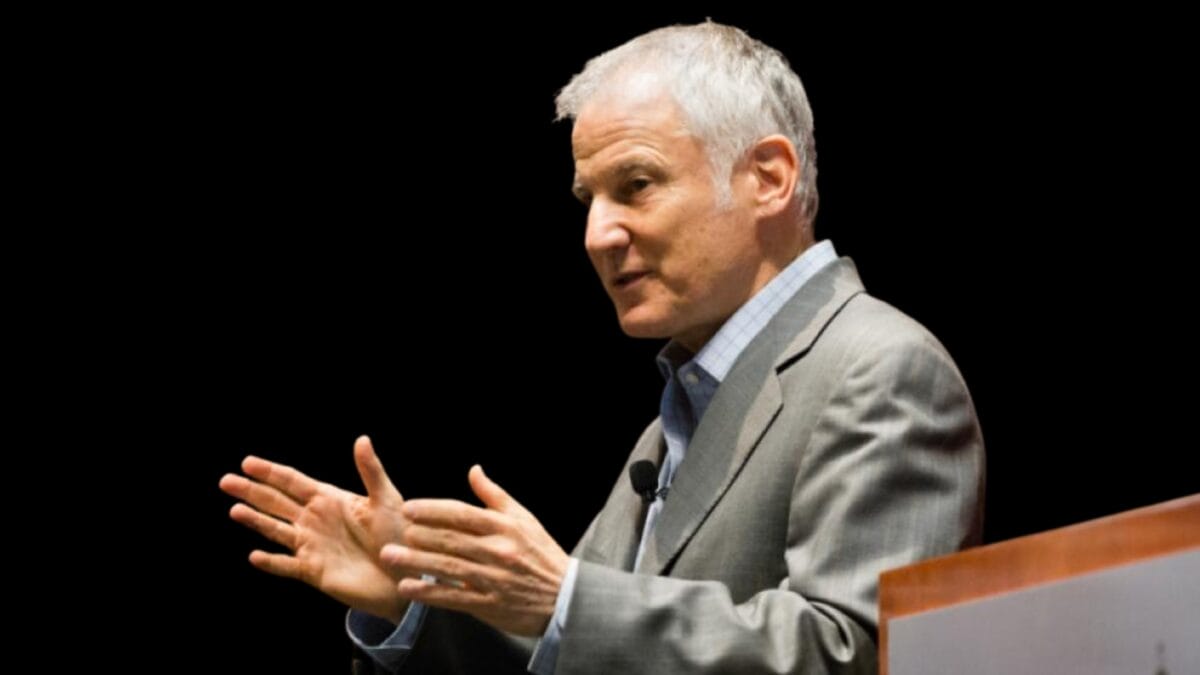
A move away from “naïve engagement” between the US and China affords the opportunity for genuine diplomacy and stabilising relationships over the longer term according to Professor Stephen Kotkin, senior fellow at Stanford’s Freeman Spogli Institute for International Studies and the Kleinheinz Senior Fellow at the Hoover Institution.

Speaking to Top1000funds.com in a video interview on the anniversary of the Russian invasion of Ukraine, Kotkin said a significant armed conflict between the US and China is the “real” geopolitical risk and must be avoided because of its broader systemic impact.

“Geopolitical risk is exaggerated for the most part, most geopolitical risk does not affect markets in the way analysts claim,” he says. “The consequences on a humanitarian level are vast but on an investment level they can often be ignored. With China though it is much larger and systemic and so investors can’t ignore it.”

“I was never one to think that globalisation was at risk but I was one to think that China’s role in globalisation was going to shift radically, that trend was apparent before Russia’s full scale invasion of Ukraine and it has accelerated since.”

Kotkin, who is also the emeritus Professor in History and International Affairs at Princeton University, where he taught for 33 years is a world expert in geopolitics and authoritarian regimes including Russia.

Sponsored Content

He said amid all the atrocities, as well as the heroism, the Ukraine war has two invaluable achievements: it demonstrated both to China and to the West just how much strength the West possesses, and it showcased an outcome no one should want.

“This is no guarantee of statesmanship.  It is, though, a basis for it,” he said. “One can, justifiably, be both more pessimistic and more optimistic at the same time, as a result.”

Kotkin said there were many surprises as a result of the conflict in Ukraine including Russia’s ability to withstand the sanctions. Althought hard to measure accurately he said Russia’s GDP decline was probably 2-4 per cent last year and may even see growth this year, while Ukraine has lost at least a third of GDP.

“The biggest surprise for me is the absence of another area of the world that has tried to take advantage of the situation, that has tried to do something while the world was distracted by Ukraine,” he said. “That hasn’t happened so that has been a pleasant surprise. It shows you have to be careful and humble with your forecasting but it also shows we are early in this war and there is much more that could come including economic dislocation.”

  1. Sanford Rich

    NYCBERS analyzed the last two decades of developed and emerging international allocations in our equity portfolio. The result suggests that historic assumed/projected returns, volatility, and correlation were not even close to being accurate. The historic assumptions led to a 15% allocation to Ex-US developed markets and emerging markets. Performance disappointed on all measures. As we approach a new asset-liability analysis and asset allocation, the question is what assumptions are reasonable for Ex-US developed and emerging markets, both absolute and relative, and what is it that impacted returns in international markets to create such deviation from expectations and relative performance? What did we, and our consultants get wrong? Also, if you believe in mean reversion what is the expectation for mean, and what will drive international markets to outperform the US (the historic assumption)?
    Are we failing to account for Geopolitical risk or autocracy risk?

Leave a Comment

La Caisse’s oil exit pays off as renewables portfolio pulls ahead of fossil fuels

La Caisse’s oil exit pays off as renewables portfolio pulls ahead of fossil fuels

Divesting from the oil sector has been a boon for La Caisse’s performance, as the Canadian pension giant says its energy investments have earned billions in value-add compared to the benchmark since the inception of its climate strategy. Head of sustainability Bertrand Millot unpacks the fund’s approach in an interview with Top1000funds.com.

Sort content by

Energy is the fundamental systemic risk

Tim Hodgson, co-founder of the Thinking Ahead Institute at WTW, makes the case that energy is the metaphorical lifeblood of any system, and is therefore the fundamental systemic risk, and that this insight should inform how we go about our net-zero investing.

Russian invasion of Ukraine proves West not in decline: Stephen Kotkin

The Ukraine invasion is an epic tragedy but also an opportunity for the West to re-discover its values and restore neglected relationships with much of the world, according to Professor Stephen Kotkin, an American historian, academic and author.

Cash rate scenario analysis drives asset allocation reset at Maryland

The asset allocation of the $63 billion Maryland State Pension System has protected the fund on the downside. But now CIO Andrew Palmer is looking at cash rates persistently of 4 per cent, what that means for various asset classes and how the fund should be allocating.

Reversal of investment themes demands investors change their assumptions

Investors are currently facing the end of uncertainty around assumptions they have made for decades, and need to shore up their portfolios with greater inflation protection, more active management, and by fostering innovation, according to chief strategist at the Investment Management Corporation of Ontario.

Turmoil at Alecta as CEO fired and equity revamp promised

Alecta, Sweden’s biggest pension fund with $110 billion of assets under management, has fired its chief executive Magnus Billing following nearly $2 billion of losses incurred from last month’s US banking crisis. The pension fund is also beginning an enquiry into how it manages equity.

OPTrust: Why liquidity is central to risk management

As SVB has just discovered - and UK pension funds were sharply reminded last year - every financial crisis is essentially a liquidity crisis. It's why Peter Lindley, president and chief executive of $25 billion OPTrust, one of Canada's largest defined benefit pension plans, puts liquidity management front and centre.

Previous




