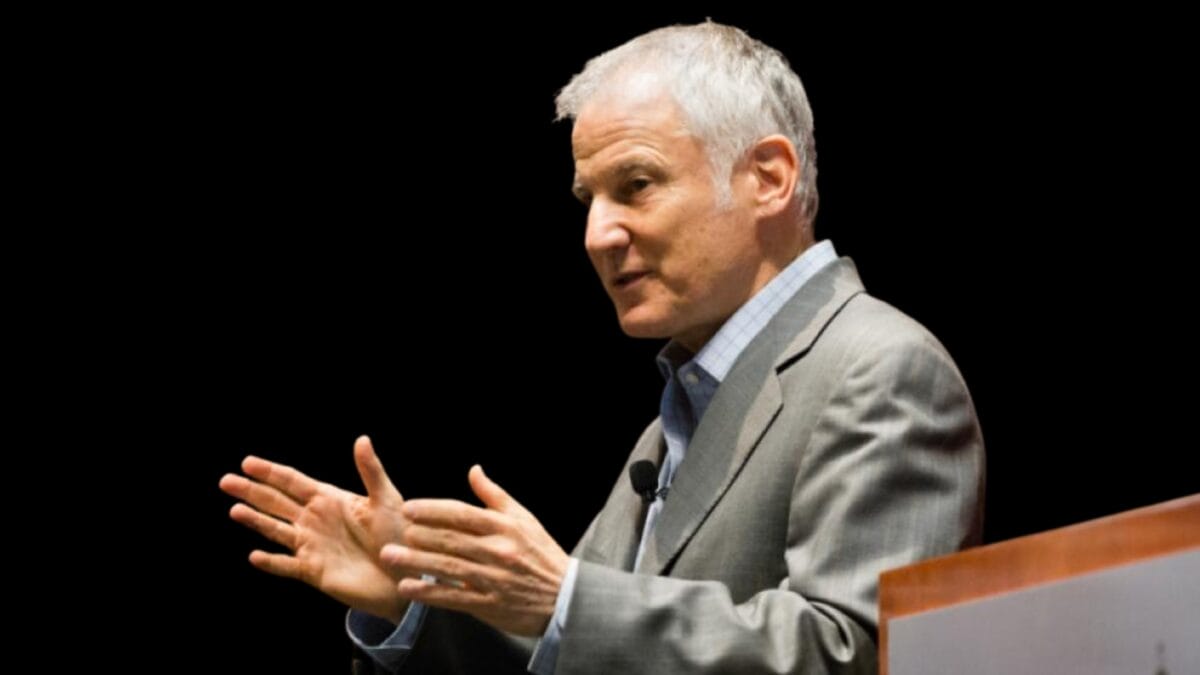

Investors can’t afford to ignore China risk: Kotkin

A move away from “naïve engagement” between t
Continue Reading

A Top1000funds.com subscription unlocks the full article

Join the global institutional investment platform read by the world's largest asset owners, fund managers and consultants.

New here

Create an account

Complimentary to register. We'll verify your details and grant access to the archive, our newsletters and the Asset Owner Directory (enhanced features coming soon).
Register now
Already a member

Sign in

Already activated your account? Sign in to continue reading and access your saved articles, preferences and member-only content.
  1. Sanford Rich

    NYCBERS analyzed the last two decades of developed and emerging international allocations in our equity portfolio. The result suggests that historic assumed/projected returns, volatility, and correlation were not even close to being accurate. The historic assumptions led to a 15% allocation to Ex-US developed markets and emerging markets. Performance disappointed on all measures. As we approach a new asset-liability analysis and asset allocation, the question is what assumptions are reasonable for Ex-US developed and emerging markets, both absolute and relative, and what is it that impacted returns in international markets to create such deviation from expectations and relative performance? What did we, and our consultants get wrong? Also, if you believe in mean reversion what is the expectation for mean, and what will drive international markets to outperform the US (the historic assumption)?
    Are we failing to account for Geopolitical risk or autocracy risk?

Leave a Comment

La Caisse’s oil exit pays off as renewables portfolio pulls ahead of fossil fuels

La Caisse’s oil exit pays off as renewables portfolio pulls ahead of fossil fuels

Divesting from the oil sector has been a boon for La Caisse’s performance, as the Canadian pension giant says its energy investments have earned billions in value-add compared to the benchmark since the inception of its climate strategy. Head of sustainability Bertrand Millot unpacks the fund’s approach in an interview with Top1000funds.com.

Sort content by

Hiding behind diversification

Modern portfolio theory has created the impression that diversification is always a good thing, but asset owners could benefit from a more sceptical attitude. This article suggests over-diversification favours managers at the expense of returns to investors.

Global uncertainty requires risk rethink

Chief risk officer at the World Bank Group, Lakshmi Shyam-Sunder, says the extreme uncertainty of the global economy requires a new risk management framework, and investors should not take anything for granted in scenario planning. The World Bank has revised down its estimates for global growth to below 3 per cent.

Navigating two decades of funded status

The funded status of corporate DB pension plans has experienced unprecedented volatility in the 21st century. This article examines the sources of funded status volatility seen over the past two decades and discusses how plan sponsors of DB pension plans have adapted. It argues it is important to exercise care in the strategy that is chosen and in the timing of implementation.

Texas Teachers revamps AA, adds leverage

The board of the $154 billion Teacher Retirement System of Texas has approved changes to its strategic asset allocation as a result of its latest five-year study, increasing its allocation to private markets, risk parity and introducing leverage.

Risk aversion matters: life-cycle design

A key issue in life-cycle fund design is setting the right ‘glide path’ for switching from growth to defensive assets over time. As it turns out, risk aversion is far more important than pension fund balance. New research raises a note of caution over offering a single, one-size-fits-all life-cycle fund.

Finding risk: First State Super

A decade of ultra-low rates and mediocre growth does not mean that every year will yield low returns for investors, according to Damian Graham, the CIO of First State Super one of Australia's largest institutional investors. He talks about how to get enough risk in the portfolio.

Previous




