Handy Sandy:
analysing the hurricane

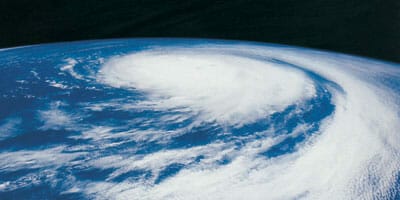
When Hurricane Sandy descended on the east coast of the United States and headed inland, it forced the closure of all the nation’s financial markets. Christopher Finger and Oleg Ruben at MSCI thought this was important because, although there are plenty of precedents for natural disasters in terms of economic impact, the storm was singular in forcing the closure of equity markets on Wall Street.

Well and good, but unexpected events such as market closures require some degree of assumption about risk modeling. The authors were driven by the need to find out whether those assumptions lived up to the potential of the havoc Sandy wreaked.

Read the report to make up your own mind.

Sponsored Content

Leave a Comment

GIC, Temasek eye trillions of growth in climate adaptation market

GIC, Temasek eye trillions of growth in climate adaptation market

Singapore’s two largest asset owners, GIC and Temasek, see attractive opportunities in climate adaptation solutions – a relatively underfunded area compared to decarbonisation. The former has already made selective adaptation investments and said the opportunity set across public and private debt and equity could increase to $9 trillion by 2050.

Sort content by

The price and performance of wine

Because it’s nearly Christmas, and conexust1f.flywheelstaging.com will close down for the holidays, we thought this research piece was apt. Elroy Dimson, Peter L. Rousseau, and Christophe Spaenjers, have looked at the impact of aging on wine prices and the performance of wine as a long-term investment, using a unique historical database for five long-established Bordeaux

Why Washington keeps giving in to Wall Street

Wall Street’s leaders are largely unrepentant for the immense harm their institutions inflicted on the U.S. economy during the financial crisis, and their outlook nd behavior have not changed in any significant way since the crisis, according to a George Washington University Law School paper. However the lengthy and detailed paper argues there is hope.

Emerging equity markets in a globalising world

This research by academics at Duke and Columbia Universities looks at whether it still makes sense to separate equities allocations into developed and emerging market buckets.   Given the dramatic globalization over the past twenty years, does it make sense to segregate global equities into “developed” and “emerging” market buckets? This paper argues that the

What a difference a PhD makes

New research has found that if you have a PhD and work for a money manager your flows will be larger and your performance will be better. This research in the US shows that the gross performance of domestic equity investment products managed by individuals with a Ph.D. (Ph.D. products) is superior to the performance

A new understanding of responsible investing preferences

Investors with a large proportion of educated female members have extra reason to take socially responsible investing seriously, but can possibly relax about poor returns. That is a fascinating finding of Rachel Pownall, an associate professor of Tilburg University, who has published groundbreaking work on the nuances of responsible investing. Pownall, together with Arian Borgers

Investment beliefs of endowments

Academics from Columbia and Yale Universities examine the expected and actual returns of US university endowment portfolios and the role of alternatives in generating alpha.   To access the paper Investment beliefs of endowmentsmrec4inarticleinline Sponsored Content scnative1 scnative2 scnative3

Previous




