Valuation and risk as the rhetoric-action gap on climate mitigation closes

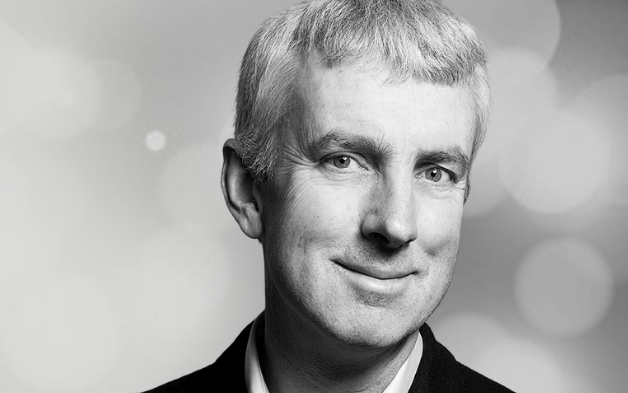
In this live recording from Sustainability in Practice, hosted by Top1000funds.com at Cambridge University in April 2022, Professor Julian Allwood speaks with Colin Tate.

About Professor Sir Julian Allwood

Julian Allwood is Professor of Engineering and the Environment at the University of Cambridge. From 2009-13 he held an EPSRC Leadership Fellowship, to explore Material Efficiency as a climate mitigation strategy – delivering material services with less new material. This led to publication in 2012 of the book “Sustainable Materials: with both eyes open” – listed by Bill Gates as “one of the best six books I read in 2015.”

Julian was a Lead Author of the 5th Assessment Report of the Intergovernmental Panel on Climate Change (IPCC) focussed on mitigating industrial emissions. Amongst others, he was elected as a Fellow of the Royal Academy of Engineering in 2017.

From 2019-24 he is director of UK FIRES – a £5m industry and multi-university programme aiming to explore all aspects of Industrial Strategy compatible with delivering zero emissions by 2050. ‘Absolute Zero’, the first publication of UK FIRES attracted widespread attention including a full debate in the House of Lords in Feb 2020, and has led to a string of other reports, research and impact.


Sponsored Content

Leave a Comment

Why Asian equities’ growth will outlast the AI-driven semiconductor cycle

Why Asian equities’ growth will outlast the AI-driven semiconductor cycle

In the latest episode of the Fiduciary Investors Series, Liao spoke with Top1000funds.com Asia Pacific correspondent Darcy Song on why the convergence of innovation, demographics and improving shareholder returns makes Asian equities an increasingly compelling diversification trade for asset owners navigating a geopolitically fractured world.

Sort content by

COVID-19 and the role of sustainability

This conversation with Joel Pohin, director of the portfolio management division, Caisse des Depots looks at how the fund is positioning the portfolio during this time of uncertainty and the role of sustainability in the short and long term.

Is Europe in trouble?

In this Fiduciary Investors series podcast Amanda White talks to Iain Begg, Professsorial Research Fellow at the European Institute, London School of Economics and Political Science, about the economic and social turmoil of COVID-19 and the robustness of the EU to deal with this economically.

Alleviating global poverty: the role of the investor

Esther Duflo, the Abdul Latif Jameel Professor of Poverty Alleviation and Development Economics at MIT and current Nobel Prize winner in Economics discusses the impact of the coronavirus pandemic on developing countries, and the role that investors can play in alleviating poverty.

The future of the corporation

In this Fiduciary Investors Series podcast Amanda White talks to Henry Richards, who is the project lead on the Future of the Corporation at the British Academy. The discussion is part of our exploration of purposeful companies and the premise that we need to redefine business in the 21st century to build trust between corporations, investors and society.

CalPERS: Leverage, liquidity, inflation

In this Fiduciary Investors series podcast Amanda White talks to Ben Meng, chief investment officer of CalPERS, the largest pension fund in the United States. Meng, who oversees an investment office of nearly 400 employees and manages investment portfolios of roughly $400 billion, talks about the fund’s plan to achieve its 7 per return target - including the use of leverage – the liquidity management of the fund and how it could deploy capital during the crisis, and the inflation.

Responsible capitalism: data challenge

In this Fiduciary Investors Series podcast Amanda White talks to chief executive of the Sustainability Accounting Standards Board, Janine Guillot, about stakeholder capitalism and the role investors can play in shifting the dial. We discuss the value SASB can play as a tool for decision making and how stakeholder issues can impact performance.



