
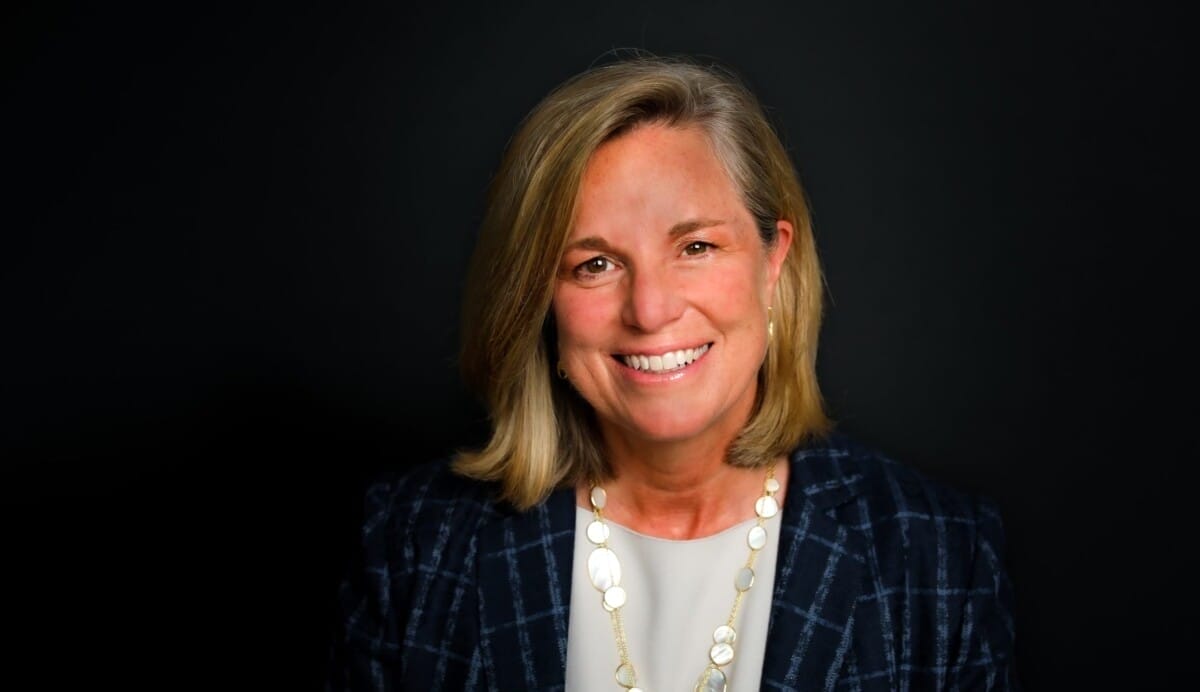

The chief investment officer of the $150 billion Minnesota State Board of Investment has the power to hire and fire managers without board approval for the first time, in a governance overhaul approved this week that will significantly speed up its decision-making process.
Presenting the proposed governance change to the board this week, executive director and chief investment officer Jill Schurtz said the velocity of investment decision-making has “accelerated meaningfully” – especially around co-investment opportunities and continuation vehicles – and is out of pace with the quarterly board meeting cadence.
“This would be an important enhancement for efficient decision-making, and in particular facilitating our ability to take advantage of attractive opportunities as well as favourable economics,” she told the board meeting.
Under the new investment policy statement (IPS), which the board approved, the CIO now has the authority to hire and terminate investment managers in public assets at her discretion.
In private markets, the CIO will be able to make commitments of up to $750 million per fund, secondaries and co-investment vehicles, plus up to 1 per cent of such commitments to cover any required costs at closing. She can also make direct co-investments alongside commingled funds in which the SBI has existing commitments, for an amount no greater than the primary commitment or $500 million.
The old process of hiring new managers required SBI investment staff to interview shortlisted organisations and submit finalists to its 17-member investment advisory council (IAC), comprising public sector, finance, employee, and retiree representatives. The IAC’s recommendations then required board approvals before the staff could contract an external manager.
Under the new IPS, the board retains the ultimate say in policy decisions such as asset allocation, the ability to modify or revoke delegated authority to the CIO, as well as the appointment and termination of the CIO.
Schurtz said the move to delegate investment authority will align SBI with industry best practice.
“It’s not just pension plans that have moved to this model far and wide, but as well it’s universities, foundations, endowments and family offices. This is seen as an important feature of a well-performing plan,” she said.
In what would be one of the final rounds of commitments under the old governance structure, the board approved eight private equity, one private credit, one real estate and one real assets fund – the largest mandate being an injection of up to $300 million into a Blackstone private equity fund.
Portfolio finetuning
SBI investment staff also presented the results of its five-yearly asset allocation study, conducted over the past 18 months with external consultant Aon.
It led to the decision to reduce the cash allocation from 5 to 3 per cent, shifting the capital to core and core plus bonds as well as “return-seeking” income in a slight increase to risk. The fund will also focus on shorter maturity securities in its Treasury protection portfolio to lower interest rate sensitivity and improve stress-period liquidity.
In a bid to have better control of diversification in private markets and understand the underlying exposure, SBI introduced sub-asset class weightings which saw private equity occupy the lion’s share of private assets with an 18 per cent of total fund allocation.
SBI investment staff said in a meeting memo that it has “compelling reasons” to believe the asset class’s return premium relative to public markets will persist, but perhaps at a lower level due to increased competition for deal flow.
The fund will also target a 3 per cent allocation in private credit, and 2 per cent each in real estate and real assets. The return target for the private markets’ asset class will be a composite of sub-asset class benchmarks weighted by their market values.
Domestic equities and international equities’ target allocations remain unchanged (33.5 per cent and 16.5 per cent respectively).
“Overall, the proposed changes move the portfolio in a positive direction and reflect important enhancements to portfolio implementation,” said deputy CIO Erol Sonderegger, adding that the changes have a modest impact on expected return and volatility.
“The recommendations from the study reflect incremental changes focused more on improving portfolio execution than on proposing large changes to asset class weightings.”
The board meeting was held virtually as pro-Palestinian protests were organised in front of the SBI building, with demonstrators demanding that the agency divest from Israel bonds over the country’s role in the ongoing Gaza war. Some advocates spoke during the public comment period, but the board did not make any official comment regarding the exposure.








Leave a Comment
You must be logged in to post a comment.
Login