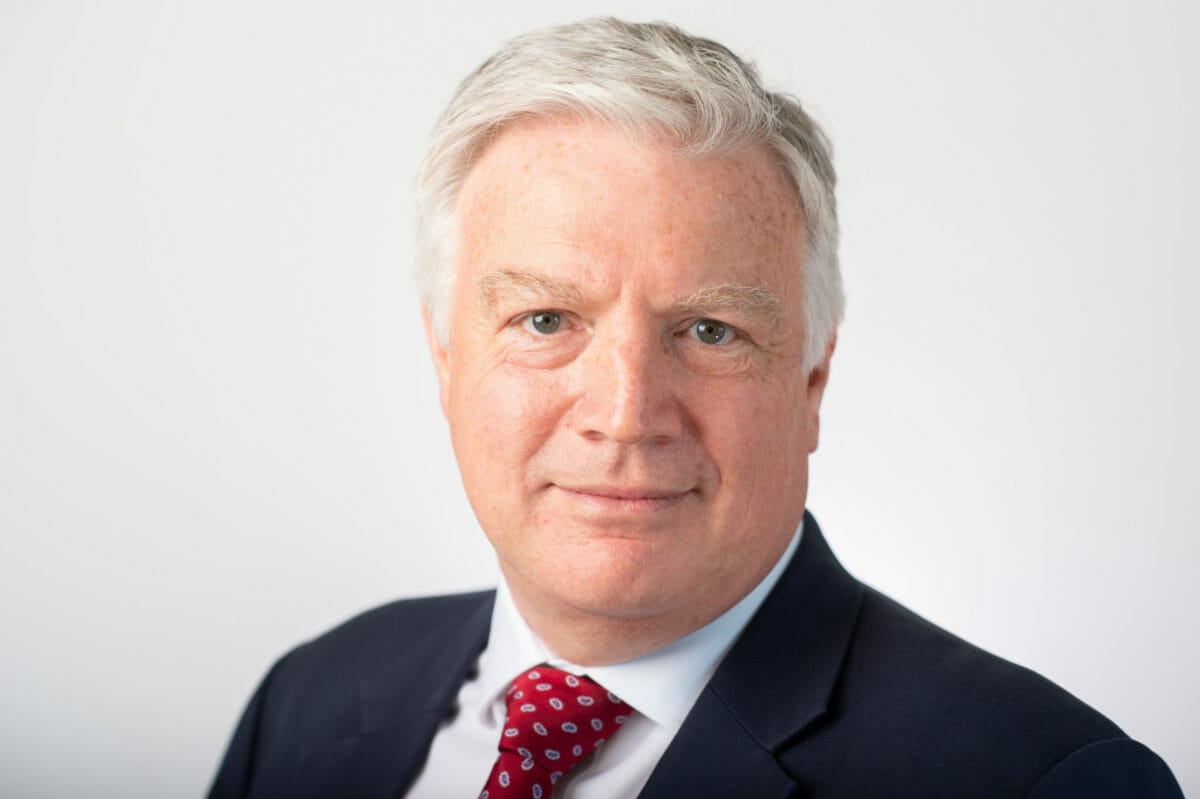

Breaking barriers: Trustee diversity

David Fairs at Pensions Regulators, Brighton, 13th May 2019

In The Pension Regulator’s (TPR) recent governance and trusteeship consultation, we asked how we could help UK trustees improve the diversity of trustee boards, something we believe is crucial. We made clear we don’t support the introduction of quotas to broaden the narrow type of individuals currently seen on trustee boards.

We have now published our consultation response having found some respondents challenged what we are trying to achieve by focusing on diversity. Some also asked us what we mean by diversity. While many responding to our consultation were supportive of reporting on diversity, it is clear we have more to do in building a consensus on the way forward, what we mean by diversity and how it should be realised.

Research that we have conducted within TPR, and external academic research, all point to the fact that diverse groups achieve better decisions through debate and challenge. Our own research on gender points to a strong correlation between gender-diverse trustee boards and those boards which score highest against our measure of quality governance.

But does including one female in a board of all males, a young trustee among a board of older trustees, a trustee with a marketing or HR background against a trustee board of financial professionals – achieve diversity? Does inclusivity within the board make a difference? Trustee chairs often tell us that they have no influence over who is appointed to the board. Members elect member-nominated trustees, and the employer commonly appoints employer-nominated trustees and often any independent or professional trustees.

This could be one factor impacting the diversity of the trustee board, leaving some people thinking they can’t be trustees, and unwilling to put themselves forward as trustees. To some degree, the current lack of diversity and lack of role models for different characteristics must be a barrier, and influence those who would be prepared to put themselves forward.

Every trustee chair, I am sure, would welcome any new trustee with the right knowledge and understanding, or an enthusiasm to gain that in the timeframe permitted by law – as would every other member of the trustee board. But chairs and trustees are people, and people tend to socialise and gravitate to people like themselves. We all have unconscious biases. Thinking about, and being aware, of those biases and putting in place mechanisms to welcome and accommodate people with different characteristics to the current make-up of the board could be a welcome first step in creating an environment where a broader range of people might be encouraged to apply.

Sponsored Content

Including one woman among a board of men, or a young trustee among a board of older trustees, will have challenges. These include new members’ ability to persevere and contribute effectively if the board is not “open,” or if the board hasn’t grappled with any inherent biases and seems unwelcoming or resistant to the different opinion and voice that they bring.

To my mind, an effective trustee board needs to be inclusive, aware of any unconscious bias it currently has because of its make-up, and understand whether board meetings are conducted in a way that enables individuals within the trustee board to contribute to their fullest extent: to be themselves. Trustee boards lack diversity because there is a lack of role models, because breaking into a non-diverse trustee board is challenging and unwittingly hostile. And because trustee boards and their chairs are not sufficiently inclusive, recognising the individual diversity that each member brings to the board.

The challenge is to focus on diversity and inclusivity. If we focus on inclusivity, trustee boards could naturally become more diverse. We need to tackle both to create a sustainable difference. The pensions industry must play its part, and I welcome the Pensions and Lifetime Savings Association’s (PLSA) recent commitment to launch a made-simple guide for schemes about how they can recruit and retain diverse trustee boards.

TPR is also keen to make a significant change to the current position on diversity and inclusion on trustee boards, and will take time to deliver a more substantive and sustainable change. We will establish and lead an industry working group to find ways of supporting schemes to take steps to improve both diversity and inclusivity. We will create clear definitions of what is meant by diversity and inclusion in a pensions context, and deliver good and best practice guidance on both board composition and how boards can make the most of the pool of potential trustees they have available to them.

David Fairs, is executive director of regulatory policy, analysis and advice at The Pensions Regulator

Leave a Comment

NY Common joins allocator push on company AI transparency

NY Common joins allocator push on company AI transparency

The $273 billion New York State Common has upped the pressure on portfolio companies to report on how artificial intelligence usage is contributing to layoffs, as AI governance becomes a growing focus in the proxy voting and engagement activities of asset owners.

Sort content by

Dismantling DEI: Investors weigh the risks

Six months on from President Trump's executive order to dismantle once mainstream DEI programs, institutional investors reflect on concerns regarding returns, recruitment and engagement. Top1000funds.com surveys a variety of views amongst the disruption arguing it is an opportunity to reframe the issue and articulate what DEI means.

Lessons in governance at Alaska’s APFC

At a recent board meeting, trustees at Alaska's sovereign wealth fund APFC garnered insights on governance from recent turmoil at PSERS' and Ohio State Teachers.

Behind AustralianSuper’s global expansion

London-based AustralianSuper deputy CIO Damian Moloney oversees the global expansion plans of Australia’s largest superannuation fund. While a global presence has clear benefits for the fund and its members, Moloney’s advice to others contemplating the same is to plan extensively and build early.

Guardians of the Future: The evolution of New Zealand Super

New Zealand Super’s new chief executive Jo Townsend inherits an organisation with a strong culture but facing some challenges posed by rapid growth. An internal project aims to reduce complexity and focus on simplicity for a fund already rated by WTW as operating at global best practice levels.

Alecta doubles down on governance, risk management and culture

Sweden’s largest pension fund, the $126 billion Alecta, has spent much of the last year continuing to work on improving governance, risk management, competence and culture in the wake of a $2 billion loss in 2023 attributable to investments in US regional banks, including Silicon Valley Bank, turning sour.

How UK’s LGPS still has a long way to go creating a Canadian model

The UK’s new Chancellor of the Exchequer Rachel Reeves just returned from a trip to Toronto where was gleaning ideas from Maple 8 bosses on how to emulate a “Canadian style” pension model. But it will require a governance overhaul to create a Maple 8 in the UK.



