

What does it actually mean to be a long-term investor when the ground beneath your feet is shifting faster than your investment committee can convene?
That was the question we held front and centre as we built the program for the Fiduciary Investors Symposium held in Singapore last month. But even in a room of 68 asset owners from 12 countries managing more than $9 trillion of other people’s money there were no easy answers.
The US-Israeli strikes on Iran began on February 28, just three weeks before the conference began. By the time we were deep into sessions at Raffles in Singapore, the Strait of Hormuz, through which roughly a fifth of the world’s oil and gas supply moves, had been closed by Iran in retaliation.
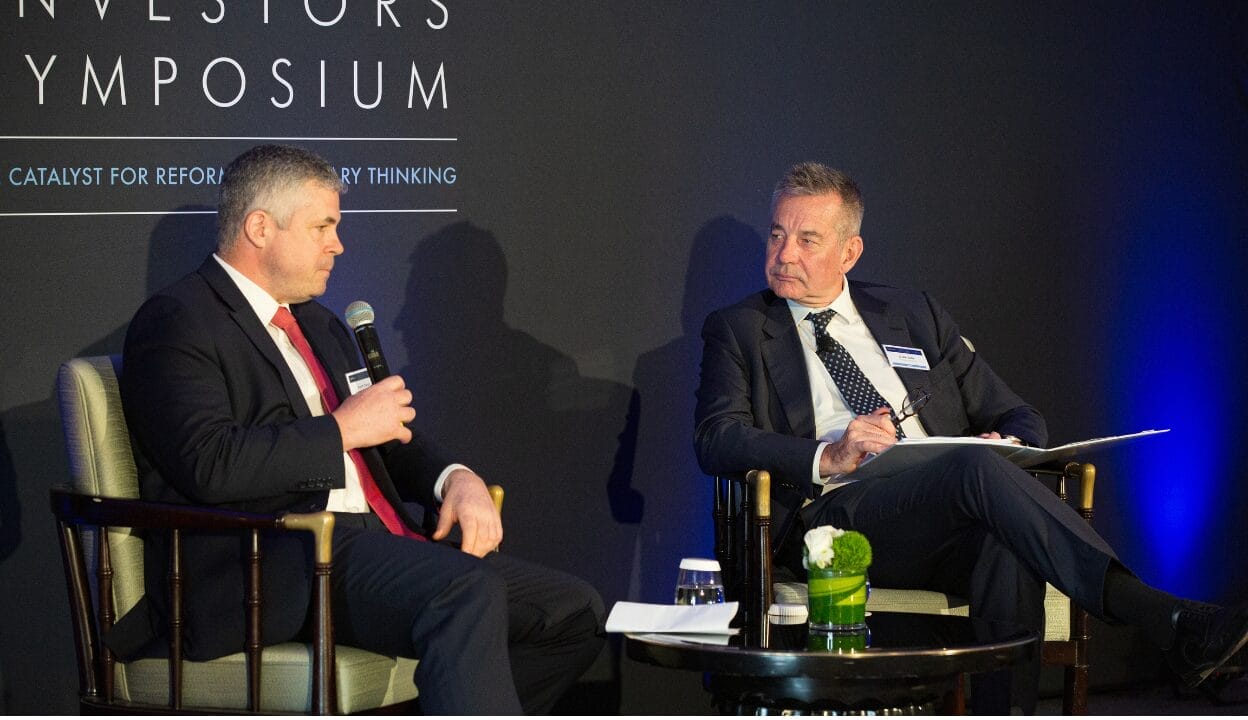
In one session, I asked Kevin Dwan of MFS Investment Management directly: what does taking geopolitics more seriously actually change in an asset-allocation process?
It was a good question on Monday, because by Wednesday it was front page news.
Though I should note that this wasn’t a surprise to everyone in the room. Stephen Kotkin, renowned historian from Stanford’s Hoover Institution who Conexus Financial has worked with for 15 years, had been warning about this trajectory for years. Not this specific conflict, but the pattern; the accumulation of seemingly unrelated crises that, in retrospect, don’t look unrelated at all. He said it again in Singapore. Some people looked uncomfortable, while some looked unsurprised.
But what struck me more than the closure of the Strait was the gap between how institutional investors would like to process geopolitical risks and how they actually do, or institutionally how they do in practice. Across two days, the right questions were being asked. Which capital market assumptions no longer deserve our automatic trust? Which assumption in your portfolio is most vulnerable, that bonds will diversify equity risk, that US exceptionalism will persist? They were good, rigorous questions, asked by serious people.
That’s the gap. Knowing a crisis is coming and being positioned for it when it arrives are two entirely different things.
For investors, this is not an abstract issue.
Standing in Singapore one fact, and the implications of the war, became more prevalent: 85 per cent of all fuel coming into Asia passes through or near the Strait of Hormuz. And 95 per cent of the fuel supply to my home country, Australia, comes from Asia.
Within days of me returning home, Australian shares had fallen more than 10 per cent. Qantas announced fuel guarantees only until the third week of April. Our mining sector, which is our single largest income earner, began rationing fuel use. The government, which weeks earlier had been preparing a reform budget, pivoted entirely. Consumer sentiment hit its lowest point in Australian recorded history.
The world didn’t wait for the budget papers, and it didn’t wait for the investment committee.
The closing session at FIS Singapore was framed as a call to action. Bridgewater, Khazanah and CPP, three of the most sophisticated institutional investors in the world, were asked not what they thought about the new world, but what they were actually doing about it.
The answer, broadly: get inflation protection, diversify geographically, revisit your currency assumptions, and value your ability to change your mind. That’s simple in theory, but harder when your governance model was built for a different world.
There was one other observation from Kevin Dwan that I keep coming back to. Politicians, he said, generally have to get to the edge of the cliff before they start to believe in gravity.
Institutional investors aren’t supposed to work that way. Their entire mandate, the reason they exist, is to act before the cliff, not in response to it.
The question coming out of Singapore isn’t whether investors should be managing their portfolios for geopolitical risk. Of course they should. The question is whether the institutions managing long-term savings are built to respond at the speed the world now moves. And whether the gap between knowing and acting – which, ultimately, is where all risk lives – is one they can afford to keep open.
For more information on the Fiduciary Investors Symposium series click here.








Leave a Comment
You must be logged in to post a comment.
Login