
Path to sustainable infrastructure

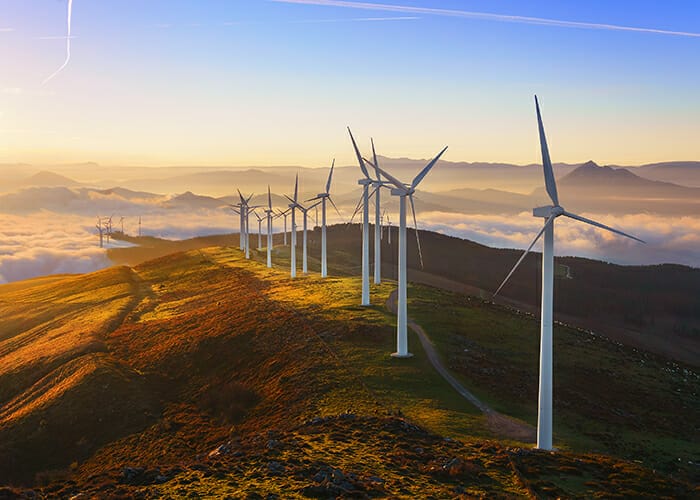
wind turbines in the Oiz eolic park

“Investing in sustainable infrastructure is the growth story of the future.”
• Global Commission on the Economy and Climate, 2016

The world needs more infrastructure, particularly in developing countries. But not just any infrastructure. To achieve the economic, social and environmental objectives embodied by the Paris Agreement and the Sustainable Development Goals (SDGs), this infrastructure must be sustainable, low-carbon and climate resilient. The New Climate Economy’s 2014 report, Better Growth Better Climate, estimates that from 2015 to 2030, the global requirement for new infrastructure assets will be $90 trillion, more than the value of the world’s existing infrastructure stock.

To meet these needs, annual investment in infrastructure will need to increase from current levels, about $3 trillion, to $6 trillion. At the same time, data from the Organisation for Economic Co-operation and Development and alternative assets researcher Preqin shows investors’ allocations to infrastructure are gradually increasing, driven by a combination of factors (such as low yields in traditional asset classes and inflation protection).

Together, these should be positively reinforcing developments. But are they? The Inter-American Development Bank (IDB) commissioned Mercer to assess the extent to which infrastructure investors – and other stakeholders, including governments, multilateral development banks (MDBs) and infrastructure industry initiatives – are focusing and collaborating on sustainable infrastructure. Our findings are somewhat mixed: the positive momentum of new initiatives focused on sustainable infrastructure is countered by the fact that sustainability concerns struggle to enter the core allocation strategies of mainstream investors.

Our initial report, published in November 2016, Building a Bridge to Sustainable Infrastructure, outlined the effort underway to raise awareness of sustainable infrastructure investment opportunities and develop tools to foster related investment analysis and monitoring. However, as outlined in the companion paper, Crossing the Bridge to Sustainable Infrastructure, we find that the level of investor awareness and engagement with these developments seems relatively limited. In addition, current allocations to infrastructure fall short of the levels required to support economic development, The New Climate Economy found in 2016. To overcome these barriers, we set out a call to action for investors, governments, MDBs and industry initiatives (see infographic).

What is sustainable infrastructure?

Sponsored Content

In a broad sense, sustainable infrastructure is socially, economically and environmentally sustainable. The specific application of this concept will depend on the relevant geographical and sector contexts. But ultimately, sustainable infrastructure is that which will enable the world collectively to meet the SDGs and the Paris Agreement.

Some investors have the misconception that sustainable infrastructure simply means more renewable energy infrastructure. Indeed, investment flows into renewable energy have been increasing; for example, in 2016, more than 40 per cent of new infrastructure investment went into renewables, data from Preqin shows. Although this is positive, sustainable infrastructure needs are broader. The New Climate Economy’s Better Growth Better Climate outlines in detail the change that is required across three critical economic systems: cities, land use and energy.

In addition, infrastructure needs to be resilient in the face of a changing climate. A 2016 study of public-private partnerships (PPPs) by Acclimatise found that “Among the sample of 16 national PPP policy frameworks examined, not a single one was found to mention a changing climate, climate resilience or adaptation.”

Investor interviews show lack of progress

As part of our research, we spoke with a number of infrastructure investors about the extent to which they consider sustainability in their decision-making. Despite growing attention to ESG considerations within investment organisations, we found that many infrastructure teams are just now developing a formal approach to sustainability in investment and, further, that such considerations are generally applied at the deal level. There is little top-down thinking about the transformational change and investment pathways that must accompany successful implementation of the Paris Agreement and the Sustainable Development Goals (SDGs), and the opportunities that they offer to investors. When considering the reasons for the lack of progress, we identify the following factors:

Lack of familiarity with the sustainable infrastructure business case and a related lack of experience in considering what might qualify

Limited standardisation of tools and approaches, with barriers to entry for investors

Lack of co-ordinated policy commitments across regions and sectors consistent with the Paris Agreement and the SDGs, which dampens investors’ focus on energy transition risk (that is, the risk associated with swift action to mitigate climate change)

Lack of tools and focus on climate resilience (that is, adaptation), which has seen little prioritisation to date. 

Investors noted an interest in learning more about the merits of a sustainable infrastructure approach and in gaining the know-how to achieve it. To date, industry initiatives have not been successful in providing such knowledge and would benefit from greater clarity about what constitutes sustainable infrastructure and its business case.

Call to action

Despite some high-level commitments to sustainable development by policymakers, and the significant efforts underway to leverage private-sector finance, there is still a lack of engagement from many infrastructure investors. Thus, a call to action is essential. We highlight three key initiatives, as outlined in the following graphic:


If you invest in infrastructure, we encourage you to review Crossing the Bridge to Sustainable Infrastructure and develop an approach that enables your organisation to optimise risk and return considerations for the long term, while being cognisant of the role your investments play in the transition to a low-carbon and sustainable economy.

Jane Ambachtsheer is partner and chair, responsible investment, at Mercer. Amal-Lee Amin is climate change division chief at Inter-American Development Bank.


Leave a Comment

The future belongs to investors who can adapt

The future belongs to investors who can adapt

Canada's HOOPP has officially adopted the total portfolio approach since the start of 2026. Unpacking the move, the fund's managing director and head of total portfolio group Jacky Lee writes that while the approach doesn't magically make the return better, the fact that it frees the investment team from outdated processes and gives investment leaders the flexibility to act is what gives it an edge.

Sort content by

Precarious world needs effective G20

General secretary of the International Trade Union Confederation, Sharan Burrow, spoke to the Lowy Institute for International Policy in Sydney, Australia on Thursday August 1 about the need for an effective G20 in a precarious world. Ladies and Gentlemen, The global economy is no more stable today than it was six years ago, and the

Towards sustainable stock exchanges

Wall Street is not normally synonymous with sustainability. But today, the United Nations Secretary-General Ban Ki-moon will ring the closing bell at the New York Stock Exchange to welcome NYSE Euronext into the Sustainable Stock Exchanges Initiative, joining NASDAQ OMX and leading emerging market exchanges from Turkey, South Africa, Egypt, Brazil and India. Why would

Asset-backed funding: desperate or innovative?

On one hand, the decision by one of the United Kingdom’s leading foods businesses, Dairy Crest, to plug its £84-million ($130-million) pension deficit with cheese smacks of desperation. Any proactive investment strategy to get the $1.2-billion pension fund back on track has been abandoned for a funding measure using unconventional sponsor assets to plug investment

Gloom at NAPF attests to investor adventure

One year on and the job of trustees gathered at the United Kingdom’s National Association of Pension Funds, NAPF, annual investment conference in Edinburgh hasn’t got any easier. As the search for optimism in a low-return world endures, the conference seems to be caught in a time loop. Compared to last year, deciding on the

The smoking gun at CalSTRS

For a pension fund that describes itself as “ponderous”, the $154-billion California State Teachers’ Retirement System, CalSTRS, has moved uncharacteristically swiftly in recent months. The second largest public pension fund in the United States, the plan for teachers and faculty is in the process of divesting its holdings in gun manufacturers following the massacre at

Will infrastructure ever find wings?

It’s difficult to ignore the clamour around infrastructure investment, the asset class of the moment. Lloyds TSB and the London Pensions Fund Authority recently joined founder members of the Pensions Infrastructure Platform, PIP, a government initiative to encourage pension funds to invest more in infrastructure. The Universities Superannuation Pension Scheme, USS, just increased its allocation

Previous



