
No choice can be the right choice

When the NOW: Pensions Trust was launched in 2011, many employee benefit consultants and financial advisers were of the opinion that investment choice was essential within defined-contribution pension schemes. Employers simply wouldn’t want to provide their workforce a scheme that didn’t offer a range of funds.

But as auto enrolment has progressed, this opinion has been proven wrong, partly because employers and advisers have focused more on operational ease, and partly because experience has shown that members do not exercise investment choice when offered it. It’s fair to say that many people are simply frightened by choice.

Government-backed scheme NEST is the UK’s largest auto enrolment provider. NEST offers a range of funds, including a lifestyled ethical option, higher-risk and lower growth options, a pre-retirement option and a sharia option. In total, less than 1 per cent of members have actively chosen to use any of these options. Across other auto enrolment providers, the picture is remarkably similar.

Despite this, many schemes offer multiple funds with multiple managers for each asset class. As members are provided with more funds to invest in, the cost of running the scheme increases. The extra costs incurred from marketing as funds compete for investors’ attention and the added operational complexity all eventually hit investors’ returns.

Those savers who do self-select are normally guided by the risk classifications of the funds available; however, regardless of the tools at their disposal, members continue to struggle to determine their own attitude towards risk.

Those who do self-select rarely revisit their investment decision. Research shows that about 80 per cent of self-selecting members change their selection less than once every five years, and more than half of them never make a change. An initial choice of a cash fund can remain in place for 40 years or more and lead to significantly lower retirement fund values.

Sponsored Content

The few members who do switch their investment funds will often chase the market. The buy high/sell low behaviour of even the most experienced investors continues to be well documented.

As a result, the vast majority of savers are better served by the default fund than by making their own investment decisions.

The message is clear – auto-enrolled savers don’t want to be burdened with investment choice. With auto enrolment, these savers are, by their very nature, passive. They haven’t elected to join a pension scheme, their employer has enrolled them. They haven’t chosen the pension scheme their money will be paid into, their employer has decided. In most cases, they haven’t decided how much to pay in, the government has decided that.

With fund sizes for auto enrolled savers still small, it’s perhaps unsurprising that they aren’t paying too much attention to how their money is invested. In the NOW: Pensions Trust, the average fund size is about £400 ($530) with members paying in just £35 ($46) a month, on average.

Evidence suggests that savers don’t begin to engage with their pension savings until they have the equivalent of one year’s salary saved. For our members, this could take a decade.

Focus on risk allocation

We don’t think offering investment choice in this market is the right approach.

At NOW: Pensions, the trustees take full responsibility for the investment journey. All NOW: Pensions members have their funds invested in the Diversified Growth Fund (DGF). It uses a diversified investment strategy, balancing the risk of the different investments the fund holds. We believe this is the right approach if we are to deliver strong and stable returns over the long term.

We focus on risk allocation, rather than asset allocation. This is different to more traditional investment approaches that focus on asset allocation and tend to have a much higher proportion of their overall risk exposed to stock markets. By focusing principally on the risk characteristics of each investment, we are able to construct a balanced portfolio without subjecting our members to inappropriate risk.

As members approach retirement, we gradually switch their funds from the Diversified Growth Fund into the Retirement Countdown Fund (RCF). The RCF is designed to generate returns similar to those available from cash holdings, by investing predominantly in cash deposits and money market funds.

The effect of switching into this safer environment is that the nearer each member gets to retirement, the less impact any sudden market movements will have on the value of their money invested with NOW: Pensions. We cannot predict how and when our members will draw their pension fund, and we do not believe many members are in a good position to do so until they are close to their retirement. Our strategy addresses this need for flexibility.

The DGF returned 11 per cent for our members in 2017 – we are pleased with that performance. Due to the way the fund is structured, we don’t expect performance to lead the pack during periods of strong stock market growth, such as we have seen in the recent past. During stormy weather, however, we think we have better protection against the elements. The proof will only become clear over time, when we expect to see strong returns without the levels of volatility that equity-heavy investment approaches experience.

With an uninterrupted focus on a single investment solution, we can ensure a strong approach to governance, allowing members to concentrate on the things they can influence – fundamentally, when they plan to retire, what they plan to do when they do retire, and how much they should be saving to turn their dreams into reality. Governance is a major priority for us at NOW. All our trustees are wholly independent, which means their only priority is the welfare of the members. Also, we have recently taken steps to strengthen our trustee board, including recruiting Joanne Segars, a much-respected figure in UK pensions and former head of the Pensions and Lifetime Savings Association.


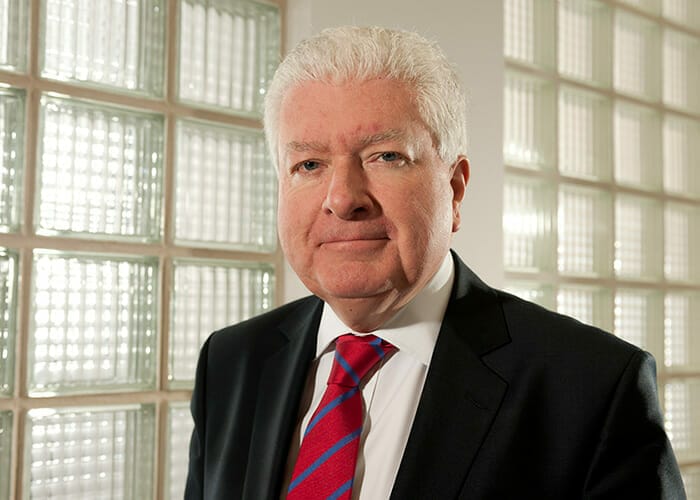
Nigel Waterson is chair of trustees at NOW: Pensions.

Leave a Comment

What a brief encounter with Elon Musk taught me about the limits of capitalism

What a brief encounter with Elon Musk taught me about the limits of capitalism

In 2013, on the sidelines of the Milken Conference at the Beverly Hilton, my friend and then-colleague Sean Scallan and I found ourselves in a seven-minute private conversation with Elon Musk.   He was not yet the figure he is today. Tesla was struggling. SpaceX had launched but not yet proven itself. The idea of humans

Sort content by

Is chasing lower taxes really a strategy for value creation?

Investors are just beginning to understand global tax issues and the risks associated with aggressive tax planning by the companies int their portfolios, Fiona Reynolds, managing director of PRI says there are a number of common-sense measures that companies should begin to put in place.   The 2014 G20 Summit to be held in Australia

The investment model for asset owners: is there a best-practice version?

In the last of a series of articles exclusively for conexust1f.flywheelstaging.com, Roger Urwin, head of global content at Towers Watson examines the asset owner investment models that are recognised as best practice, questioning whether there are patterns to the models of success. The best-practice investing model could either involve how you do it or what

PFZW reformulates investment principles

PFZW, the €150 billion ($205 billion) Dutch pension fund for the health care industry, has created a new investment framework which is the result of an 18-month soul-searching journey under a project called “The White Sheet of Paper”. The framework will translate into policy and implementation steps starting from 2015. Jaap van Dam, PGGM´s chief

Risk parity – the benefits of a conditional approach

Risk parity is a meaningful and robust approach for building well-diversified portfolios, but it relies on historical volatility estimates, which penalises upside risk as well as downside risk and leads to a massive overweighting of bonds versus equities, even in a low yield environment. The authors from EDHEC Risk-Institute build the case for an alternative

The in-house investment team: right people, roles, rewards

Good people are at the core of any successful organisation, and that is true for asset owners. Global chief investment officer of Towers Watson, Craig Baker discusses how designing and implementing structures that attract the right people in the right roles can unlock long-term sustainable advantages that the right investment team can offer.   It

Ubiquitous and adaptive investing – the aspiration of a truly global fund

Large pension funds might be invested on a truly global basis but their operating models are rarely global structures. Towers Watson argues that asset owners can benefit from a business model that can deliver organisational performance, manages talent and aligns with core missions from multiple operating locations. Over the last decade, large pension funds and

Previous



