
Sydney University’s private asset portfolio under scrutiny for defence ties

University of Sydney

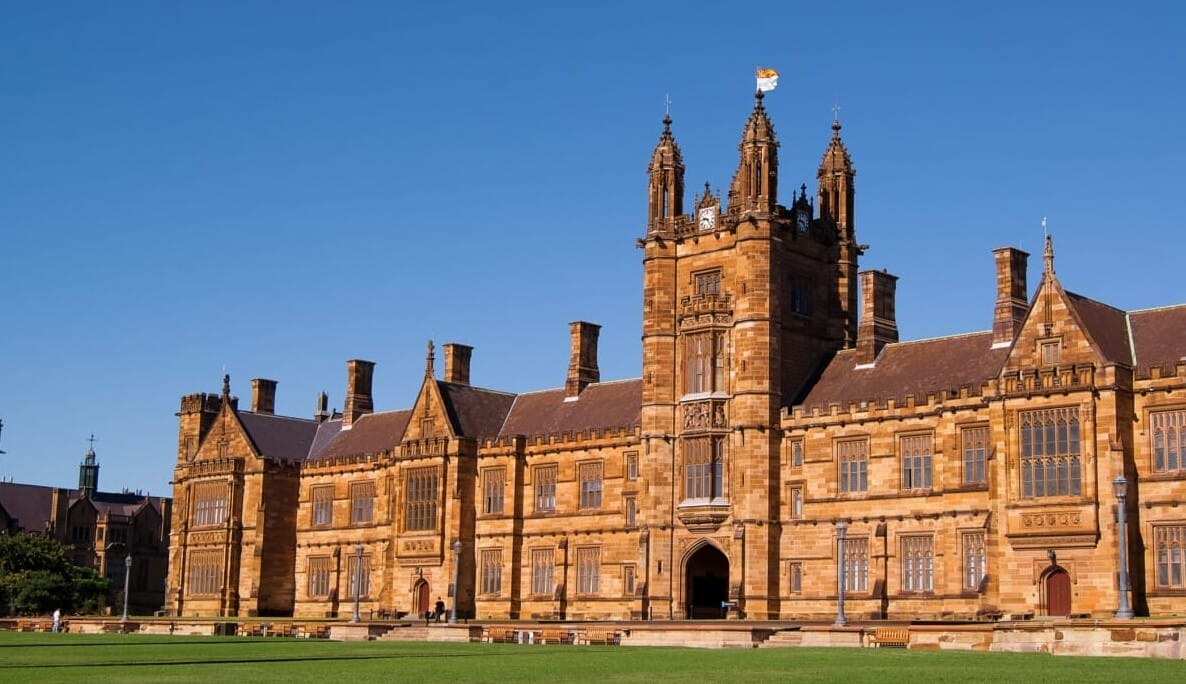
An external panel has recommended that Australia’s Sydney University minimise investments in defence and security-related industries within its A$770 million ($510 million) private asset portfolio rather than divest and book a A$67 million loss. 

The review was instigated by the University – which runs a A$3.4 billion portfolio comprised of donations and bequests – in mid-2024 following campus protests in response to the Middle East conflict. 

While the panel recommended the University sell its listed investments in aerospace companies, which generate revenue of about A$4.6 million, it deemed selling similar assets within its private equity pooled funds and fund-of-funds not feasible given the structure of those investments.

“It is not possible to impose exclusions on top tier private equity managers or upon private equity ‘fund of fund’ managers,” the report said.  

However, selling the entire portfolio on the secondaries market would invoke an estimated A$67 million discount on its current holding value, while the endowment would also miss out on future returns. 

“As also noted, the ‘opportunity cost’ of not investing in private funds (based on the current portfolio of A$770 million in investments) would be A$30 million per annum. This cost becomes exponentially greater, over time, given the effects of compounding returns.” 

Sponsored Content

Instead, the review recommended the University hold those private funds until maturity and identify any underlying investments that derive revenue from items listed on the Australian government’s Defence and Strategic Goods List (DSGL) Part One. It should disclose those investments annually and actively engage with private asset managers to stop any significant investment in those areas. 

The University of Sydney already excludes investments in cluster munitions, tobacco, fossil fuels and power generation companies that cannot demonstrate their transition to low carbon. 

The University is currently considering the findings of the report, which was overseen by ethics expert Simon Longstaff. 

global trend

The recommendation stands in contrast with a rising number of European pension funds which are loosening their ESG criteria to allow for greater investment in defence industries following pressure from the Trump administration. 

Denmark’s pension fund for academics, AkademikerPension – a strong proponent of applying an ESG lens across its portfolio – is the most recent fund to relax its rules for investments in the defence industry. 

“The security situation is currently worse than ever in recent times,” AkademikerPension CEO Jens Munch Holst said in a statement on the fund’s website in late June. 

“Russia continues its brutal war against Ukraine. And we see an increasingly clear picture of an imperialist Russia that clearly does not respect recognized borders and the right of other peoples to self-determination.  

“And at the same time, we can see that Europe, despite many talks with the American government, is very isolated when it comes to Ukraine, European security policy, the maintenance of democracy and relations with Russia. It is sad, and it calls for a new course in terms of investments in Europe’s defence.” 

It will now be able to invest in six European weapons manufacturers which have links to nuclear weapons: Airbus, Babcock International, Dassault Aviation, Leonardo, Saffron, and Thales. Three smaller companies have also been removed from its previous exclusion list (Serco Group, Groupe Reel and Ultra Electronics). However, the fund’s exclusion list still includes 46 weapons manufacturers. 

“We are not doing this to invest in nuclear weapons, but conversely, we do not want a small turnover from nuclear weapons-related activities to prevent us from supporting the capital construction of a European defence.” 

AkademikerPension’s statement was made on the same day that NATO leaders promised to boost annual defence spending to 5 per cent of their countries’ gross domestic product (GDP) by 2035. 

PFA Pension, the largest pension fund in Denmark, is another fund to recently allow investment in a select number of defence stocks. 

APG Asset Management which manages €552 billion ($650 billion) for Dutch pension fund Stichting Pensioenfonds ABP, is also considering increasing its existing $2.5 billion allocation to the defence sector, framing the argument in terms of security rather than buying weapons. 

Leave a Comment

Returns, resilience and reinvention: What private markets’ top brass are worried about

Returns, resilience and reinvention: What private markets’ top brass are worried about

Senior executives from some of the world's largest private market managers gathered in Berlin this month with a collective understanding: managers who move slowly on AI face not just weaker returns but the risk of owning businesses that have been competitively displaced before they can exit.

Sort content by

Thinking Ahead Institute co-founder exits amid deeper integration with WTW

Tim Hodgson, co-founder of WTW’s Thinking Ahead Institute, has left the prolific research network as it seeks closer ties with the broader consultancy. The network's head Marisa Hall rejected the suggestion of any fundamental restructuring but said TAI needs more resources as it takes on more TPA projects.

NBIM dethrones GPIF to become the world’s largest asset owner

Norway’s sovereign wealth fund is now the world’s largest asset owner according to the Thinking Ahead Institute's annual Asset Owner 100 report, which also outlines the similarities and challenges among top capital allocators globally. 

Sweden’s AP2 and AP6 conflict over PE investments

The Swedish government’s plans to streamline the country’s pension system and merge the $8 billion buffer fund AP6 with its larger and more diversified sibling, the $48 billion AP2, have hit a bump in the road. Major points of contention include AP6's large private equity exposures and staff integration. 

Iceland’s pension funds: Consolidation continues but size of sector a worry

Merger mania continues to grip Iceland’s pension sector, but economies of scale and greater efficiency don't solve the problem of the size of an industry now larger than the country's banking system and insurance sector combined, and more than sufficient to buy all listed investments.

Limited alternatives keep global capital anchored to the US

Singapore’s Temasek said while US exceptionalism may be “fraying”, there aren’t many alternative markets that can handle the same volume of global capital. Meanwhile, fellow sovereign fund GIC believes the greenback’s reserve currency status remains solid even though currency swings could spell trouble for foreign investors.

Minnesota overhauls governance as CIO gets more mandate power

Chief investment officer of the $150 billion Minnesota State Board of Investment will gain authority to hire and fire managers without board approval in a governance overhaul approved this week that will sharply fast-track decision-making. The change follows an 18-month asset allocation study which has resulted in some portfolio finetunes.

Previous