
Sydney University’s private asset portfolio under scrutiny for defence ties

University of Sydney

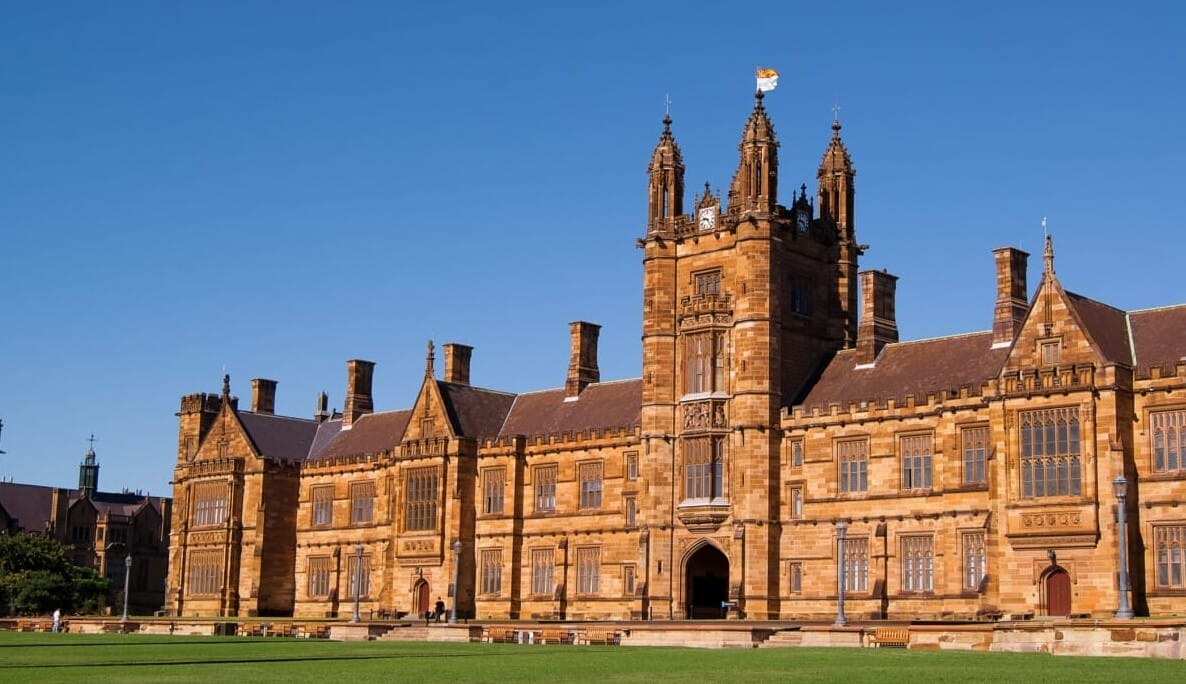
An external panel has recommended that Australia’s Sydney University minimise investments in defence and security-related industries within its A$770 million ($510 million) private asset portfolio rather than divest and book a A$67 million loss. 

The review was instigated by the University – which runs a A$3.4 billion portfolio comprised of donations and bequests – in mid-2024 following campus protests in response to the Middle East conflict. 

While the panel recommended the University sell its listed investments in aerospace companies, which generate revenue of about A$4.6 million, it deemed selling similar assets within its private equity pooled funds and fund-of-funds not feasible given the structure of those investments.

“It is not possible to impose exclusions on top tier private equity managers or upon private equity ‘fund of fund’ managers,” the report said.  

However, selling the entire portfolio on the secondaries market would invoke an estimated A$67 million discount on its current holding value, while the endowment would also miss out on future returns. 

“As also noted, the ‘opportunity cost’ of not investing in private funds (based on the current portfolio of A$770 million in investments) would be A$30 million per annum. This cost becomes exponentially greater, over time, given the effects of compounding returns.” 

Sponsored Content

Instead, the review recommended the University hold those private funds until maturity and identify any underlying investments that derive revenue from items listed on the Australian government’s Defence and Strategic Goods List (DSGL) Part One. It should disclose those investments annually and actively engage with private asset managers to stop any significant investment in those areas. 

The University of Sydney already excludes investments in cluster munitions, tobacco, fossil fuels and power generation companies that cannot demonstrate their transition to low carbon. 

The University is currently considering the findings of the report, which was overseen by ethics expert Simon Longstaff. 

global trend

The recommendation stands in contrast with a rising number of European pension funds which are loosening their ESG criteria to allow for greater investment in defence industries following pressure from the Trump administration. 

Denmark’s pension fund for academics, AkademikerPension – a strong proponent of applying an ESG lens across its portfolio – is the most recent fund to relax its rules for investments in the defence industry. 

“The security situation is currently worse than ever in recent times,” AkademikerPension CEO Jens Munch Holst said in a statement on the fund’s website in late June. 

“Russia continues its brutal war against Ukraine. And we see an increasingly clear picture of an imperialist Russia that clearly does not respect recognized borders and the right of other peoples to self-determination.  

“And at the same time, we can see that Europe, despite many talks with the American government, is very isolated when it comes to Ukraine, European security policy, the maintenance of democracy and relations with Russia. It is sad, and it calls for a new course in terms of investments in Europe’s defence.” 

It will now be able to invest in six European weapons manufacturers which have links to nuclear weapons: Airbus, Babcock International, Dassault Aviation, Leonardo, Saffron, and Thales. Three smaller companies have also been removed from its previous exclusion list (Serco Group, Groupe Reel and Ultra Electronics). However, the fund’s exclusion list still includes 46 weapons manufacturers. 

“We are not doing this to invest in nuclear weapons, but conversely, we do not want a small turnover from nuclear weapons-related activities to prevent us from supporting the capital construction of a European defence.” 

AkademikerPension’s statement was made on the same day that NATO leaders promised to boost annual defence spending to 5 per cent of their countries’ gross domestic product (GDP) by 2035. 

PFA Pension, the largest pension fund in Denmark, is another fund to recently allow investment in a select number of defence stocks. 

APG Asset Management which manages €552 billion ($650 billion) for Dutch pension fund Stichting Pensioenfonds ABP, is also considering increasing its existing $2.5 billion allocation to the defence sector, framing the argument in terms of security rather than buying weapons. 

Leave a Comment

Returns, resilience and reinvention: What private markets’ top brass are worried about

Returns, resilience and reinvention: What private markets’ top brass are worried about

Senior executives from some of the world's largest private market managers gathered in Berlin this month with a collective understanding: managers who move slowly on AI face not just weaker returns but the risk of owning businesses that have been competitively displaced before they can exit.

Sort content by

CalPERS ties pay to collaboration, total fund results under TPA

The $556 billion CalPERS is considering a more complete integration of “collaboration” and total fund results as performance metrics for its executives and investment team as it makes headway in its shift to the total portfolio approach.

Infrastructure at the heart of Canada-Australia pension fund pact

A group of major Canadian pension funds, including the Maple 8, has entered a high-powered memorandum of understanding with top Australian superannuation funds to lobby for policy changes that would help fast-track investments. Brokered by IFM Investors, enabling infrastructure investments in both nations will be a significant focus.

NYC Comptroller on corporate stewardship escalation, Israel bonds re-entry

New York City Comptroller Mark Levine says he will leverage the city’s $310 billion pension assets and link arms with other state Treasurers to apply pressure on US corporates. In an interview with Top1000funds.com, he sets out the stewardship agenda while explaining a potential re-entry into Israel bonds.

Texas Teachers’ CIO questions TPA, DAA value-add

Chief investment officer of the $225 billion Teacher Retirement System of Texas Jase Auby has voiced reservations about the total portfolio approach, particularly regarding the robustness of its central feature, the top-down decision-making process. He also outlined why the fund doesn’t consider dynamic asset allocation a durable source of alpha.

Danish investors shun the US but complete divestment ‘unlikely’

Danish pension investors are pulling capital out of US Treasuries amid tensions around Greenland, but a complete divestment from the world’s biggest market will hurt Danish funds’ performance and ultimately their pensioners more than the US government’s balance sheet.

Distinct LP roles drive scale in impact investing market

A new report found large allocators favour established managers for impact mandates due to their track record, while foundations and insurers play a vital role in supporting early-stage managers that need time to develop an institutional grade offering.

Previous