Returns, resilience and reinvention: What private markets’ top brass are worried about

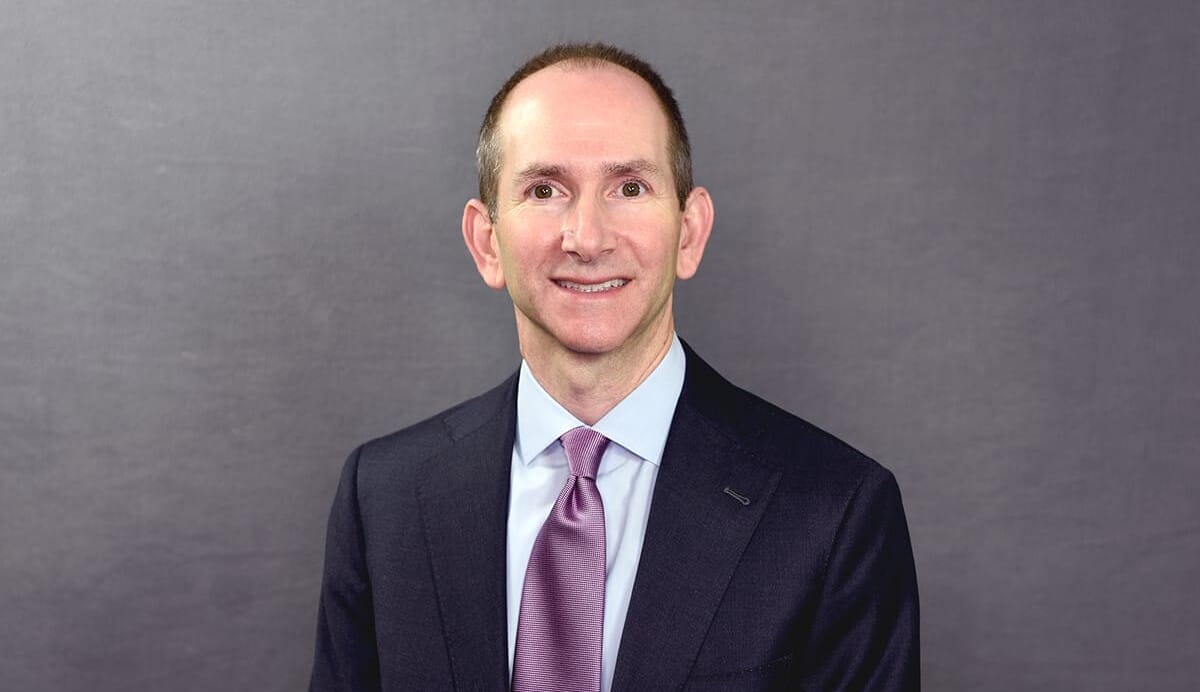
David Rubenstein. Photo: SuperReturn

Artificial intelligence is no longer a portfolio talking point but quickly becoming the divide between private markets managers who will generate excess returns over the next decade and those who will not, according to senior executives from some of the world’s largest private markets firms.

Those who move slowly face not just weaker returns but the risk of owning businesses that have been competitively displaced before they can exit. That was the recurring verdict at SuperReturn International in Berlin this month, where top brass including those from Carlyle, Silver Lake, General Atlantic, Partners Group and HarbourVest converged on the issue with a shared urgency.

The 80/20 split

Steffen Meister, executive chair of Partners Group, described a three-phase model for technological deployment at a large scale: first, using it to make existing processes more efficient; second, deploying autonomous systems at scale to change how businesses perform; and third, the emergence of entirely new business models. Most portfolio companies are still in phase one.

“The 80 per cent [of businesses] that do a little bit of transformation at the moment, they don’t get a whole lot of upside,” he said. “The 20 per cent that go all in, they get disproportional upside.”

“[It’s not] like transformation is offence or defence. Offence and defence is pretty much the same thing – it’s survival and succeeding in businesses.”

Christian Lucas, managing partner at Silver Lake, made a similar point about the software sector, which represents around 25 per cent of the firm’s portfolio. He noted that publicly traded software companies reported 15 per cent revenue growth as a group at the end of fiscal 2025 – a “remarkable” acceleration on prior years – while multiples were simultaneously re-rated from around 20 times forward earnings to 13 times following the release of Claude Code. But the upside and the threat arrived together.

Sponsored Content

Silver Lake’s response has been to avoid trying to predict the future on AI winners and instead focus on infrastructure like data centres, chips, grid-connected land and hardware.

“At Silver Lake, what we say is let’s not make any definitive statements about AI, because it changes so quickly. But it’s obviously a big trend. We’re trying to make sure it’s a friend and not a foe,” Lucas said.

Gabriel Caillaux, head of EMEA and global head of infrastructure and energy transition investing at General Atlantic, argued the current wave of innovation is categorically different from previous technology cycles, which were capital-light.

“I have never seen a demand cycle like this ever, ever,” he said, noting that 80 per cent of new software subscriptions are currently going to large language models. He pointed to Anthropic, which General Atlantic invested in two years ago with an expectation it would generate $4-5 billion in annualised revenue. Its run rate has since grown to tens of billions of dollars.

Caillaux also flagged a dynamic that investors should watch: AI providers are currently keeping token costs artificially low to drive adoption. “Once they’re embedded, trust me, your tokens are going to start costing more money,” he said.

Geopolitics as given

On the macro environment, the tone was acceptance rather than alarm. David Rubenstein, co-founder of Carlyle Group, noted US inflation running at an annualised 4.2 per cent at the time of the conference, making near-term rate cuts a near-zero probability. He expects the newly minted Federal Reserve chair, Kevin Warsh, to reduce the Fed’s transparency and shrink its balance sheet, but not to move quickly on rates.

Rubinstein was direct in saying that the US has no treaty obligation to defend Taiwan, and that President Trump has so far declined to commit to doing so. The real driver of US concern, he argued, is economic rather than strategic: “The US economy would go into depression if we didn’t get chips out of Taiwan.”

He does not expect a Chinese invasion imminently – partly because Beijing watched Russia’s difficulties in Ukraine and recognises the challenge – but the semiconductor dependency alone makes Taiwan one of the most consequential geopolitical fault lines for global portfolios.

On defence, the numbers are striking. The US is proposing $1.5 trillion in defence spending, roughly 50 per cent more than when Trump took office, and European budgets are rising sharply in response. What is less commonly noted, Rubinstein observed, is that 85 per cent of European defence procurement goes to American companies – meaning Europe’s rearmament is, in large part, a revenue line for US industry.

Partners Group’s Meister was explicit that geopolitics is not the game changer for private markets over the next decade; technology is. The “cocktail of tariffs, trade and supply chain challenges is certainly not ideal,” he said, but not a fundamental threat to industry business models.

“The big game changer for the next 10 years is the next generation of technology,” he said.

“[AI] in our view, will lead to real transformation of the economy through a reconfiguration of winning these models and the redistribution of profit pools.”

The exit test and the LP question

John Toomey, chief executive of HarbourVest, argued that private markets are undergoing a fundamental structural change that most participants have not fully absorbed. Under the old model of blind pools and closed-ended funds, “if you wanted to be an investor in a single private company, you had to happen to have been an investor in the manager who acquired that business,” he said.

But now multiple GPs sit on the same cap table, co-investors enter at different stages, and the same asset can be accessed through a continuation vehicle or the secondary market. Institutional investors who once faced only two decisions – how much to allocate and which managers to pick – are now being asked to make judgements at the asset level.

On whether private equity returns can hold up today after the stellar run the asset class has had in the past 10 years, Toomey acknowledged the large end of the market is largely leveraged beta but argued the middle market still offers genuine alpha through value creation in portfolio companies.

“I’ve seen managers create returns over and over and over again, but over long cycles,” he said.

“My big message to our clients is this is not your grandparents’ private markets.

“The industry structure is evolving; it’s putting some pressure on strategies in the market that people have used over the last couple of decades, but it’s also creating more opportunities for investors to innovate how they access the market.”

*The composition and production of this article was completed with the assistance of AI. The article was edited and approved by Top1000funds.com editorial staff.
Amanda White, editor of Top1000funds.com, attended Super Return International in Berlin.

Leave a Comment

Ohio STRS warns of higher US recession risk; prioritises liquidity

Ohio STRS warns of higher US recession risk; prioritises liquidity

The State Teachers Retirement System of Ohio has warned of a “material” increase in US recession risk compared to last year as the fund braces for a wider, “negatively skewed” distribution of outcomes in the next 12 months. It came as the mature plan, which is 81 per cent funded, is tilting to fixed income and new asset classes like liquid alternatives over equities.

Sort content by

Thinking Ahead Institute co-founder exits amid deeper integration with WTW

Tim Hodgson, co-founder of WTW’s Thinking Ahead Institute, has left the prolific research network as it seeks closer ties with the broader consultancy. The network's head Marisa Hall rejected the suggestion of any fundamental restructuring but said TAI needs more resources as it takes on more TPA projects.

NBIM dethrones GPIF to become the world’s largest asset owner

Norway’s sovereign wealth fund is now the world’s largest asset owner according to the Thinking Ahead Institute's annual Asset Owner 100 report, which also outlines the similarities and challenges among top capital allocators globally. 

Sweden’s AP2 and AP6 conflict over PE investments

The Swedish government’s plans to streamline the country’s pension system and merge the $8 billion buffer fund AP6 with its larger and more diversified sibling, the $48 billion AP2, have hit a bump in the road. Major points of contention include AP6's large private equity exposures and staff integration. 

Iceland’s pension funds: Consolidation continues but size of sector a worry

Merger mania continues to grip Iceland’s pension sector, but economies of scale and greater efficiency don't solve the problem of the size of an industry now larger than the country's banking system and insurance sector combined, and more than sufficient to buy all listed investments.

Limited alternatives keep global capital anchored to the US

Singapore’s Temasek said while US exceptionalism may be “fraying”, there aren’t many alternative markets that can handle the same volume of global capital. Meanwhile, fellow sovereign fund GIC believes the greenback’s reserve currency status remains solid even though currency swings could spell trouble for foreign investors.

Minnesota overhauls governance as CIO gets more mandate power

Chief investment officer of the $150 billion Minnesota State Board of Investment will gain authority to hire and fire managers without board approval in a governance overhaul approved this week that will sharply fast-track decision-making. The change follows an 18-month asset allocation study which has resulted in some portfolio finetunes.

Previous