
Thinking Ahead Institute co-founder exits amid deeper integration with WTW

Tim Hodgson

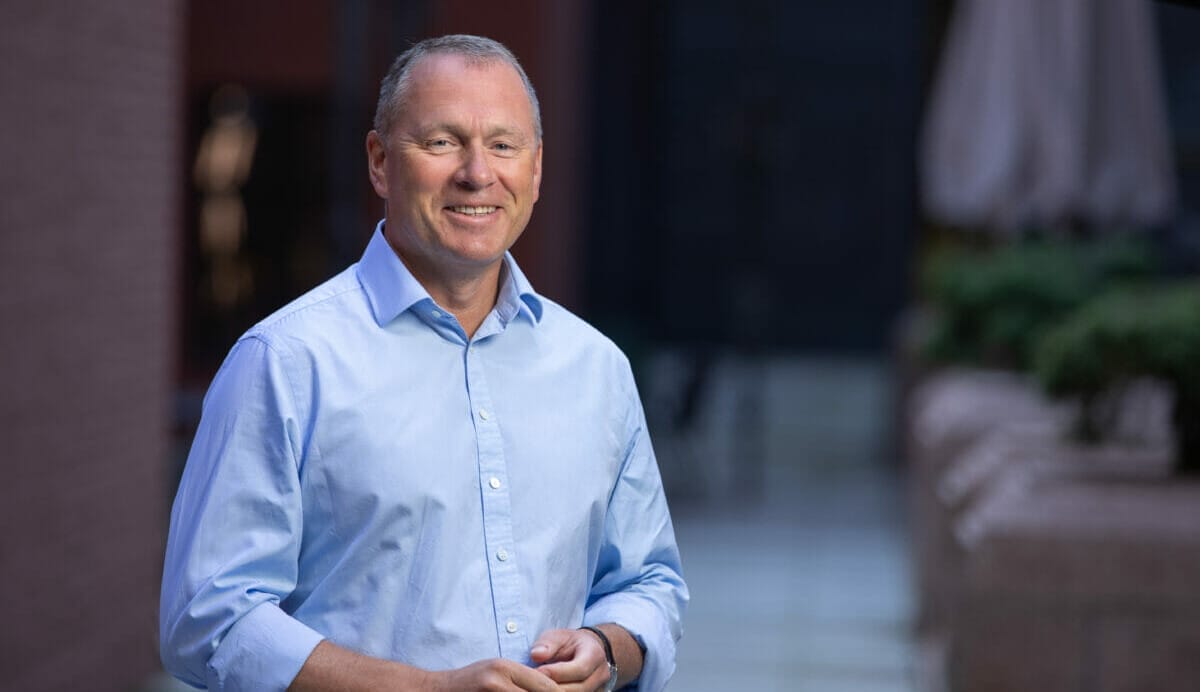
Tim Hodgson, co-founder of WTW’s Thinking Ahead Institute, has left the prolific research network as it seeks closer integration with the broader consultancy.  

He departed after almost three decades of spearheading the research effort at TAI, which was first an internal initiative and then turned into an official offshoot in 2014. It was set up by Hodgson and Roger Urwin as an organisation jointly supported by WTW (then Towers Watson) and paying members. Urwin is also the global head of investment content at WTW and has been with the business for over 30 years. 

A source told Top1000funds.com that future research efforts at TAI will be spread across more of its colleagues at the Nasdaq and NYSE-listed WTW, instead of being conducted by the organisation at arm’s length in the current set-up.  

Head of the TAI and senior director at WTW Marisa Hall rejected the suggestion of any fundamental restructuring and said the move is a result of TAI undertaking more localised projects with asset owners, particularly in the Middle East and North America, which requires it to draw on resources from the broader WTW business. It is understood that there won’t be further departures in the TAI team apart from Hodgson. 

“Effectively, it’s a bit of a hub-and-spoke model where you still have the core Thinking Ahead team, but due to the sheer number of requests that we’re getting… you’ll find that Thinking Ahead is probably just increasing its integration with [WTW] colleagues,” she said.  

“Tim, who we love dearly and still are in contact with, through agreement with the broader business has left WTW as a whole… I think that’s probably a very natural evolution of a relationship with a longtime colleague.” 

Sponsored Content

Hodgson declined to comment when contacted.  

TAI is one of the earliest proponents of the total portfolio approach (TPA) and has produced application frameworks and TPA case studies among allocators, which helped theorise and promote the complex portfolio construction method. It established TPA as a spectrum and acknowledges that asset owners can have varying degrees of commitment to its philosophy.  

The TPA studies bolster WTW’s investment advisory offering of which the transition from a strategic asset allocation (SAA) method to TPA is a critical part. A 2024 study from TAI found that organisations which adopted TPA added 1.8 per cent alpha per annum over their SAA peers across a 10-year period. 

Hall said TPA has become a “firehose conversation” due to the wide interest from asset owners looking to understand and adopt the approach. She said this is another reason why TAI needs help from its WTW colleagues to fulfil member requests. 

“It’s moved from the work that we’ve done in the total portfolio approach starting 20 years ago… to now we would say that we’re having triple the number of conversations on TPA. Because of that, we’re doing a lot more specialist projects,” she said. 

TAI is a not-for-profit organisation and is more than half funded by WTW, with the rest of its budget coming from membership fees. Hall rejected suggestions of any cost-cutting motives behind TAI’s integration and that members shouldn’t expect any changes in the way they interact with the organisation.  

Members of TAI include 38 asset owners, such as the Abu Dhabi Investment Authority, Australia’s Future Fund, the UK’s Nest and Sweden’s AP7, and 15 asset managers, according to its 2024 integrated report. 

“We’re trying to make more use of the broader resources we have at our disposal based on what clients and members are asking us for,” she said.  

TAI’s other areas of research include sustainability, wealth and governance, as well as asset and organisation-centric papers such as the annual global pension asset study focusing on the biggest pension funds and the global DC peer study outlining different organisation designs.  

TAI currently has a team of nine led by Hall.  

Leave a Comment

CPP: Why doing the right thing in TPA can look like losing

CPP: Why doing the right thing in TPA can look like losing

CPP Investments has argued that a TPA portfolio has a high chance of appearing to have underperformed when evaluated against traditional SAA benchmarks, even when the underlying investment decisions are sound. In a recent paper, the fund argues TPA portfolios should be judged on a broader scorecard.

Sort content by

Returns, resilience and reinvention: What private markets’ top brass are worried about

Senior executives from some of the world's largest private market managers gathered in Berlin this month with a collective understanding: managers who move slowly on AI face not just weaker returns but the risk of owning businesses that have been competitively displaced before they can exit.

Temasek likely to miss 2030 climate target dragged by aviation, energy investments

Temasek chief executive Dilhan Pillay says the sovereign investor is likely to miss its 2030 interim climate target, as exposures to the aviation and power generation sectors are crimping the investor’s ability to reduce portfolio target emissions. But the $339 billion fund is sticking to its net zero by 2050 goal, stressing the slower decarbonisation pace "reflects the realities of the broader global economy."

CalPERS, NY pensions challenge SpaceX’s ‘unfireable’ CEO provision ahead of mammoth IPO

Three of the largest US pension funds, managing a combined $1 trillion in assets, have demanded a meeting with SpaceX executives ahead of its speculated blockbuster IPO warning that its proposed corporate plan could be “the most management-favourable governance structure ever brought to the US public markets”.

Falling dollar dents Canadian pension returns; triggers hedging rethink

A weakening US dollar has eaten into the returns of Canada’s largest pension funds as annual reports revealed the currency shock forced a fundamental rethink from some investors around hedging practices. OMERS has pivoted from a policy hedging target to a more flexible approach fulfilling multiple objectives, while OTPP more than halved its US dollar exposure in 2025.

NBIM lays out case for real estate turnaround

Norge Bank Investment Management chief executive Nicolai Tangen conceded the $2.1 trillion fund is “not satisfied” with the performance of its real estate portfolio, as weakness in the asset class was a main contributor to three consecutive years of negative relative returns. All eyes are now on whether its overhauled strategy, which includes new structures and sector composition, can turn things around.

Dutch transition: APG leans into data, IT and communication

APG has successfully shifted its smaller pension fund clients to the new defined contribution pension system and now begins the huge task of moving the giant ABP as well. The defined contribution system has many implications including shedding more than 1000 staff at APG and moving investments more into riskier assets.