
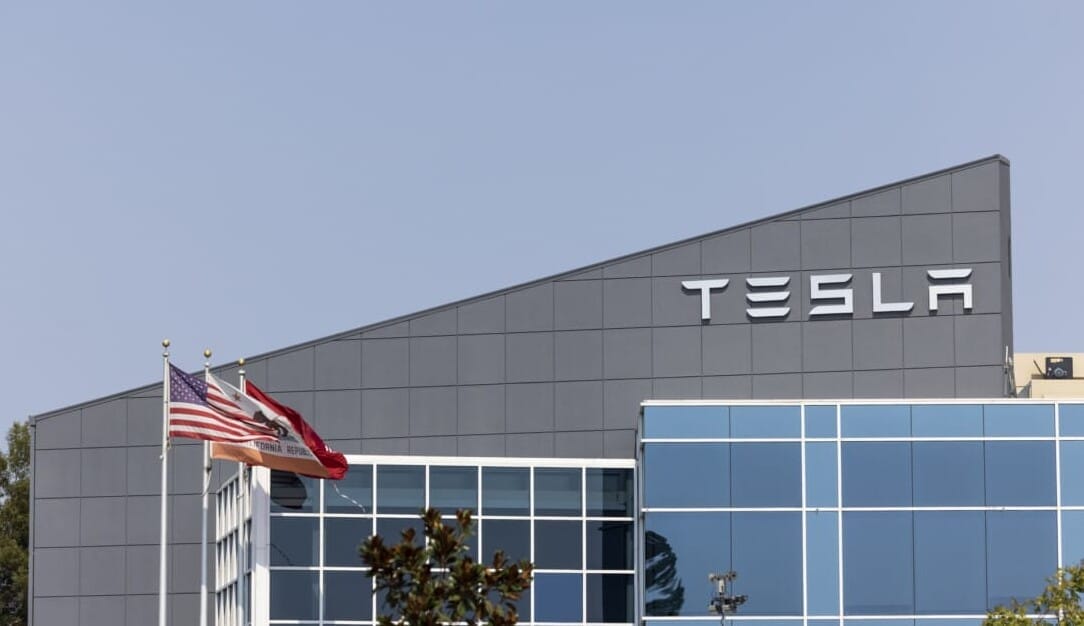

Tesla has come under another bout of investor pressure from 12 pension funds, US state treasurers and asset managers. This time shareholders, including Denmark’s $21 billion Akademiker Pension and $279 billion NYC retirement systems, want CEO Elon Musk to get back to work, requesting he dedicate at least 40 hours a week to the company.
In a letter to Tesla chair Robyn Denholm, they called on the company to address “deficiencies in the board’s oversight of company leadership” writing “the current crisis at Tesla puts into sharp focus the long-term problems at the company stemming from the CEO’s absence, which is amplified by a Board that appears largely uninterested and unwilling to act in the best interest of all Tesla shareholders by demanding Mr. Musk’s full-time attention on Tesla.”
The ultimatum came as Musk announced his plans to leave his government post in the Trump administration overseeing the Department of Government Efficiency (DOGE). But as well as calling for any new compensation plan for Musk to include the condition that he spends at least 40 hours per week managing the company, investors want other changes too. They expressed their concerns regarding Musk’s commitment to his privately held companies including SpaceX, Neuralink, the Boring Company and xAI.
“Given his leadership roles at four private companies and his foundation, the Board must ensure that Tesla is not treated as just one among many competing obligations,” the letter read.
previous calls for change ignored
The letter is the latest call for change from increasingly frustrated investors who either plan to divest, or have already.
In March, AkademikerPension, which invests on behalf of Denmark’s academics, announced plans to exclude Tesla from its investments if there is no sign of reform at this June’s AGM. CEO Jens Munch Holst cited Musk’s increasing interference in US and European politics as a particular grievance. Musk visibly backed the far-right Alternative for Germany (AfD) party ahead of the country’s February elections.
“It’s no secret that Tesla has been a market leader in the green transition for years. But when we can tick off a long list of issues year after year with no prospect of improvement, in fact quite the opposite, it’s hard to argue that we should remain invested,” he said.
AkademikerPension has also complained about governance and board independence, given Musk’s family and friends on the Tesla board which includes his younger sibling, Kimbal Musk. Union resistance and workplace issues have also long troubled the investor, which wrote to Tesla back in 2023 with fellow Danish funds KLP, PKA and Folksam, urging the company to respect collective bargaining.
Last April, Swedish pension provider KPA Pension announced that it had divested its entire shareholding in Tesla following a period of “fruitless” engagement regarding its concerns about the company’s attitude towards employees’ union rights.
“Tesla’s attitude towards its employees’ union rights is problematic in terms of KPA Pension’s investment criteria. KPA Pension has therefore tried in various ways to influence the company, primarily together with other owners, where proposals have been submitted to the company’s annual general meeting for two years in a row. Unfortunately, no improvement has been seen and a decision has therefore been made to divest the holding,” wrote Marcus Blomberg, head of asset management and sustainability, on KPA’s website.
In 2023, the $44 billion PensionDanmark also sold its $69 million holding because of concerns around workers’ rights.
Elsewhere Dutch civil service scheme, the €552 billion Stichting Pensioenfonds ABP, sold its Tesla stake earlier in the year. Speaking to Top1000Funds.com, Ronald Wuijster, chief executive officer of APG Asset Management which oversees ABP’s assets, said the investor had sold a €571 million ($585 million) stake in the company as part of an optimisation strategy in the index portfolio.
“For us, investments are made according to four elements comprising return, risk, cost and sustainability, and that hasn’t changed,” he said.
In the letter this week, the 12 investors also called for Tesla to start developing a succession plan, and be ready for both “planned and unplanned or an emergency’” departure of Musk. They also requested the appointment of an independent director with “no personal ties” to other board members. This month, the electric vehicle company appointed John Hartung, the outgoing Chipotle chief financial officer as a director, whose son-in-law is employed by Tesla.
“It is striking that Tesla would nominate a director who, by objective standards, does not appear to be independent—particularly to a board already criticized by investors and the Delaware Chancery Court for its lack of independence,” the letter said.
Tesla’s stock price has plunged by more than 24 per cent since peaking in December 2024. Sales tumbled in the first quarter of this year due to a consumer backlash in Europe, fierce competition from China’s BYD, the world’s best selling electric vehicle maker, and weakness in the company’s home market.








Leave a Comment
You must be logged in to post a comment.
Login