
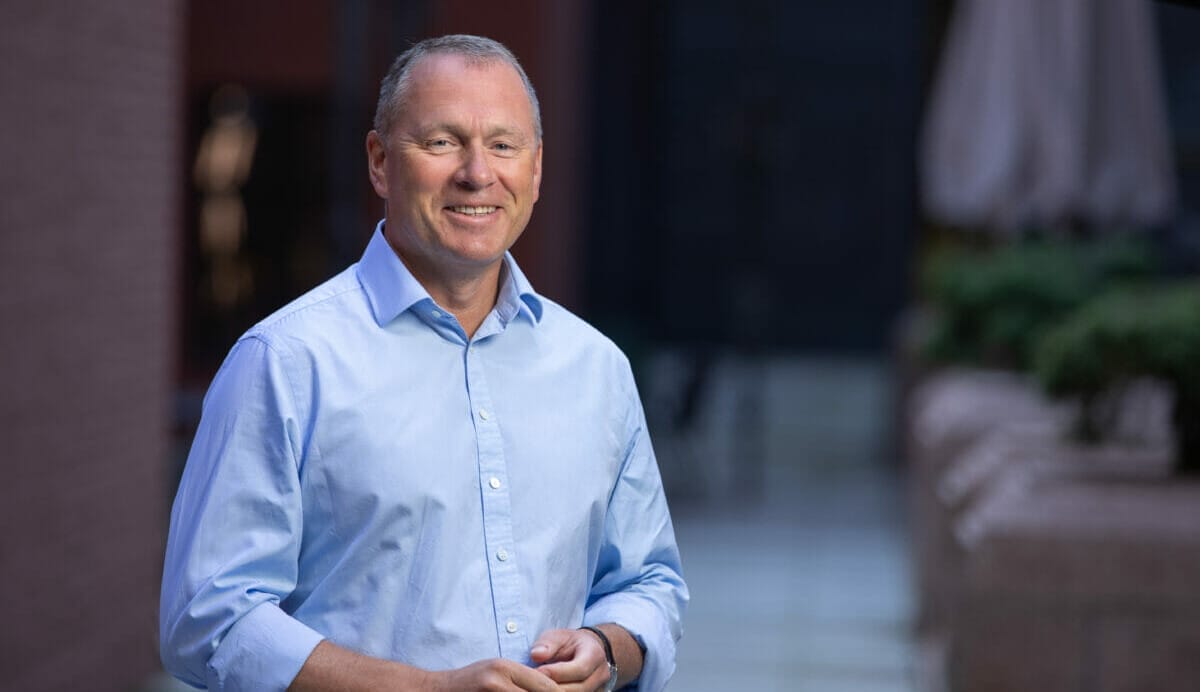

Norway’s giant sovereign wealth fund, the Government Pension Fund Global, took out the top spot in this year’s Global Pension Transparency Benchmark. Amanda White talks to CEO of Norges Bank Investment Management, Nicolai Tangen, about why transparency is important and why under his leadership Norges aims to be the best fund in the world.
Transparency has been high on the agenda of Nicolai Tangen since he became chief executive of Norges Bank Investment Management, responsible for the management of the $1.43 trillion Government Pension Fund Global, three years ago.
It’s not just because being transparent is the right thing to do, or that the Norwegian sovereign wealth fund is a ‘fund for the people’ and stakeholder management is crucial. It’s because transparency builds trust and a platform to be more impactful in generating change.
“Knowledge of the fund is linked to the trust that people have in the fund,” Tangen says in an interview with Top1000funds.com about the fund taking top spot in the Global Pension Transparency Benchmark for 2023. “We are really dependent on the trust of the Norwegian people, because this is a democratically-anchored fund it has to do with the trust of the people and the politicians and the whole governance structure here. Norway is a very transparent and democratic society and so we have to reflect that in the way we run the fund.”
But importantly, as an investor, being transparent allows the fund to be more influential when it wants to address change in the portfolio companies it invests in.
“By being more transparent you are more impactful when you try to investigate change,” Tangen says. “We work hard with our portfolio companies to get them to be more transparent, to disclose more on what they do on climate and so on. So we owe to them to be as transparent as we can be.”
A clear emblem of Norges’ transparency leadership can be seen in its approach to proxy voting. The fund’s giant equity portfolio, about 69 per cent of assets, makes it the largest single owner in the world’s stocks, representing about 1 per cent of all listed equities globally. It votes in 12,000 annual general meetings across 63 countries every year. Not only that but five days before each AGM, NBIM reveals how it is going to vote, giving other institutional investors and the companies themselves full transparency on their voting position.
“To have impact and credibility with our voting we have to be transparent in what we think and how we vote, so all this [transparency] goes hand in hand,” Tangen says. “We are the most transparent fund in how we vote, and we announce how we are voting in advance. No other company does that.”
This week the fund will expand that transparency publishing a status report on its voting for the first time. In addition the fund lists every investment holding on its website by name, demonstrating full transparency in its investments.
“Where we are the most transparent in the world is that every single share we have is reported. You can look at everything we do. You can look at every change in our holding, every single company we invest in. That is the most extreme transparency we have,” Tangen says.
The fund has also published “expectations documents” of how companies in its portfolio should address global challenges in their operations including climate, tax-avoidance, child labour and biodiversity.
Top amongst peers
Last year when the Global Pension Transparency Benchmark revealed the individual scores of the 75 underlying pension funds for the first time, Norway’s sovereign wealth fund came in a close second to Canada’s CPP Investments. “Next year we will be number one,” Tweeted Nicolai Tangen, in what would become a promise lived up to.
Fast forward to 2023 and not only has Government Pension Fund Global outranked 74 of its global peers, but it improved its transparency score by 14 points to overtake CPP Investments, last year’s winner. The total score was underpinned by Norges taking out first in transparency of reporting around performance and responsible investment, second spot in cost transparency and 16th of the 75 funds reviewed in governance.
The Global Pension Transparency Benchmark, a collaboration between Top1000funds.com and CEM Benchmarking, is a world first global benchmark measuring the transparency of disclosures of 75 pension funds, and 15 pension systems, across the value generating measures of cost, governance, performance and responsible investments.
“Benchmarking transparency is important initiative, it’s super important, I absolutely love this survey,” Tangen says. “As sovereign wealth funds become more important and a bigger force across the world, it is increasingly important they are transparent. Otherwise people will start to question the whole capitalist model and the secretive powers of these very large pools of capital.”
Tangen says the fund worked quite deliberately to improve transparency and move up the ranks. There is still some room for improvement, especially around governance transparency but the fund’s complicated governance structure – sitting within the central bank and having a mandate from the Minister of Finance – will mean that it will need to engage with broader stakeholders to make changes on that factor.
But Tangen is quick to point out that the fund is not increasing transparency just to win this or any other award. Transparency is something that has been an integral part of the fund’s strategy, and something that he has put particular emphasis on, since he started as CEO in September 2020.
This includes all types of transparency including more openness internally within the organisation and externally to the outside world.
“Now we share everything, for example we share the notes from the leader group meetings across the organisation so everybody in the firm can see what we discussed,” he says. “And we open up to the outside world and have many more people who can talk on behalf of the fund. We have gone from four people three years ago to now 625 people, so everybody can talk about it. It’s a complete change.”
Transparency is a clear indicator of Tangen’s leadership style and he makes no secrets of the fact that Norges has an ambition to be the world’s best fund.
“We want to be the world’s leading fund, full stop. That includes everything from performance, reputation, our people and leading on ESG,” he says. “With ESG that has to do with having clear and intelligent views, being consistent and long term in our views and have our views well anchored in our parliament and so on, so if there is backlash against ESG which we have seen in other parts of the world, we are not going to change our mind and I think that is really important.”
To be the best in the world the leadership team is focused and deliberate in: how it recruits, educates and retains people (it recently hired sports psychologists); how it embraces technology especially the use of AI; its operational robustness and how it weathers volatility; a clear and consistent voice in how it communicates; and performance.
“The way we develop people and create psychological safety and be seen to grow and thrive is important,” Tangen says. “The leadership team has a clear focus to be the best in the world.”








Leave a Comment
You must be logged in to post a comment.
Login