
Why Textron isn’t investing in private credit

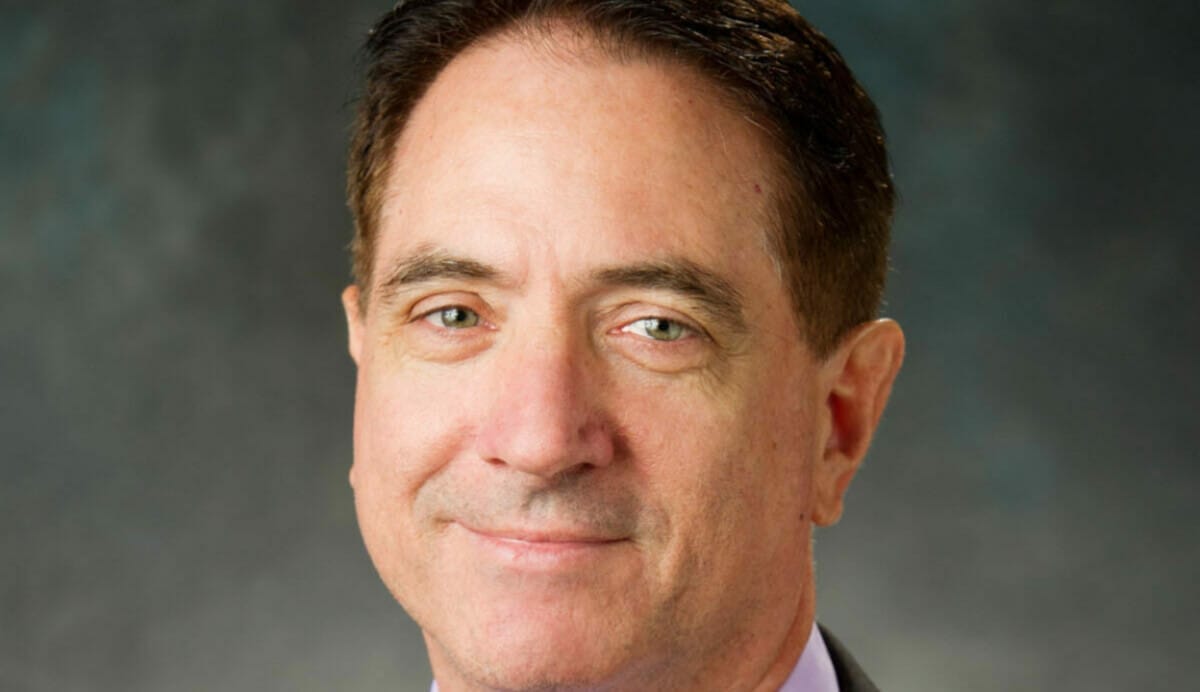
Many institutional investors are increasing their allocations to private credit, jumping on the idea of lending to companies on a floating rate in the current interest rate cycle. But Charles Van Vleet, CIO of the $10 billion corporate pension fund for US aerospace and defence giant Textron, is not going to get lured onto the rocks of high yields.

He remains resolutely in favour of private equity over private credit when considering how best to tie up money long-term in illiquid, draw down vehicles.

“Where I have limited ability to tie up my money, I am not going to tie it up in private credit,” he says, speaking from the fund’s headquarters in Providence, Rhode Island. “Investing in private credit in a 7-8 year tie up and expected IRR or yields of 10-12 per cent is attractive but with bonds you can never get back any more than par, and you will soon wish for the asymmetrical upside of equity rather than the asymmetrical downside of bonds.”

Adding: “I hear lots of people saying my gosh, who needs to buy equity when you can buy high yield bonds with a 9-10 per cent coupon but my focus remains on equity.”

A year ago in July, Textron (which has returned 4.6 per cent year to date) stopped all new commitments to private credit and cut its spread exposure in half as Van Vleet opted to gain exposure to corporate growth through junior equity tranches over senior fixed income via private credit.

“We replaced spread exposure with beta-weighted allocations in the S&P. High yield bonds are correlated with the S&P at 0.6 per cent so when we sold 1 per cent of high yield we bought 0.6 per cent of the S&P.”

Sponsored Content

Van Vleet’s aversion to private credit is twofold. On one hand he believes that although the next default cycle (about to begin) will witness fewer defaults, the ability of investors to recover assets will be significantly lower. The problem lies in the absence of residual assets available for bond holders because the type of companies most likely to default are in tech.

“The nature of what America makes is different compared to a decade ago,” he says. “For many of these companies the most valuable asset goes down the elevator at night.”

Another reason that recoveries will be lower is that many of the covenants binding the loans are wanting. In the past, investors set covenants around the amount of cash to keep in the bank, leverage and margins, but these once weighty documents are notably lighter today. “By the time a lot of these companies are bankrupt they have bled the balance sheet. There just aren’t the covenants in place for lenders to come in and give the business a stern talking.”

The other reason for ditching private credit is wholly positive. Van Vleet is an enthusiastic investor in the corners of the US equity market that capture the scale of change ahead and offer the kind of unlimited return impossible to tap in bond markets.

Take technological leaps like LLM (large language models) powering the AI revolution visible in ChatGTP; the new generation of weight-loss drugs know as GLP1-agonists. mRNA, the biological unit that Pfizer and BioNTech used to make Covid-19 vaccines that scientists now believe will help the body fight other diseases or Crispr, the first drug to make use of revolutionary gene-editing technology. Not to mention innovations like cellular meat or when-not-if technological take off in fusion.

“Six weeks ago, we did not know of GLP-1. Six months ago, the term LLM was unknown. Three years ago, mRNA was non-existent, as was Crispr, two years prior. Some people think fusion is 20-years away but for long-term investors that’s tomorrow  – and it will take the carbon challenge away. All of these are transformative events and inventions. In short, North America equity investing is the best place to find the winners and losers of the exciting decade ahead.”

Apart from a small pocket of passive that Textron keeps for liquidity purposes, Van Vleet has an active stock picking strategy around these themes. But despite Textron’s focused investments he doesn’t believe only active strategies will reap the benefits.

“A rising tide will lift all boats, just be invested in boats, just be invested in equity,” he says. “Who is going to reap the benefits of this productivity? Its not going to go to labour – it’s going to go to the capital providers; to the equity investors, and it’s already priced into the market.”

And these themes are accessible across all asset classes. For example, Textron’s 12 per cent allocation to real estate comprising 22 direct investments in buildings and with no fund investment includes ownership of data centres fitted with the complex cooling requirements needed for vast servers.

In another nod to his contrarian approach, Van Vleet concludes that real estate investors continue to overlook opportunities in life sciences, cold storage and multifamily because they have been wholly focused on plummeting office values.

“They are throwing the baby out with the bathwater,” he concludes.

Leave a Comment

Finland’s Elo: Larger equity allocations promise new media scrutiny

Finland’s Elo: Larger equity allocations promise new media scrutiny

As Finland's pension funds prepare to increase their equity allocations to unprecedented levels compared to global peers, they must also navigate a new and unfamiliar risk. Elo's chief investment officer Jonna Ryhänen explains the fund's investment approach going forward and how it will manage stakeholder and media scrutiny as they react to swinging volatility and returns.

Sort content by

Finland’s VER warns impact of higher rates on private markets still unknown

Timo Löyttyniemi, CEO at VER is focused on how the fund's asset managers have handled the impact of higher interest rates in private markets. It's about to become apparent if they've successfully hedged interest rate risk; re-financed, and reduced total leverage levels to manage higher borrowing costs.

A new SAA at Connecticut allocates more to risk assets in manager shakeup

Since joining the Connecticut retirement plans as CIO just under two years ago, Ted Wright has developed a new strategic asset allocation that has bumped up the allocation to private assets. Top1000funds.com talks to him about risk budgets, a manager shakeup and diversity.

UN Pension Fund back on track after 2022, as low costs pay off

The United Nations Joint Staff Pension Fund, UNJSPF, is clawing back 2022 losses with assets under management currently valued at $82 billion and the fund experiencing a positive return of 5 per cent so far this year.

West Virginia CIO fears anti-ESG politics threaten fiduciary independence

Like many other US pension funds, West Virginia Investment Management Board’s (IMB) proxy vote has been a lightning rod for anti-ESG sentiment. CEO/CIO, Craig Slaughter explains why he fears recent legislative changes could herald the beginning of a threat to the fund's fiduciary independence.

PGGM’s private equity priorities: Impact, Paris-alignment and co-investment

After four years as CIO at ABP, Diane Griffioen has joined PGGM as head of private equity where her focus is on driving Paris-alignment, impact and co-investment across the €23 billion portfolio.

AP2 returns active Chinese equities back to quant

AP2, Sweden’s SEK 400 billion ($38.8 billion) buffer fund, recently divested its allocation to three Chinese asset managers overseeing an allocation to China A shares despite spending many years carefully building up the successful stock picking portfolio.

Previous



